RSS
RSS
Vote Now! 2026 Ingredient Choice Awards
July 22, 2026

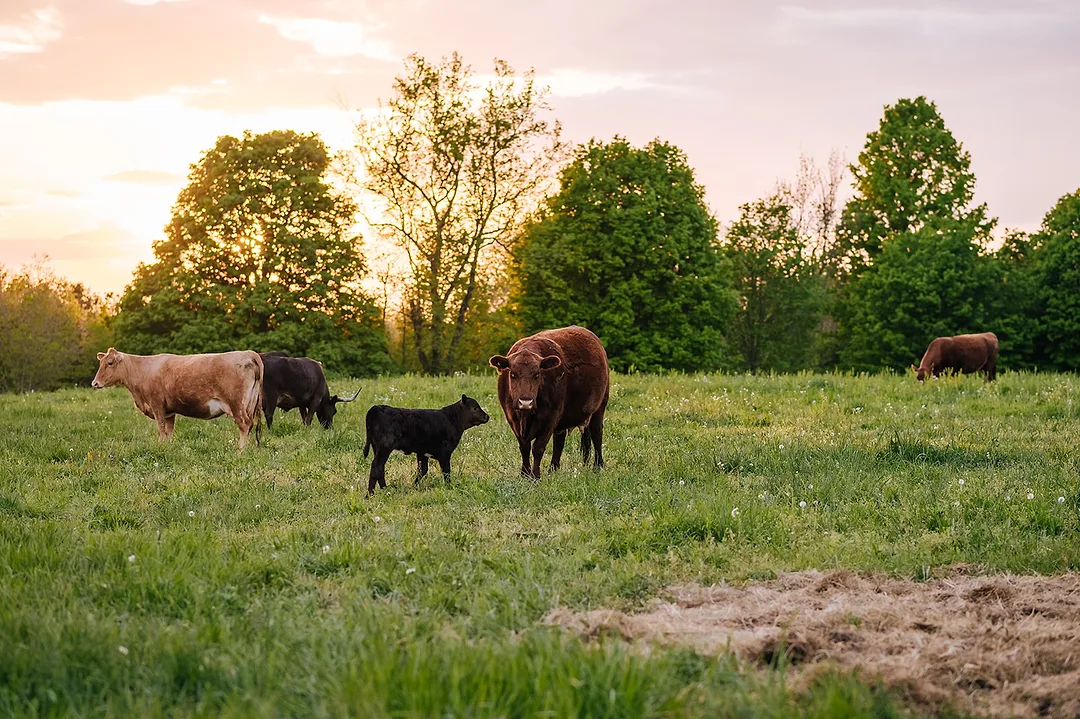
Consumers increasingly seek transparency around beef sourcing, but terms such as grass-fed, grass-finished, pasture-raised, organic, and regenerative can represent very different farming practices and certification standards.
| Courtesy of Foxhollow FarmTwenty years ago, almost nobody had heard of grass-fed beef. When people tried it for the first time, older customers would stop mid-bite and say it reminded them of growing up, like they were tasting something they'd forgotten existed. Younger customers were just surprised it had flavor at all. That expectation gap told me everything about how far we'd drifted from understanding what beef actually is.
Today, "grass-fed" is on labels at Costco, Kroger, and fast-casual menus across the country. That should, in theory, be good news. But I've watched the language of regenerative agriculture spread far faster than the practices themselves, and I think that gap is worth talking about honestly, because people are getting fooled, and they're trying not to be.
The most important thing I can tell you is that grass-fed and grass-finished are two different things, and the label doesn't always tell you which one you're getting. An animal can spend most of its life on pasture and still be moved to a feedlot and finished on grain before slaughter. Under current labeling rules, that animal can still be called grass-fed. Finishing method affects the animal's fatty acid profile, the flavor of the meat, and the ecological footprint of the whole system. These are not small differences.
"Pasture-raised" is another term worth slowing down on. It refers to how an animal lives, not what it eats—a pasture-raised animal may still be grain-finished. "Organic" tells you about pesticide and antibiotic use, but nothing about how the animal was raised or what it ate at the end of its life. And "regenerative," which is everywhere right now, has no single regulated federal definition. Any brand can use it. I say this not to be cynical, but because I've spent 20 years doing this work, and I think people deserve to know that the vocabulary has outpaced the standards.
Some of the confusion comes from specific practices that are legal but genuinely misleading. Beef imported from Australia or elsewhere can carry a grass-fed label in the U.S. if the animal was grass-fed in its country of origin. Animals kept in confined conditions but fed harvested hay can technically qualify under some definitions, because hay is dried grass. Many brands that use regenerative or grass-fed language aren't single farms—they're aggregating from dozens or hundreds of producers with different practices and different levels of accountability.
There's also a genetics piece that almost never gets discussed in consumer-facing marketing, but it matters a great deal. Not all cattle breeds are suited to finishing on grass. Some animals have a frame that means they simply won't develop properly on pasture alone, regardless of how they're managed. When people try grass-fed beef and think it doesn't taste any different from conventional, often that's why. The breed, the finishing, the management—all of it shows up on the plate.
Addresses diet only. It tells you the animal was fed grass, but says nothing about whether it was confined, how the land was managed, or whether it was grass-finished. This is the most commonly seen label and also the least informative one.
Goes further than USDA. Requires animals to be born and raised on American farms, prohibits confinement, and mandates that animals are raised on pasture for their entire lives. It also prohibits the use of hormones and antibiotics.
Covers the whole farm as a living ecological system, not just the animal. Soil health, biodiversity, closed-loop farming practices—it's one of the most rigorous standards available and requires the farm itself to be regenerating, not just avoiding harm.
Focuses specifically on land health outcomes, independently verified through soil testing and ecological assessment. A farm has to demonstrate the land is actually improving, not just that they're following certain practices.
A tiered welfare standard that covers how animals are treated and how they live, from basic requirements up to fully pasture-centered systems. Worth looking at the specific tier a farm holds, since they vary significantly.
Focuses on animal welfare standards around living conditions, handling, and slaughter. Doesn't address land health or finishing practices, but meaningful if animal welfare is your primary concern.
No single certification covers everything, and a combination tells a fuller story. But even more than certifications, I'd look for transparency. Farms that do this honestly tend to make their location, their team, and their practices easy to find. If a brand's website is heavy on values and light on specifics, that's worth noticing.
You can learn a lot just from how easy or hard it is to find that information. Farms doing this with integrity tend to be proud of the specifics, the named farmers, the land, the practices, the animals. That detail is part of what they're selling, because it's real. When a brand's website is built around values and imagery but light on verifiable details about where the food actually comes from, that's worth paying attention to.
I also want to say clearly that none of this is meant to make food choices feel like a research project. Most people are busy, and the fact that buying responsibly requires this much digging is itself a problem with how our food system is set up, not a personal failing. The goal is just enough literacy to tell the difference between a label and a practice.
That matters more than it might seem. Consumer purchasing is one of the few direct signals small farms receive about whether their model is economically viable. Regenerative farming done right is slow, expensive, and hard to scale. The farms doing it honestly are often small operations with thin margins, without large marketing budgets or shelf space at major retailers. When people unknowingly buy from brands using regenerative language without regenerative practices, it makes it harder for those farms to survive. You don't have to be an activist about your food choices. But knowing what you're buying, and why it costs what it costs, is a meaningful way of participating in a system you actually believe in.
The most practical thing anyone can do is try to source proteins from a farm close enough to research—within roughly 100 miles is a good starting point. Farmers' markets, CSA programs, and state agricultural directories are all useful. When you find a farm, look for specifics: named farmers, described practices, certifications you can look up. People are more curious about their food than they've ever been, and I think that's genuinely hopeful. The next step is making sure the questions being asked have honest answers. I've been saying know your farmer since 2006. I believe it more now than I did then.
Key takeaways: 100% grass-fed beefWhat is the difference between grass-fed and grass-finished beef?Grass-fed cattle consume grass-based diets, but some may be grain-finished before slaughter. Grass-finished cattle remain on forage diets for their entire lives. Does pasture-raised mean grass-fed?No. Pasture-raised describes how animals are housed or managed, while grass-fed describes diet. Pasture-raised cattle may still receive grain. Does organic beef mean grass-fed?No. Organic certification addresses production standards such as pesticide and antibiotic use but does not automatically require grass-finishing. What certifications verify regenerative farming?Programs such as Regenified and Demeter assess ecological outcomes and farm management practices, though each certification evaluates different criteria. How can consumers identify transparent beef brands?Look for named farms, clearly described practices, verifiable certifications, and detailed sourcing information. |