The health and natural products industry relies on ingredients and supplies currently sourced internationally, many from Asia and most in fact, from China and India. Over the past decade, proactive efforts have identified India as an alternative primary source for many of these ingredients, as relationships with China have become more challenging and unstable. In addition, the scientific and technical expertise India has garnered through investment into pharmaceuticals and related technology has increased the talent pool and expertise so significantly that India as a preferred partner has become a second nature consideration for many in the nutraceutical and supplement space. India too, has committed millions to nutraceutical market infrastructure and promotion with the declared intention of having this market reach $100 Billion USD through exponential growth in the foreseeable future.
Another common element between the two countries—both India and China have strong ethnobotanical traditions, with Traditional Chinese Medicine or TCM in the former, and Ayurveda in the latter. Many of the herbs that are core to these ancient medical systems are only found in limited geographies, although there is some overlap between the two countries.
The current geopolitical environment
In the current geopolitical environment, many things, including foundations of international trade, are facing unprecedented levels of uncertainty. This instability has emerged as a defining issue for health ingredients and supplements sectors.
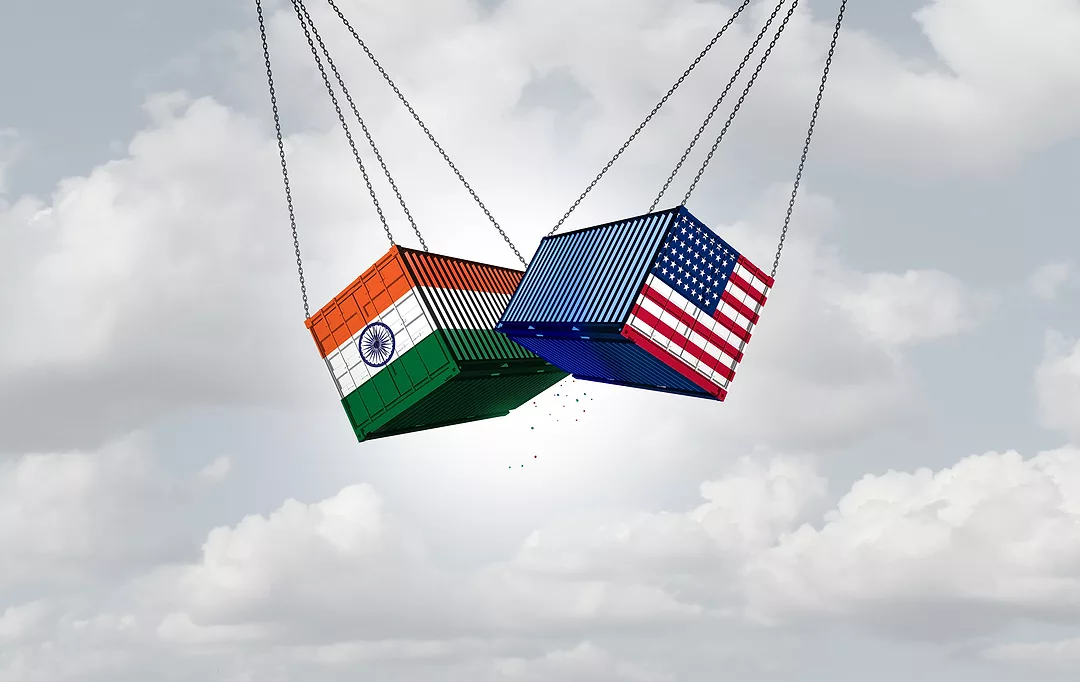
Most recently, the 50% tariff the U.S. administration has imposed on India is jeopardizing supply chains and relationships in unprecedented ways. Herbs such as turmeric, ashwagandha, amla, shilajit, and others will soon be impacted.
There are efforts underway to secure exemptions, as none of these herbs can be grown in the United States. That said, already we can begin to see a shift in focus to Europe and other regions and away from the U.S. as Indian companies buffer the uncertainty. The BRICS alliance (Brazil, Russia, India, China, South Africa, Egypt, Ethiopia, Indonesia, Iran, and UAE) was already driving some of this shift. For natural products, this means more growth in developing countries. That pattern is accelerating, and the current tariff environment is a boon to Russia (bilateral trade between India and Russia is expected to increase dramatically).
The India-China rivalry and wariness is expected to continue however. There are geographic tensions; both have exploding high-consuming middle classes, and in general are more likely competitors than true allies. From a supply standpoint, that’s a relatively moot point, but the emergence of a stronger trilateral relationship of any type between China, India, and Russia would be a major disruptor to world trade and economic systems.
At some point, other countries would be forced to recalibrate, presumably the U.S. among them. The major issue driving U.S. decisions has been identified as India’s purchase of cheaper Russian oil. Most experts expect this buying to continue—India’s emerging middle class and therefore economy depends on it, but there are numerous other concessions that India can make to justify an adjustment in tariff policy.
For that primary reason, I think we can expect to see a modification of tariffs in due course, even if the exemption strategy fails. I do expect ultimately that some exemptions are likely, and industry trade groups are aggressively pursuing this course of action. In the meantime, I anticipate we will see building up of Indo-American infrastructure even while Indian companies hedge their bets elsewhere well into 2026. For U.S. industry in the short term, we’d advise deepening current relationships, playing the longer game, and advocating locally with elected officials.
The potential for significant bilateral trade is too good an opportunity for it to be put at risk or ignored for too long.