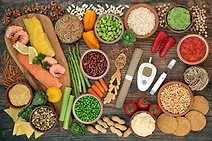
You are what you eat. No saying is proving to be more true in today’s era of the educated consumer that prioritizes clean, unprocessed foods and thus elevated the optimization of the gut microbiome to the forefront of health objectives. While many brands have pivoted their R&D efforts to focus on ‘biotics offerings, enzymes are unsung heroes of the gut health renaissance. Specialized proteins that are essential to speeding chemical reactions, metabolism, and tissue repair, enzymes fill a key role within the body’s complex ecosystem.
3 Enzyme Categories
Experts at the Institute for Integrative Nutrition report that at least 75,000 enzymes exist within the human body. As Enzymedica shares, there are three general categories of enzymes:
Digestive enzymes are produced within the body to help break down food into its basic components for digestion.
Metabolic enzymes are found throughout the body and function in support of the heart, lungs, kidneys and brain.
Food or plant enzymes generally serve the same function as digestive enzymes, and can be obtained through eating fresh, raw and uncooked foods like fruits, vegetables, eggs, unpasteurized dairy, meat and fish.
Prevalence of digestive issues
The body’s ability to make enzymes declines with age. Ann Louise Gittleman, Ph.D., CNS, explains, “You start with a limited ability to make enzymes, and little by little, day by day, your enzyme production declines, starting around age 30.” Deficiencies of any one enzyme can lead to health issues including nutrient malabsorption and gastrointestinal discomfort when consuming specific foods, which is a growing point of concern for today.
Between 60 to 70 million Americans are affected by digestive disorders, according to the National Institute of Diabetes and Digestive and Kidney Diseases. This has created high growth potential for companies that have invested in the research to be able to offer consumers viable alternative solutions to address gut-related issues. In 2024, Grand View Research valued the global digestive enzyme supplements market at an estimated USD $1.48 billion and projected it to reach $2.12 billion by 2030, with a CAGR of 6.2%.
Factors feeding into the market‘s expansion include:
- Growing consumer awareness regarding gut health and overall well-being
- Commonness of digestive disorders
- Increasing aging population
- Rising demand across food processing and pharmaceuticals
Driving demand
Food enzymes can be obtained from animal, plant and fungal sources. As consumers lean into sustainable, eco-friendly practices, brands are offering more plant-derived options to assist with the breaking down of foods and to address the digestive issues that can arise from shifts in dietary preferences, like the gas and bloat that can be linked to elevated fiber consumption.
For example, Enzymedica points out that many supplemental forms of pepsin, an enzyme that helps digest the proteins in food, are derived from the gastric of animals, including pigs. For those who follow a vegan or vegetarian diet or observe Kosher or Halal practices, the company offers an alternative using vegan acid-stable protease to naturally activate the body’s own pepsin. Betaine HCl uses a blend of fungal protease enzymes that naturally activate the body’s own pepsin to promote the breakdown of proteins in an acidic environment, but with a vegetarian approach.
Such offerings create lanes for brands to capture a larger portion of the dietary supplement market that seeks out natural, clean, and effective formulations. In additional to clean label and vegetarian-friendly options, consumers are gravitating to multi-enzyme solutions that blend digestive enzymes with green superfoods or probiotics to deliver benefits such as enhanced digestion, reduced bloating, and increased nutrient absorption for overall energy and well-being. WF