Vote Now! 2026 Ingredient Choice Awards
July 22, 2026
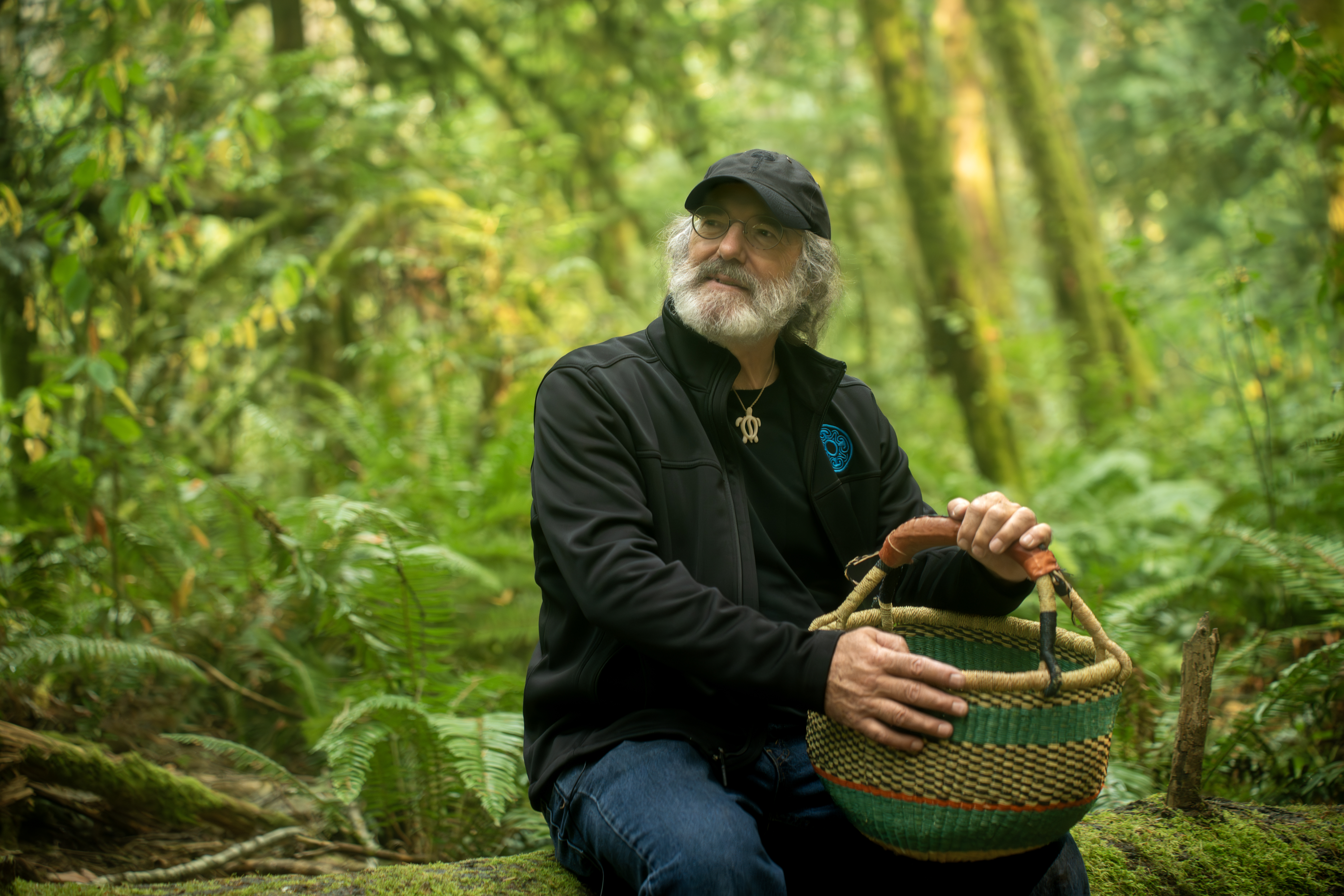
A Life in Service of Fungi
When I first began cultivating mushrooms in the 1970s, I never imagined how far the field of mycology would come—or how central fungi would become to conversations about health, immunity, and sustainability. From the forests of the Pacific Northwest to labs around the world, mushrooms are finally receiving the recognition they deserve.*
In the mid-nineties, I launched the first iterations of what would become the Host Defense® Mushrooms™ product line, to share the extraordinary benefits of mushroom mycelium with the world. At the time, mushroom supplements were relatively unknown in the U.S. market, but I had already witnessed firsthand—and through emerging science—how mushrooms could powerfully support human health.*
Unique Properties of Mushroom Mycelium
Mycelium is the largest and longest-living part of the mushroom organism. It produces a wide range of bioactive compounds that support the human body when consumed. As more people explore natural approaches to wellness, mushroom mycelium has gained widespread scientific recognition for its ability to benefit health.*
Each species we’ve studied and cultivated at Host Defense offers unique beneficial properties. Turkey Tail promotes beneficial gut bacteria; Reishi encourages a calm, balanced state; Agarikon supports engagement of the body’s natural defenses; Lion’s Mane supports healthy function in the brain and nervous system—the list goes on.*
At every turn, we’ve ensured that all of our formulas are backed by scientific discovery, and we’ve made it our mission to harness the enormous immune-supportive potential of mushroom mycelium.*
Driven by Science, Built on Transparency
Our unwavering commitment to research sets us apart from others in the crowded supplement space. Every year, we invest more than $1 million into cutting-edge scientific research, including research specifically examining the benefits of our Host Defense products.
In partnership with the NIH, we published a trial examining the benefits of our Turkey Tail mushroom mycelium. We’ve also conducted much of our research in collaboration with leading institutions such as Bastyr University, the University of Minnesota, UC San Diego, and The George Washington University.
We believe research should be accessible—not hidden behind marketing claims. That’s why we maintain an open-access database that compiles dozens of peer-reviewed studies on beneficial mushrooms.
For us, generating credible, real-world data is non-negotiable. Consumers deserve to know what’s in their supplements, how they’re made, and the research that supports them. That’s the standard we set, and the promise we uphold.
Whole Mushroom, Whole Truth
Recently, I’ve noticed a trend of claims saying that mycelium doesn’t “count” as part of the mushroom. Let me be clear: Mushroom mycelium and the fruiting body are both made of the same cellular structures—just organized a bit differently. They have different functions during a mushroom’s life cycle, but are all the same organism.
Mycelium represents about 95% of the mushroom’s life span, while the fruiting body makes up only about 5%—with some variation depending on the species. The fruiting body is made of mycelial threads laminated together, growing from the mycelium to mature and release spores for reproduction.
Some have likened this to the relationship between a plant and its fruit, but that comparison can be misleading. It’s tempting to compare mushrooms to plants, but fungi are an entirely different kingdom of life.
While a plant’s fruit does serve a reproductive purpose through the distribution of seeds, the fruit develops distinctly from the plant’s roots, stem or trunk, and leaves.
By contrast, when observed under a microscope, the filaments comprising mushroom fruit bodies are mushroom mycelium! Put another way, mycelium creates the fruit body, and the fruit body is composed of mycelium. Both mushroom mycelium and the fruiting body are part of one continuous organism—each producing a unique array of immune-supportive bioactive compounds, with some overlap. Both parts of the whole mushroom offer their own distinct benefits, but we’ve found that mycelium produces the highest concentration of bioactive compounds.*
Debunking the “Filler” Myth About Myceliated Grain
Some claim mushroom mycelium grown on grain substrate is “filler,” but this couldn’t be further from the truth. To grow our mycelium, we use a process called solid-state fermentation, where the mycelium metabolizes and alters plain rice at both a chemical and physical level. In other words, as our mycelium grows throughout the rice, it consumes and transforms the rice into something entirely new, infusing its fungal tissue throughout the substrate to create a new matrix.
But here’s where we discovered something remarkable: Rigorous scientific research confirmed that the extracellular metabolites from the mycelium transform the rice to uniquely support immunological activity. This transformation process creates new immune-supportive bioactive compounds in the myceliated rice that are not present in plain, unfermented rice.
Additional human cell model studies demonstrated that when the mushroom mycelium and the myceliated rice are together in one product, they work cooperatively to expand the spectrum of immune support beyond what either could provide alone! That’s why we use both the mycelium and the myceliated rice in all of our products—because they work.
From Forest to Formulation
For over 40 years, I’ve been driven by a belief that mushrooms have the power to transform health—not just for individuals, but for the planet. Host Defense is the realization of that vision: a company rooted in science, transparency, and deep respect for the fungal kingdom.*
As the seasons change and immune health comes into focus, I invite readers to explore what fungi can offer and trust that Host Defense will continue to lead the way with research, integrity, and care.*
*These statements have not been evaluated by the Food and Drug Administration. These products are not intended to diagnose, treat, cure or prevent any disease.
REFERENCES
Torkelson, C. J., Sweet, E., Martzen, M. R., Sasagawa, M., Wenner, C. A., Gay, J., Putiri, A., & Standish, L. J. (2012). Phase 1 Clinical Trial of Trametes versicolor in Women with Breast Cancer. ISRN oncology, 2012, 251632. https://doi.org/10.5402/2012/251632
Ornish, D., Madison, C., Kivipelto, M. et al. Effects of intensive lifestyle changes on the progression of mild cognitive impairment or early dementia due to Alzheimer’s disease: a randomized, controlled clinical trial. Alz Res Therapy 16, 122 (2024). https://doi.org/10.1186/s13195-024-01482-z
Benson, K.F., Stamets, P., Davis, R. et al. The mycelium of the Trametes versicolor (Turkey tail) mushroom and its fermented substrate each show potent and complementary immune activating properties in vitro. BMC Complement Altern Med 19, 342 (2019). https://doi.org/10.1186/s12906-019-2681-7
Davis, R., Taylor, A., Nally, R., Benson, K. F., Stamets, P., & Jensen, G. S. (2020). Differential Immune Activating, Anti-Inflammatory, and Regenerative Properties of the Aqueous, Ethanol, and Solid Fractions of a Medicinal Mushroom Blend. Journal of inflammation research, 13, 117–131. https://doi.org/10.2147/JIR.S229446
Chen, J., Zeng, X., Yang, Y.L. et al. Genomic and transcriptomic analyses reveal differential regulation of diverse terpenoid and polyketides secondary metabolites in Hericium erinaceus . Sci Rep 7, 10151 (2017). https://doi.org/10.1038/s41598-017-10376-0
Chen, S., Xu, J., Liu, C., Zhu, Y., Nelson, D. R., Zhou, S., Li, C., Wang, L., Guo, X., Sun, Y., Luo, H., Li, Y., Song, J., Henrissat, B., Levasseur, A., Qian, J., Li, J., Luo, X., Shi, L., He, L., Xiang, L., Xu, X., Niu, Y., Li, Q., Han, M. V., Yan, H., Zhang, J., Chen, H., Lv, A., Wang, Z., Liu, M., Schwartz, D. C., & Sun, C. (2012). Genome sequence of the model medicinal mushroom Ganoderma lucidum. Nature Communications, 3, Article 913. https://doi.org/10.1038/ncomms1923
Song, HY., Kim, DH. & Kim, JM. Comparative transcriptome analysis of dikaryotic mycelia and mature fruiting bodies in the edible mushroom Lentinula edodes. Sci Rep 8, 8983 (2018). https://doi.org/10.1038/s41598-018-27318-z
Content sponsored and provided by Host Defense® Mushrooms™