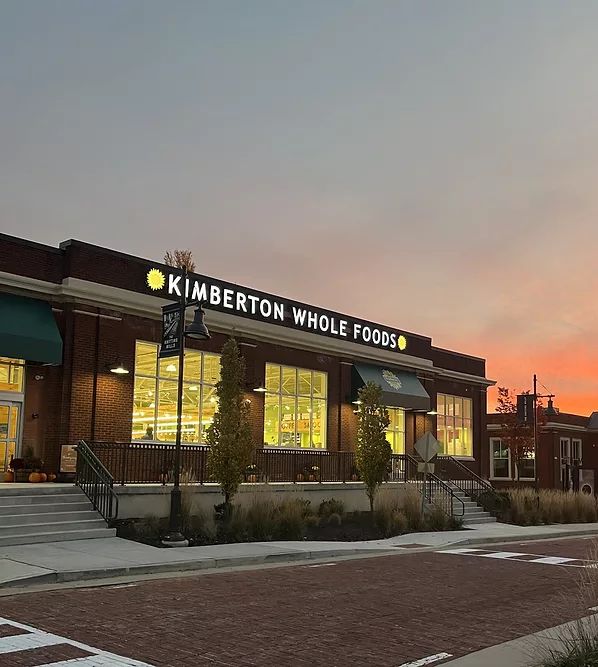
The seeds for Kimberton Whole Foods were planted in 1986. Terry Brett had started a yogurt program at a biodynamic dairy farm (Seven Stars Farm) and his wife Pat opened a farm stand to sell the yogurt. That farm stand grew to become the original Kimberton Whole Foods, which has since flourished and now has a reach that extends far beyond the original farm stand to several locations in Pennsylvania.
One thing that has not changed for our 2025 Retailer of the Year: The mission Terry and Pat started with all those years ago: “Our mission is to serve as a community market with a passionate commitment to integrity, sustainable agriculture, and fair trade,” shares Terry Brett, co-founder and CEO of Kimberton Whole Foods. “For nearly four decades, we’ve remained rooted in our mission to make organic and natural foods more accessible.”
Taking root: From modest Farm Stand to Kimberton Whole Foods
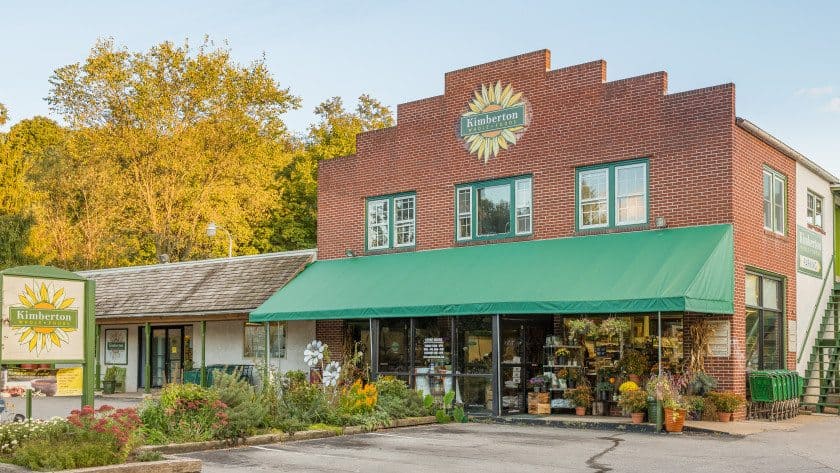 Kimberton, PA, is home to the first location
In 1986, Terry and Pat Brett opened a 400-square-foot store combined with a 1,000-square-foot dairy processing facility on the biodynamic Seven Stars Farm. The purpose of the store was to allow for direct marketing to the local community of farm-produced meats and dairy products (whole milk and yogurt).
Terry explains that the farm was certified Biodynamic by the Demeter Association, so focusing on organic and natural foods was fitting. “At the time there were not many certified organic products on the market,” he says. “The store benefited by the founding of a 10-acre biodynamic CSA in 1987, one of the first in the country.”
In those early days, the store’s team consisted of Pat, Terry, a farm intern, and volunteers. “When we were on the farm, we took advantage of buying in bulk, storing goods in a secondhand trailer, and using a beat-up Datsun pickup truck to ferry product to the farm store,” Terry recalls. “We were scrappy. Our prices were lower than the competition and the word spread.”
The community embraced the store enthusiastically, Terry says, and with that scrappy-yet-solid start, something bigger was taking root. Terry and Pat moved off the farm in 1994 and set up their store in the small Pennsylvania village of Kimberton, PA. They have been growing the operations ever since, including by opening their first warehouse in 2008 to support distribution from regional farmers and artisans.
 A look inside the Douglasville store.
As of 2025, Kimberton Whole Foods has seven store locations, all in Southeastern PA. In addition to the Kimberton location (the early, Seven Stars Farm “Farm Store” opened in October 1986, with the first Kimberton Whole Foods store opening in August 1994), the family of stores includes Downingtown (opened March 2004); Douglasville (opened March 2007); Ottsville (the original store in Ottsville opened September 2008, and the “new” larger Ottsville store opened March/April 2019 several miles away); Malvern (opened December 2014); Collegeville (opened March 2018); and Wyomissing (opened October 2022).
Navigating challenges
Naturally, growth like that comes with challenges, and the team at Kimberton Whole Foods met them head on. “In the early days on the farm, our biggest challenge was working together combining three distinct operations: the dairy farm, the yogurt processing, and the store,” Terry reflects. “We formed a workers’ co-op, which worked for seven years, and then we moved the store due to lack of space. Due to agricultural zoning, we could not build a larger store on the farm.”
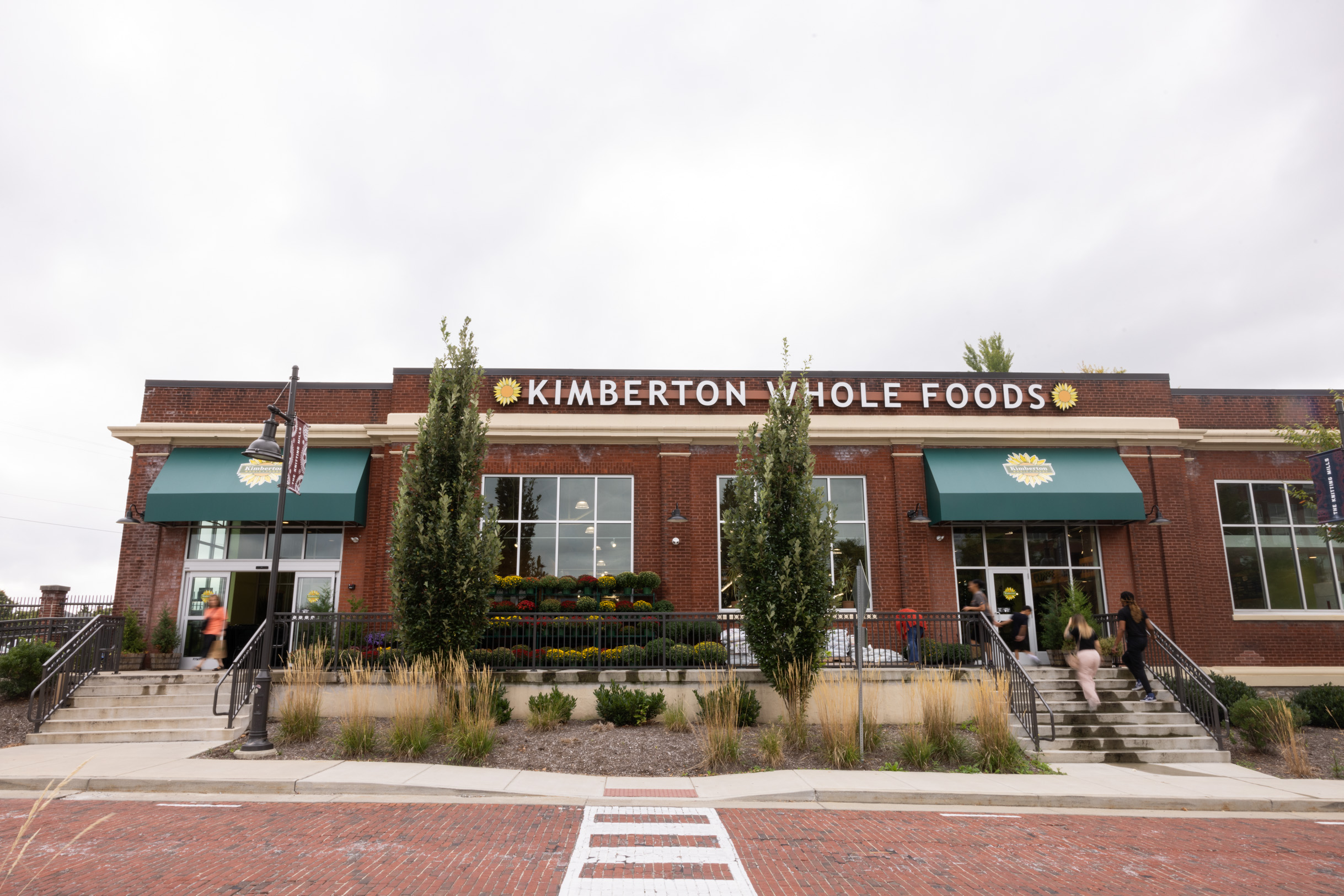 The Wyomissing store opened in 2022.
As more stores were opened, Terry says, “To minimize shrink, we started splitting cases daily at our main Kimberton location and transferring inventory to stores #2 and #3. As our business expanded to store #4, this workaround proved unsustainable, prompting us to open our first warehouse to centralize receiving and splitting orders.”
Terry notes that this warehouse and self-distribution system, servicing seven stores three to four times a week, sets Kimberton Whole Foods apart operationally. “The facility houses a commissary kitchen for producing grab-and-go food items and a centralized bulk packing operation fulfilling weekly orders,” he shares. “Most importantly, it serves as a single drop-off point for local farmers and artisans. With a perpetual inventory platform, off-site category managers can streamline ordering and distribution—saving producers time and money while keeping local products affordable for our customers.”
Another winning difference at Kimberton is a trait they share with many successful independent natural products retailers: dedication to service. “Each day we show our community (customers, coworkers, vendors) that we are willing to go above and beyond expectations,” Terry says. “We strive to approach every interaction with warmth, knowledge, and authenticity, believing that small gestures build into something far greater. In a time when genuine service is often overlooked, we make it our priority. It’s the human connection that shapes the experience in our stores and leaves a lasting impression on everyone we serve.”
Part of that focus means forgoing some modern “advances” that other retailers have embraced. “Our customers are grateful for the friendly customer service and for the community which has grown over time at each of our locations,” says Terry. We prefer to bypass self-checkouts and to place a high priority of service at the check-out lanes.”
In fostering connections, Kimberton Whole Foods focuses on local. “We sell the products of over 200 local producers within a 100-mile radius of our warehouse in Downingtown, PA,” Terry says. “In 2024, our sales of locally sourced products exceeded $12,500,000. We believe the true value of being a community market is in making contributions to the lives of our neighbors and the larger local economy.”
The approach has helped Kimberton Whole Foods—and its loyal shoppers—weather some serious storms. “Our commitment to sourcing local products served us especially well during the early days of the pandemic and continues today,” Terry acknowledges. “When conventional grocers faced major stockouts in key items like meats and poultry, we remained reliably in-stock thanks to our direct relationships with trusted farmers. Most recently, our customers were able to experience firsthand the value of a local agricultural economy. When the recent egg shortage occurred our direct relationships with six local farms kept our stores in stock.”
Doing good as a matter of business
Just as the yogurt program and farm store were started back in the 1980s by Terry and Pat to help utilize all the milk produced by the farm’s herd, the much-larger Kimberton Whole Foods team of today also aims to minimize waste and put all food to good use. Terry explains, “All excess perishable and non-perishable foods are donated to local food banks, rescue organizations, churches, and community groups to help minimize waste. We also collect produce for compost for local farmers.”
That eco-conscious, community-centered approach to business appeals to staff. Ezra Brett, COO, who has worked with the company for 13 years, leading and working with teams across the organization in Operations, HR, IT, Marketing and Facilities, as well as serving as Project Lead on new stores and store expansions, was drawn to the family business for its community-oriented approach to business. “I am passionate about our mission for authenticity,” Ezra says. “I love that our focus is not on maximizing digital interface and aggressive marketing campaigns. We want our work to hold purpose and our relationships with team members and customers to be meaningful. The goal is to serve the community with sustainable food and an environment that promotes human connection, not just to sell goods for the sake of sales.”
The shoppers at the seven stores share in this mission to do better for people and planet. “This past spring, we rolled out a reusable bag program at the register, which was embraced by customers!” Terry says. “The pivot from paper bags to having customers bring their own decreased our contributions to the waste stream significantly.”
A shining example of what makes the Kimberton Whole Foods community so special is the Round Up at the Register initiative. Each store highlights a different non-profit partner every month and customers round up their change to the nearest dollar to make a contribution. “Kimberton Whole Foods matches every penny donated, doubling the impact,” Terry explains. “The organizations selected are hyper-local to each store and range from shelters and food pantries to fire companies and libraries. Since its launch in January 2020, the program has contributed over $2,000,000 to local organizations—an extraordinary show of community generosity.”
Working toward shared success
For so many in the retail space, staffing has been a struggle in recent years. For Kimberton, the growth means staffing demands are high. “Especially over the last 10 years, when we have opened three new stores and moved one store from a 3,000-square-foot space to a 16,000-square-foot space, we have developed strong teams in all major G&A departments: Accounting, Marketing, HR, Operations, IT and Category Management (buyers),” Terry says. “And most importantly, all the teams work well together. We strive to bring servant Leadership throughout the organization.”
The hope, he adds, is that work will be fulfilling and focused with enough fun and humor to create comradery. Of course, pay is key. “Providing our team with competitive pay and robust benefits is central to creating the welcoming, community-driven environment our customers enjoy,” Terry notes. “Our profit-sharing program includes every employee, reinforcing the idea that we’re all working toward shared success. By covering a significant portion of medical insurance premiums, we’ve fostered a great deal of loyalty from our staff.”
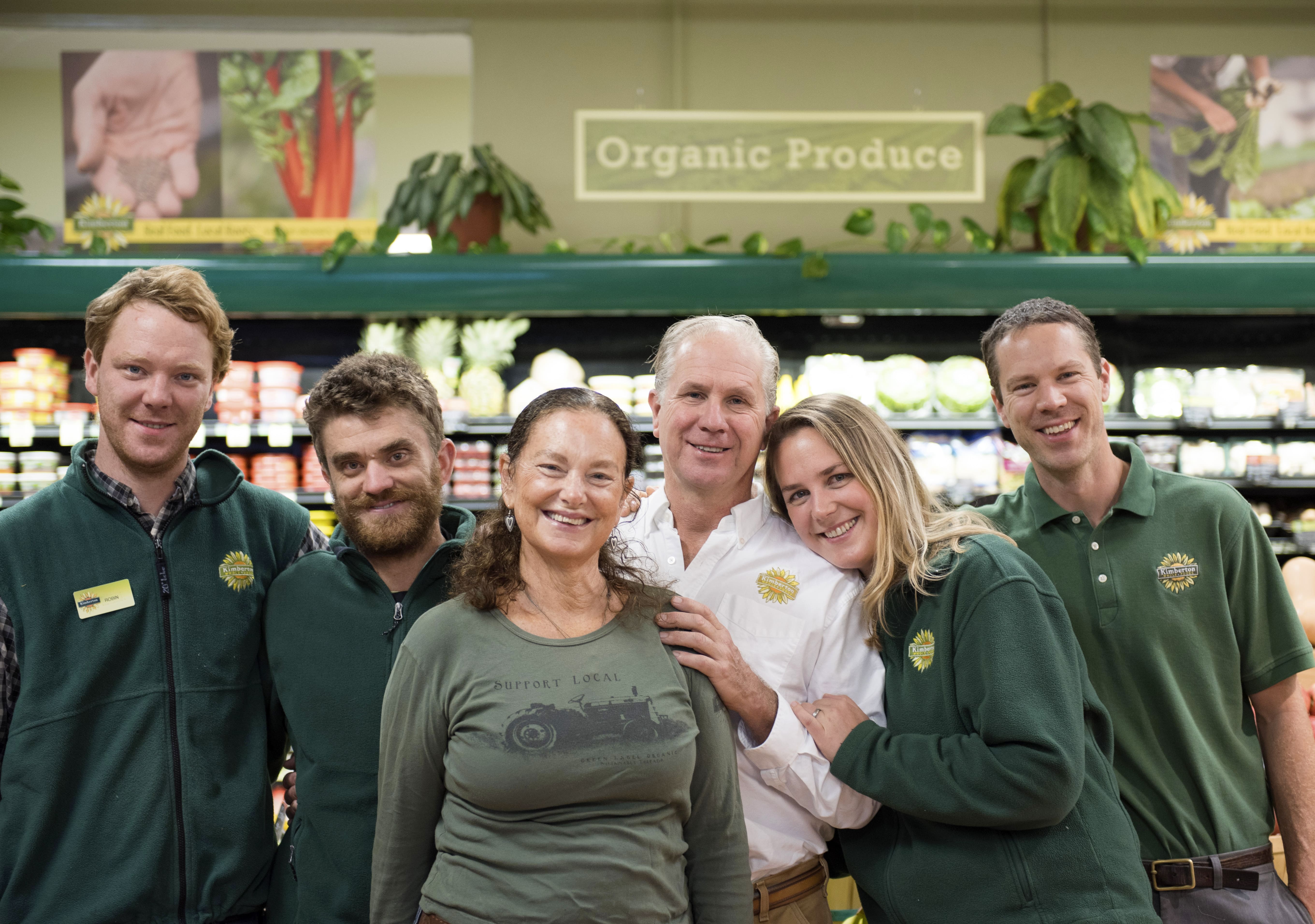 The Brett Family
Showcasing that loyalty, Hannah Koch, Supplement Category Manager, has been with the store for 17 years, handling a range of duties including curating engaging and interesting supplement sets that meet customers at every step of their health journey. “I started working at Kimberton Whole Foods part-time evenings and weekends when I was a middle school art teacher,” Hannah shares. “At the time I had read two books about herbs and thought I knew so much. I quickly learned that the world of natural foods and herbal healing was bigger than I could have imagined, and I dove right in. I quit my teaching job and have worked in many different departments over the years. When you work at KWF, you work with wonderful people who align around our mission. The Brett Family has created an almost irreplicable environment where I can do my best work.”
Ezra offers insights on the ripple effect that all of this has on the greater Kimberton Whole Foods community: “We often hear from customers that the Kimberton experience is different and that our team members truly care. I know that care is authentic, and it extends beyond our team members to how customers treat each other. I love being in the aisles when customers help each other with product knowledge and ideas or being at the front-end and seeing families catching up about their lives and enjoying their check-out experience instead of it being a chore. I remember when we opened the doors to our newest store in 2022, in Wyomissing, the first indication of a successful store was customers recognizing each other and socializing in the vestibule before making it into the store itself.”
To that, Hannah adds, “I love the sense of community that Kimberton creates. I’ve been lucky to be anchored at our original location and it’s not unusual to walk in the door and see customers huddled together in the produce section catching up on life.”
Shoppers express their gratitude for the staff, too. “The most fulfilling customer feedback comes from my days working on the floor in our Apothecary,” Hannah says. “I’ll never forget the times that customers have come back with flowers, a hug, or a thank you for a product recommendation that changed their lives. It’s the best feeling to know that the things that light me up make a real difference in the lives of others. It’s why I’m here, and it’s so important to remember that when I’m in my day-to-day of pricing and promotions.”
Focus on the farmer
On the community front, Kimberton Whole Foods also supports organizations like the Rodale Institute, Pasa Sustainable Agriculture, and the Cornucopia Institute—all of which work to advance responsible farming as a path toward a more sustainable future.
Another initiative: “We’re proud to be the premier sponsor and financial supporter of Good Food Fest, an annual food festival and celebration of local and regional farmers and producers,” Terry says. “This event welcomes over 4,000 attendees from all over the region and provides an interactive and meaningful experience interacting with the people that grow and make their food.”
 The amazing selection at the Malvern store.
With the expansions and community- and farmer-focused initiatives, Terry shares, “We’re committed to growing a marketplace that actively supports farmers using regenerative practices. When we invest in healthy soil, thriving farmland, and the people who care for it, we’re helping to create a stronger, more sustainable food system and future for everyone.”
A look back...and a look ahead
“When we started in 1986, natural products were primarily sold through independent family retailers and/or buying clubs,” Terry recalls. “There were many small distributors, and almost all brands were owned and operated by the founders. Through consolidation of distribution and vendors, natural and organic foods went mainstream. We have adapted by opening additional stores, increasing our buying power, and by continuing to work on smaller margins in order to bring additional savings to our customers and striving to be competitive in the retail grocery arena.”
The team at Kimberton Whole Foods is proud of its long-standing commitment to supporting local farms and prioritizing organic, fair food, Terry adds. “Our mission has always been rooted in nourishing both people and community, and we’re honored to serve as a connecting point for both. You’ll find selections of organic produce, raw dairy, humanely raised meats, specialty and gourmet items, fresh baked goods and wellness products from a variety of local and regional makers. We’ve developed relationships with many of these producers over the past 30 years. For several of our local vendors, we are their primary retailer.”
The hard work is paying off, as we will soon see the Kimberton Whole Foods team grow even more: “We plan to open a second warehouse in October 2025 and in spring of 2026 our eighth store,” Terry shares, adding that opening new markets for vendor partners and providing opportunities for current team members to grow in experience and responsibility is exciting.
To other independent natural retailers hoping to thrive in today’s environment, Terry offers this advice: “Keep an eye on being competitive. Open new stores if given the opportunity. If you are profitable, share the wealth with your team and the community of which you are a part.” WF