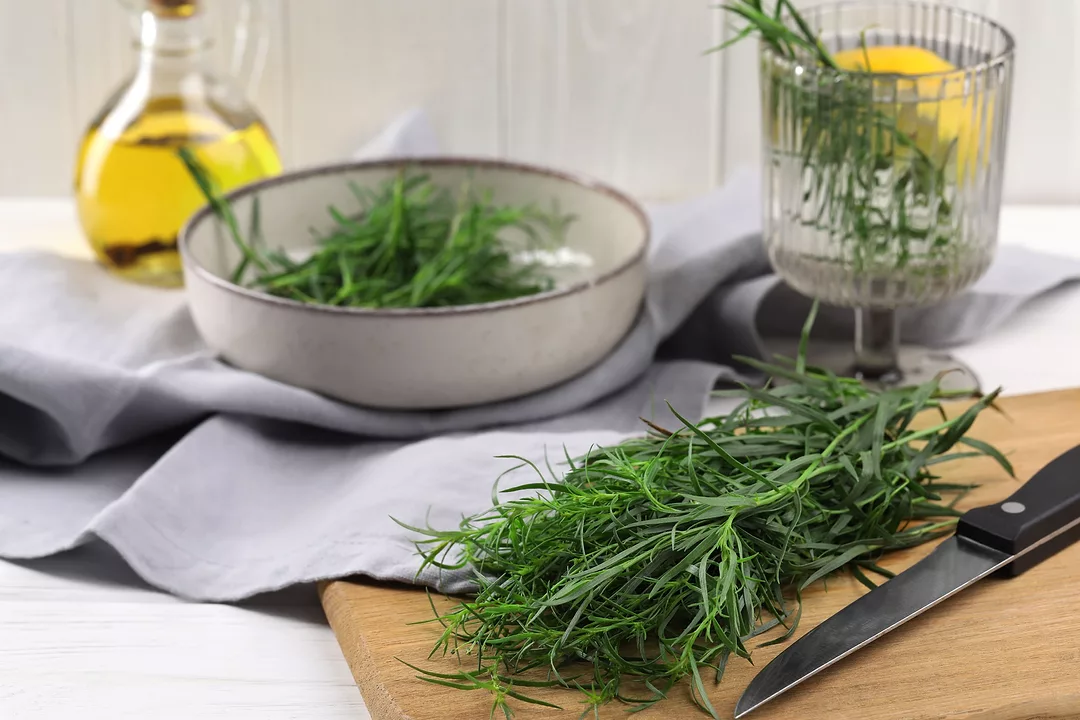
It is always exciting when we first learn that another culinary herb, or an herb commonly known for its essential oil benefits, has additional health benefits as well. A perennial herb, tarragon is part of the sunflower family, and you see it often in Mediterranean cooking, with its well-known licorice, or anise flavor.
Although many herbs are written about in scrolls and in books dating back an incredible number of years, tarragon has only been cultivated for around 600 years. This may sound like a lot, but when you compare it to ginger, cultivated for over 5,000 years, it pales in comparison.
The writers at Our Herb Garden share that it is thought to have been brought to Italy around the 10th century by invaders who used it as a sleep aid, breath freshener, and seasoning, and then St. Catherine, on a visit to Pope Clement VI, brought tarragon to France in the 14th century.
There is an incredible amount of research suggesting tarragon may have wide-ranging health benefits, although most of the available studies are on animals rather than humans. This has not slowed its popularity, and as a supplement, tarragon is available in capsules, powder, essential oil, and as a tincture.
In Frontiers in Pharmacology, researchers report: “Artemisia dracunculus (Tarragon) has been studied regarding its chemistry, biological activity, of extracts from the herb, leaves, and essential oil. Phytochemical tests have confirmed flavonoid compounds, phenolic acids, coumarins, and alkamides in the herbs and leaves, as well as a high variability of the chemical composition in the essential oil. These findings have proven new findings in their activity-antibacterial, antifungal and antiprotozoal effects, as well as antioxidant, immunomodulatory, and antineoplastic properties.” Anti-inflammatory and analgesic effects are also confirmed.
Cosmetic uses for tarragon have gained popularity as well. You can find it in hair care products, moisturizers, deodorant, and aromatherapy.
The compound coumarins found in tarragon can enhance blood thinning, so tarragon should be avoided by those on blood thinners. Of course, as always with herbal supplements, those who are pregnant or breastfeeding should use caution. Some people may be sensitive to tarragon, and if over-consumed it may cause stomach cramps, nausea, and diarrhea. As always, one should consult a healthcare practitioner for personal advice and recommendations.