
RIBUS, Inc.®, which stands for Rice Ingredient Business United States, was founded in 1992 by food scientist Neal Hammond, Jim Peirce and Steve Peirce. The concept was to provide an alternative to synthetic ingredients in the industry, long before “clean label” was a phrase, trend, or way of life. As The Original Clean Label Ingredient Company™, RIBUS has grown from baking into snacks, beverages, functional foods, nutraceuticals and dietary supplements for both humans and pets. Today the third generation, Alicia Peirce Kasch, Vice President of RIBUS, is working alongside her father, Steve, as RIBUS continues expanding into new markets and industries around the world. 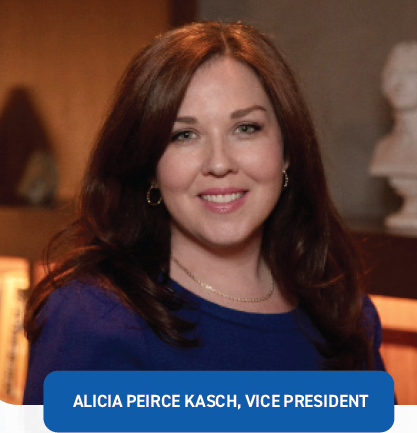
RIBUS’ mission is to provide high-quality specialty ingredients for food, beverage and dietary supplement manufacturers globally. Pioneering by nature, RIBUS strives to serve customers with innovative solutions and continuous improvement.
Active in 20+ countries, RIBUS offers plant-based ingredients and excipients to companies that need the functionality of traditional processing aids, with a label declaration that consumers want. While “clean label” has not been defined, RIBUS defines it as:
Being a family-run company allows Steve and Alicia to instill their shared values in RIBUS and within the team. At their core, RIBUS tries to live by these principles in everything they do:
RIBUS was one of the first clean label ingredient companies, and feels fortunate to have had the opportunity to learn with the industry as “clean label” continues to evolve. “When RIBUS first started in 1992, people were still in the ‘Better Living Through Chemistry’ mindset of a popular advertising campaign that ran for almost 50 years,” says Kasch. “This campaign looked to make the public more comfortable with big business and would praise chemicals and plastics, along with other topics over the years. But at the same time, consumers were exploring huge food trends like low-fat, low carb and low-sugar options, which forced the industry to find ways to produce the same tasting/functioning foods without fat and sugar.”
RIBUS was able to assist bakeries with alternatives to mono- and di-glycerides, DATEM and other synthetic ingredients with its Nu-BAKE®, and later expanded into other food applications like extrusion with a line extension of Nu-RICE®. Kasch notes, “We were able to show cost savings to producers while offering them a label declaration that more consumers were looking for.”
This history sets the stage for how RIBUS has evolved with the food industry over the past 32 years. “Because of this, we confidently say ‘Clean Label’ is not a division of RIBUS, it is RIBUS,” Kasch adds. “Everything in our portfolio is plant-based, mostly based on rice, but we blend with other plants as needed for their functionality. Our portfolio is small, but it’s intentional; every product has a purpose and solves a problem. ‘Clean label’ might be a marketing initiative to some, but to RIBUS, it’s an added bonus on top of the production issue our ingredient is solving.”
Internally, RIBUS considers itself a boutique food ingredient company. While small, that gives them the opportunity to be agile, innovative, and move with the market. “We have developed multiple products based on customer feedback that an ingredient wasn’t doing what they’d hoped, so we took that and improved on it to give customers what they were looking for,” Kasch says. “We have a highly talented, smart, resourceful team who strive to give a level of personalized service to our customers that you would expect from shopping at a clothing boutique versus a mass retailer.”
“Steve and I are both very curious, so you’ll probably hear us ask ‘Why’ very early into any conversation. I believe having that inquisitive nature allows us to look at things differently and try to identify gaps in the market that we can fill. You’ll probably also hear us say ‘I don’t know, but let’s try...’. Again, we are always learning more about our ingredients by working with customers on their applications, and while we might know on paper how our ingredients should act, every system is unique. We try to always give suggestions on how our ingredients should be used, but ultimately, it’s up to the customer as to how, where and when to use our ingredients, based on how it works best in their application.”
Finally, the quality of RIBUS’ ingredients sets them apart. The products are all protected, either by patents or trade secret formulas, so while there may be alternative ingredients out there, they are not identical to RIBUS ingredients. “When you buy a RIBUS ingredient, you know that the rice is all grown in California, which means low heavy metal content,” Kasch explains. “While this is not something that you can affect, we do monitor it to make sure it’s compliant with local and international regulations. RIBUS, our contract manufacturers and suppliers, follow the globally recognized standards and hold certificates for GFSI, organic, Kosher, Halal, Non-GMO, and Gluten Free, so you know that the quality is sound and adds value to your finished product, not a risk.”
RIBUS is focused on sustainability by upcycling the traditional co-products of rice, the bran and hull, which allows the entire crop to be utilized. Patented production processes allow these commonly discarded plant parts to be used in a variety of food and supplement applications as anti-caking agents, emulsifiers, dough conditioners, flavor carriers, and binders, giving customers the production functionality they need, with a label declaration they want.
Kasch joined the family business in 2017, after spending nearly a decade in the advertising industry. Joining RIBUS as the Global Account Manager, she directly managed external teams of brokers and distributors and was promoted to Vice President in 2022. Kasch now manages RIBUS’ Sales, Marketing, Quality and Regulatory teams, while overseeing daily operations of the company. Peirce has had the opportunity to turn his focus onto strategic partnerships, new technology and future opportunities for RIBUS.
RIBUS recently opened its first production location in Sparks, Nevada, to produce Nu-FLOW and Nu-FLAC. “We are grateful to have had amazing partnerships with contract manufacturers to produce our rice hulls for so many years, but the time has come for us to produce ourselves,” Kasch says. “Demand for these ingredients keeps increasing, and by doing it ourselves, we have 6x more capacity, efficiency by doing everything under one roof, and flexibility on packaging. We strive to be a dependable, reliable, resource and supplier to the industry and by bringing production in-house, we have more control over our fastest-growing products.”
“Many breakthroughs over the last 32 years we have gotten us to where we are today,” Kasch says. “The first was Nu-BAKE being included in every chocolate cake Safeway baked. Then in 2001, Snickers Cruncher candy bar launched and it was so cool hearing my dad say ‘Our Nu-RICE is in that!’ In 2013, the NOP determined that organic rice hulls (Nu-FLOW) must be used as a substitute for silicon dioxide in organic products, which really put us on the map. Most recently we’ve had three seasonal drinks at Starbucks that included Nu-FLOW. It’s still just as exciting getting to see a project go from sample request to a nationally launched finished product, and something I don’t think will ever get old.”