Our cross-country survey of independent natural retailers reveals widespread resilience, several strong successes, optimism as the next generation takes over with new energy and ideas, and in those few cases where business isn’t growing as rapidly, retailers are holding steady. Here's what they told us.
Influencers Drive Business Into Our Store
“We have no direct interaction with the influencers. We did see one post from a girl who said in her post that our price for the Coconut Cult was less than the local supermarket. I have no idea who she is. She was independently talking about us and was not someone we knew. The influencers are talking about things that are sometimes on target, and at other times are not at all what I’d be saying. So, I don’t want to be in the middle. Their followers are also very dedicated, and don’t want to be disillusioned. In business 50 years, I’ve seen a lot, and this is a new one.
“As usual, we’re having staffing issues. We have a solid management core, but other people are hard to staff. Our employee base has always been students in this university town, but we have to work around their schedules. Then they leave for the summer after telling us they’d be around. We can’t be too hard on them, because it is an entry level job. They all love working here. The culture we have is very positive and supportive. We do go out of our way to accommodate their scheduling needs. They get a lot of positive feedback from customers who tell them how much they love the store and ‘Thank you for your help.’ Our service motto is deeply engaging. We never point and say, ‘It’s over on aisle 12.’ We always walk the customer to the product they are looking for. We do research for them, provide third party literature. We have more staff than perhaps than we might need at times, but we want enough staff available to help people who need that type of attention.
“Our flow of traffic is seasonal, football in the fall messes it up. Q1 is always strong because there is no football on weekends, and everyone’s fitness New Year’s resolutions. Now, the weather is getting nice on the weekends, and people are going out of town, so traffic slows down on the weekends, but we might make up for it on a Monday. Not a dramatic slowdown, but a changing pattern of shopping days.
“The deli has always been my nemesis, and our best attribute. I recently had a customer tell me, ‘I’ve been eating here for 20 years at least, and I’ve never had a bad meal, and I tell people.’ We get a lot of feedback about food service, and people are more likely to talk about that than what great product we have.
“We have one long-term employee going through a health crisis. We are trying to be supportive while he goes through it, but it is serious. He knows he has paid time off when he needs it. He had banked a lot of vacation time. Fortunately, he is on our health insurance plan. And just emotional support, not inappropriate, but commiserating, just human kindness really. He doesn’t have the stress of worrying about his job.
“Supply and vendors, there are some product shortages, and some holes on the shelves. It comes and goes. So, we are out of popular things until they get resolved.
“We get a lot of community support because we’ve been so long term in the community. When media want to interview me about anything that’s trending, I don’t usually want to interview, because I may offend half our customers. We say we have to be neutral. We’re not here to talk about what we believe, but to be a neutral place that provides a service and quality products to the community.
“Two customer service incidents come to mind. We had a man come in who wanted to buy a pound of an herb. We didn’t have a pound, so he made a special order for it. At some point he called to say he’d already paid for it; ‘.32 pounds at $32 per pound on the receipt. You mean I’m going to have to pay for it again when I come in for it?’ I ended up telling him, ‘Since there is confusion about what you paid for your order, you won’t have to pay for it when you come in to pick it up.’ Employees were shocked.
“The other situation, an older couple was returning two cases or more of liquid lecithin because they found out it didn’t say non-GMO. But it was out of date, and they had bought a ton of it. I told my employee to return it all even though the circumstances did not fit our return policy. It doesn’t matter. It turns out that after we made the return and refunded his money, the customer told us he had just come from the hospital where he had been treated for cancer, which is why they were concerned about GMOs.
“I was probably not meant to be a businessperson.”
Profit Sharing Fosters Loyalty
Northeast Retailer I: “2024 was a successful year for us with over 20% growth in comps [comparable store sales]. We expected to drop off this year; however, our first quarter’s numbers were up to 21.5%. Unit sales are up at slightly less of a percentage, averaging 18%. The average sale price is up about 3% over last year.
“Our sales strategy is to strive to be competitive in center-store with our primary competitors in the conventional market, while offering a high quality, primarily organic produce program and a well-curated fresh proteins offering. These two departments are averaging 25% to 30% year-over-year comps. So, fresh food is leading the way. Rounding out this mix are other fresh categories such as gourmet, bakery and prepared foods. Our supplements and body care sales are strong. And we have a strong focus on providing excellent customer service.
“My advice to friends in the industry is to try to drive sales through working with variable (and lower) margins. We have found that higher sales volume actually lowers our labor costs as a percentage of gross sales, as well as G&A [general and administrative] expenses and occupancy costs.
“Supporting our co-workers with excellent benefits and higher pay goes a long way in creating a warm and inviting place to shop. We have a profit-sharing plan that includes all team members. The profit sharing, as well as paying a high percentage of medical premiums, has fostered a great deal of loyalty.
“As far as hiring goes, we receive several hundred applications every month, which takes a considerable amount of time to process by our two full-time recruiters. Unfortunately, it is not unusual to have new hires go through the entire process, receive and accept an offer letter, and then not show up on the first day. These are by and large younger people. Our retention rate is higher amongst new team members who have a longer work history and who have a deeper appreciation for our benefit packages.
“I do understand why many younger people are not thinking about careers. With the uncertainty created by climate change and political and economic instability, planning for a long-term future and saving for retirement through 401-K contributions is less likely to be a motivating force.
“You asked me what keeps me up at night? The same concerns mentioned above and most of all trying to pay a living wage.”
INFRA Helps
Northeast Retailer II: “I had one of my best years last year. I attribute it to the prices of things are higher, so the retail gross is higher. Even though our growth was in low single digits, I consider that a win because our costs have gone up for repairs, and hourly wage increases. Insurance skyrocketed, even though we’ve not had any claims. Companies are leaving the state because of the current politics. So, I try to lower my costs by buying shrewdly. INFRA helps me out.
 “People tell me my prices are competitive, and my selection is as good as Wegmans. They are 10 minutes from me. My dad opened this store in the mid-70s. I bought the store in ‘99, and Wegmans came in hard with their store-within-a-store. We have top-notch customer service levels. Every one of my employees cares about our customers, and customers care about the employees. Part of our growth comes from us being present for our community. There is no employee training program. They learn by osmosis. I’ve had people who started with zero interest in health foods or supplements, and they’re 20 years in with me now. I don’t have a need for employees right now. We needed a deli cook last year, but not other than that. I now have a good cook who is 20 years old, who is good with seasonings, which are unusual skills for someone as young.
“There were a lot of out-of-stocks this year, like Similasan eye drops. We needed other options. You have to be nimble to find product to get on your shelves. So, our in-stock rate has increased. If you continue to order the same items that have been out-of-stock, you have to look elsewhere and not be satisfied with the chronic O/S. One strength is the autonomy I give the employees to source some of these alternatives. Let’s say I’ve been fortunate that we’ve not had to implement more restrictive policies, because people are playing on the team.
“Our growth is also driven by a lot of new faces. We have a lot of older, long-standing customers who are aging out, so we’ve been fortunate to gain new customers. When we know a customer is new, we make it very apparent that we appreciate them coming in.
“I work old-school. I look at every invoice. I’m training my son, and he is becoming sharp. For example, we are selling Zevia, a no-calorie natural soda sweetened with stevia, at less than the competition. Your bottom-line margin, you always have to look at it. You can’t have POS-prescribed purchase orders. These distributors stay in business despite themselves. To get them to keep your margins, you have to keep them in check. But I do it because I may want to pass this business onto my son, and I need to make something good happen for the next few years.”
It’s About Building Trust
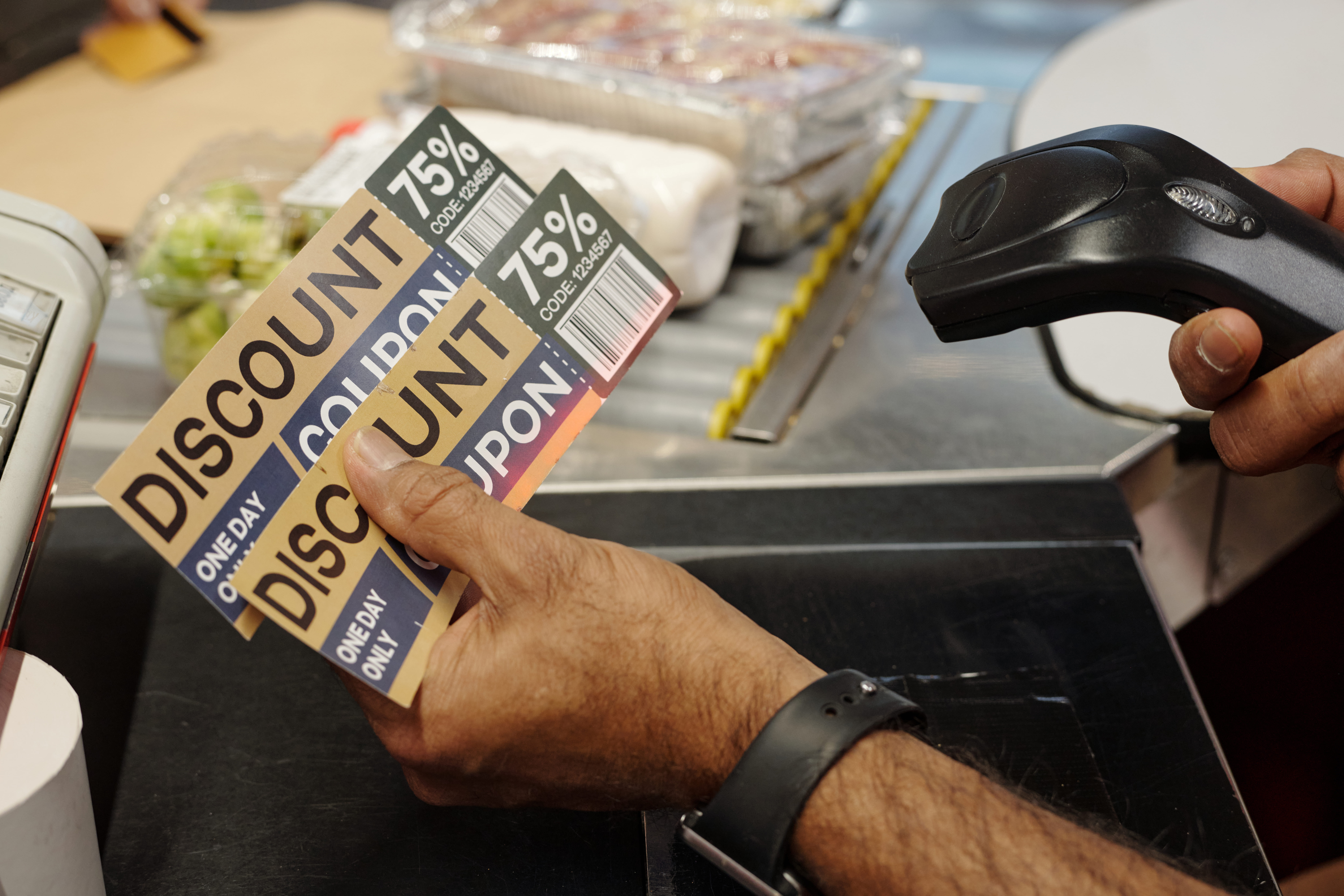
Mid-Atlantic Retailer I: “I’m Mr. Cynical. I miss the old granola days. We’re still having discussions when we get together and talk, which is not a lot, about how do we get more people in the store, how do we grab them? Foot traffic is down over the years. People are buying more online. No one here has figured it out. We still use the Monthly [coupon] Clipper. We cut out newspaper ads. We try to do Instagram, and have the employees talking about products, and customers talking about their experience. We are big on sales. It is half our business.
 “With Walmart, EBay, and others, there is not as much business on our e-commerce website as there used to be. Brands that we put online can pull the deals without notice, so we’re stuck with a lot of product. We are concentrating more on our private label. Buying bigger, getting bigger discounts, six to eight months’ reserve product, but we get 30% off when we forward buy, so we can compete. We are trying to tell employees to push shoppers to our private label, so they’ll have to come back.
“The hump is training our employees to understand that the quality of our private label is the same as Solgar. Without that education, customers think it is too generic, that it doesn’t have a name-brand behind it. So, we are doing more company trainings for employees to go over why our quality is the same or better. It’s all trying to get people in. We are doing a lot more lectures now, and 40 to 50 people attend on average. We have a nutritionist who used to have a store, he has a Ph.D. in nutrition. We set up a table with the product he recommends. The lectures used to be put on by companies, but now we have our own talent in-house. To advertise, we use sign-up sheets that we tell employees to give out starting 45 days ahead. They put one in every bag, and call to confirm the day before. It’s always free. We also do a lot of raffles here, using gifts from the companies that we hit up for gift baskets.
“This month is our anniversary, so we have a lot of free product. It’s amazing how many samples companies will send you. But you have to ask. Some retailers may not know they have to ask. We put out a fish bowl for customers to put their names in, and they are appreciative when they win. We have a doctor of homeopathy, full time. Me. A guy who worked for Life Extension just came on here after losing his job a few weeks ago. Customers tell us, ‘You guys know what you’re talking about.’ And they continue to buy from us even though they can get it cheaper elsewhere.
“It is about building trust. For sales, we are holding our own. We’re not growing in double digits anymore. This year, we are down online, mostly due to Amazon, about 4%-5% year over year. But we had a big 2023 into 2024. Customer counts are down, too. That’s the big thing. There’s no [brick and mortar] competition around, no health food stores within a 15-mile radius. They are building another Whole Foods Market five miles away, and there’s already another one five miles in the other direction.”
Minimum Wage Increases Are a Challenge
Mid-Atlantic Retailer II: “It is a little challenging I would say, for the independents. There’s a lot of consolidation of brands getting bought out by big corporations. Our business outlook, we look pretty good, even with prices going up for things like chocolate and coffee. We’re keeping our inventory levels about the same, not lowering inventory on-hand. We are trying to stay strong. We’re about the same year-over-year. We had a good March, which helped offset a slower January and February. So, we are at least equal with last year. Customer counts seem good to me from what I see with people flowing through the store.
“Last year was down a bit from 2023. But we had a couple of other factors in our area. For example, a regional premium grocery chain opened up near to us. It didn’t seem to bother us too much, though. Keeping employees seems pretty good for us. But it is really a challenge with the minimum wage increases. Especially for people who have worked with us a long time. How do you justify a new person making the same per hour as a long-time employee? We are fortunate that our next generation kids have returned to the store after completing college business and administration degrees with an eye to continuing our growth.
“For foodservice, we just have a deli now. During Covid, I started looking at the numbers. What we paid the deli employee just covered what we made, but not our food costs. Now we just slice some meats and make some soups. Our former foodservice guy started a little place of his own and makes sushi and meals-to-go and brings them to us a few times per week. It’s more grab-and-go style. We never had seating, so that was how we always ran it. It was not a big change for customers.
“Profit margins are stable, even with a lot of costs going up. Big expenses that are affecting our profits, other than national chain competition, are the increase in electricity, which in our state is outrageous; minimum wage increases that make it difficult to be a competitive employer; and the maintenance on an aging building and equipment. We are preparing for the price increases, as we did with Covid and will try to stay up to date, which as a small retailer is difficult.
“On the product side, we’re able to buy okay. I switched main distributors, and that seems to be better now. We get a lot of reps from the natural brokers that call on us once a month and write deals. I go into the store on Tuesday, Wednesday, and Thursday, and do the books at home on Mondays. You know how it is with ordering, if you don’t do it yourself, then you don’t know in your head what’s selling and what’s not selling. My wife says I’ve got to hand more responsibility over to my stepson, so that he can learn how to do it. She’s right.”
Awareness Has Never Been Higher
Mountain West Retailer: “2025 has been great for us. I think that the awareness of organic foods and the importance of nutrition in light of all the toxins in food and in the environment has raised awareness. In fact, I think awareness has never been higher, largely due to RFK [Robert F. Kennedy, Secretary, U.S. Health and Human Services], but also the podcasting culture with the popularity of the nutrition topic, and things like biohacking longevity. Podcasting is a whole new venue. For example, Joe Rogan is talking about biohacking, eating well, and how to avoid different toxins all the time.
“There are also different doctors jumping on board new podcasts all the time. And let’s be honest: The people that own the mainstream media own the food companies too. Podcasts give voice to honest uncensored, non-aligned voices. I’m super excited about these podcasts and alternative publishing like Substack. I follow a bunch of people who can report without an editor telling them what they can and can’t write. But that’s part of the traditional role of the natural food store, too, isn’t it? We are supposed to be providing an alternative voice. We are a gateway to the naturopathic healthcare industry.
“Our store is doing super good year-over-year. The Trader Joe’s that opened across the street from us actually boosted our business. Spring weather has slowed business a bit the last couple of weeks. I don’t have a very intimate knowledge anymore of pricing. I talk margins with managers. I feel like sometimes, how inflation and tariffs are affecting the business are really two different things, separate issues. I saw the U.S. Secretary of the Treasury [Scott Bessent] give some actual examples of how a say, 20% tariff, may wind up affecting the end customer by 1% or 2% because markets are dynamic. First, the producer might lower its price. Second, the importer broker may take a cut in commission. Third, the retailer may decide to take a shorter margin or not pass on any of the price increase. It is not a one-to-one relationship. We hope it’s all part of the deal, don’t we? Trust the process.
“With our employees, we are pretty privileged and have extremely low turnover, due to things we’ve done to manage them over the years. Even during Covid we didn’t suffer too much. We had only one job opening when the conventional supermarket nearby had 70 openings. One thing is, we pay better than the rest of the world. We also have a ‘Lending a Hand’ program, where you participate even at $5 per paycheck, you wind up having a pretty decent trust fund for emergencies.
 “We even have a line item on our books called a ‘culture benefit,’ which is a discretionary amount we spend each year on staff. For example, we just had some Mexican food catered for the staff as an acknowledgement of their contribution. We also made some super cool custom Yeti water bottles. Things like these are meaningful, memorable perks. We have also operated ‘open book,’ using the Great Game of Business model for nine years now. And you really do develop that culture of ownership. Employees can bank on profits being shared. The only rule is that the business owner determines the minimum amount of profit the business needs. Above that amount, the profits are shared 50/50. So, our employees have really seen income grow over the years.”
We Are in a Moment With GLP-1
West Coast Retailer: “We’ve had a strong year so far in 2025, solid, and 2024 was a good year also. We did close one store when its lease ended, but we gained those customers who came into our existing stores. I think what NPA [Natural Products Association] is doing to prevent tariffs impacting our business looks positive. Of course, vitamin bottles are still made in China, but that’s a small part of it.
“We’ve been tweaking our employee training, so that it is a bit more updated. We make videos showing what’s hot so that our nutrition consultants and employees are up to date. We make our 150 employees sign off that they’ve viewed the videos. We are also programming the business for growth and are in a good moment with the fourth generation of the founders’ family starting to come into the business and infusing it with their new energy and vision. How many businesses make it to the fourth generation?
“Our employee base is good, many with us for decades, including me. But new hires are transient, though. Shoppers are usually on some kind of quest to follow a trend out there, like ‘stay healthy,’ or heart health, immune protection, long-term Covid symptoms. We are also in a moment with GLP-1 diabetes-type products, like berberine, which can trigger GLP-1 in the body. Homeopathy is still big, and Bach Flower Remedies are making a comeback. They designed a new merchandiser turntable to display and sell the single remedies. I wasn’t sure it would work, but customers are stopping and shopping. It’s really genius merchandising. We have a saying here, we must zig and also zag: stay true to our foundations and then pay attention to the trends.”
Key for 2025: Improve Staff Knowledge Base
New England Retailer I: “I bought this store just after Covid broke. I had been in the professional world before being laid off and was wondering, What am I gonna do? Natural foods was pandemic resistant, and an essential business, and I had shopped at the store for many years, and have always been involved in wellness, nutrition, and sports. Each year since then, sales have been better, and 2024 was a good year, and so far, 2025 is tracking better than ‘24.
“I figure unless you are learning every day, you are officially dead. Our key for 2025 is to improve our staff knowledge base. We want to be lean, inventive, and not just mindlessly reordering and scanning bar codes. I want my staff to be looking at TikTok for what’s hot. If we are getting three phone calls a week about a certain product, well, that’s a trend we should think about jumping on.
“We are busier this year, and customers are saying they are happy to have us here, that they appreciate having a small, local store to shop. We look for clean, unique, high-quality items that are not carried at the local markets, price is not a deciding factor. We use social media to introduce those items, and we’ve had people coming from hours away just to get those items. One example is Coconut Cult, an 8-ounce fermented yogurt for $12. You are only supposed to take one to two teaspoons per day and savor it. I personally was never on Facebook or Instagram, but some of our younger folks will post about certain products. Also, some customers sing our praises on social media, although we don’t ask them to.
“Overall, vendors have kept supply consistent the last two years, and when increases in products come through, especially groceries, people understand. We installed a new POS system to implement a loyalty program. We give a $25 credit after you’ve spent $500, which we track with a point per dollar. So, even though Amazon at times may be less expensive, you can use your credit to offset that. We also pass on vendor sales and offer case discounts. And we created days-of-the-week promotions. Mondays are for small businesses. Tuesdays are for our wiser, seasoned customers. Wednesday is for military, and Thursday is for health care professionals, which we define loosely to include occupational therapists, mental health workers, chiropractors, and other holistic practitioners. Friday is for educators and students.
“Over the winter, we lost our six-door freezer. Amazingly, there was no impact on sales. Only a couple comments from customers. But our electricity bill has dropped 90%, and we even get a credit amount in some months. That’s a big savings. As for margins, you can live and die by them, but we’d rather sell 100 items at 40% than two at 200%. Our employees are awesome. People want to work here. We have retirees and full-time educators that enjoy the store. They are not in it to get rich, but to be involved in wellness and learning.
 “We’re also into sustainability; glass jars, regenerative products, and high quality are big trends. We have a dollar store right next to us, and we love to show people how to compare, say, magnesium quality between the two stores. We ask customers to educate themselves. We don’t ‘cure.’ And people are coming in really educated, many follow Dr. [Eric] Berg’s podcast, and are bringing in product labels to compare with ours.”
New Faces, Families, and Young People
New England Retailer II: “Our fiscal 2024, which closed March 31, ended up very well. Both our fiscal and calendar years were good. I’m paying more attention to the calendar year this year due to significant tax, economic, and political changes this year. I’ve heard differing things. We didn’t start off our fiscal year strong last year strong, which was up only 3%. But this calendar year, from January to now, is up 10%. March and April are almost 15% above last year at our stores. We are almost two months ahead of budget schedule for sales now.
“I’m not sure what I attribute it to. My husband attributes it to RFK [Robert F. Kennedy, Secretary, U.S. Health and Human Services] 100%. I think it is the change in people’s shopping. Less snacks. Meat and dairy are through the roof. And it is not just pricing. Inflation is not as significant this year vs. last. One of our stores, which is located in a tourist area, has always sold more crackers and cheese and snacks, but now our perimeter in that store has fresh produce up well over 20%. Daily customer count is up significantly too.
“What is interesting about that is we have a lot of long-time customers who have moved away because of expensive housing or whatever. We’re seeing 45 more customers per day, on our total count of 600 to 700 customers per day. And basket size is up at least $2 to $3 dollars. So, it is the customer count that is up for us, since the basket could be inflation. We don’t have to work as hard to entice people to come into the store. For years we ran vitamin supplement line drives and gave double loyalty-points days. But we have backed off a bit, and don’t do them every month, which is one way to not have to raise prices. But the sales are still there. We still have higher sales at the end of the month without having to work quite as hard.
“We still use a lot of in-store promotions, but it feels like people are making the choice to come in on their own. People are talking about concerns like microplastics. Or pasteurized eggs. Many new people don’t know what they are talking about. ‘Do you mean pasture-raised, fertilized?’ The customer had to call his wife. People are hearing something. I don’t know what to attribute it to. Especially here at our store in a town that is a tourist destination again. We felt the pain last year with people moving away. I can tell how much new-customer activity there is by how many sign up for our rewards card. Sales are definitely strong. I’ll see how it goes through the summer, when we get a lot of international customers. The signs are there already. We’re already seeing a lot of summer stock-up orders start, so the signs are good.
“Customers are coming in knowing a bit more about what they want. They are a bit more self-reliant than in the past few years. They recognize natural brands, even our private label, and come in with lists. The dynamic is different than our other store. My husband would say we are seeing a lot of new, younger faces, families, and young people. But I think also, the weekly shopper is coming in more frequently, too. The sales are shifting. We can see it on paper and in the numbers. There’s a lot more life back in the inner-city store than has been for a while. I think there is a resurgence of lifestyle people, who are choosing a healthier way. They are not coming for a particular product they can’t get at Whole Foods. It is an intentional decision to shop local, smaller.
“Employees? Ich. We are at the end of the off-season, and we don’t have a pool of people to draw from. It wasn’t quite as easy to get a student as we’ve had the past few years, whether it’s housing, lack of transportation in the town, or maybe it is uncertainty with the pool of people coming here. The area employs a lot of immigrants. The job pool is very tight, and we’re struggling to staff the store. But in our other inner-city store it is the opposite, I feel. We have a ton of job applicants. Every week there’s three or four people applying to work, which might not sound like a lot, but we used to go three to four months without an application. We can set the bar a bit higher there.
“Our manager we just hired is someone who has been traveling into the big metropolitan area 45 minutes from here for a long time. It was like, ‘Hey, now I can work here.’ People are having a lifestyle shift for whatever reason.
“My husband gets pretty excited seeing a lot of new customers. Not just those who’ve shopped since our parents started the store. It is a different group of people. It makes sense, there is a conscious choice to embrace a smaller business, along with a generational shift in values.
“Vendors? It is better than it has been. We are definitely seeing some price increases. That is to be expected. Coffee and flours are up pretty dramatically. I’ll be interested to see how that comes into play this summer. I don’t know when it comes to filling our shelves, whether we’ve just gotten used to semi-filled shelves. We get enough product that we can fill them, so there are no big gaps. Every now and then, we’ll run out of eggs for a day or two. That is a challenge. So, we over-order, which could back us up on eggs. But a lot of vendors work with us. They’ll sell my eggs to someone else.
“There’s nothing horrible for the supply chain out there. For us, the biggest thing is our private-label grocery brand, which has a lot of copacker challenges, like on broth. Our customers get used to that brand, so they expect it. When we can’t get it, it takes a while to establish a new copacker, and customers get a bit impatient. It took us years to establish our brand. Now people want it. It is no longer, ‘Oh I can’t possibly buy a private label.’ They are 100% behind the private label. There is not a stigma attached to a less expensive brand. The quality is there.
“So far 2025 has been a really robust year. It is not like customers are dabbling in natural organic a little, they are all-in when they shop. When we expanded a few years ago, we expected the basket to grow in the new location. Then Covid hit, and everyone’s basket was higher. But today we are almost at $40 when we weren’t even at $25 before the expansion. It has been a dramatic increase, with people that come in three times per day. In the morning for a muffin and coffee, then lunch and then dinner. There are a lot of big baskets. A lot of the new faces, and they’ve all made the commitment. They are not buying just organic chicken, but everything that goes along with it.
“And while price is still a factor, we used to hear people say [conventional grocer] Stop & Shop is 20 cents cheaper, or that they were shopping between us and Trader Joe’s. Or they were driving to Costco, which is 45 minutes away. We’re not hearing that anymore. We have some eggs that are $12 a dozen that are selling. People are invested in a healthier lifestyle. Of course, everything is cyclical. It all shifts. It feels for the first time in a while that this is a conscious choice. It is not the customers who come in for the first time saying I was just diagnosed with fill in the blank. It is young families who’ve opted in for natural.”
Expanding Private Label
 Midwest Retailer: “We are genuinely excited about what 2025 has in store, building on the wonderful success we saw in 2024. We wrapped up the year with fantastic growth, and we’re thrilled to keep that momentum going into 2025! There’s a growing interest in natural and organic products, and it’s all thanks to more people becoming aware of their health and wellness. Today’s shoppers are increasingly prioritizing health, sustainability, and transparency, and we’re here to meet their needs.
“Although we’ve faced some challenges with inflation and supply chain issues that are affecting the retail landscape, we’ve been proactive about focusing on local products and services. We’re also looking forward to expanding our private label offerings, especially in vitamins.
“With changes in minimum wage affecting labor costs, we plan to invest in training programs for our team to boost efficiency and enhance customer service. We’re also excited about implementing new technologies to streamline our operations, which will help our team dedicate more time to engaging with our customers.”
Potential Inflation is a Challenge
Southern Retailer: “We finished out pretty strong for 2024, which was surprising because of heavy manufacturer out-of-stocks. We were having to buy much higher quantities. We still have to do some of that because you just never know anymore when the suppliers will run out. A couple manufacturers that we do the most business with, we started doing bigger buys anyway to get a better deal. That helps us keep customer prices down.
“One thing that happened for us in the last month: Two of our manufacturers raised prices, so we’re having to work on that. The timing for us to have to go up is unfortunate, with potential inflation. It’s our main challenge. Our customer count might be a bit down, but they are spending more.
“We are cutting back Saturday hours. We were open 10 a.m. to 6 p.m. but cut back to 4:30 for six to eight months. Now we’ve cut back to 2 p.m. One of the main reasons is we realized we are becoming a boutique kind of store, and don’t have to be in the same path as national chains and stores that need to keep longer hours. Also, getting people to staff for full days on Saturdays, we would lose people after two months. But 10 a.m. to 2 p.m. is no big deal. Even so, it is hard to get Saturday people, and we as a family have had to work Saturdays. Our weekday crew has never worked Saturdays. We also realized that sales drop off after 2 p.m. We knew we would have to regain lost customers. That is down, but the interesting thing is the customers that are coming in are spending more. I also think that on Saturdays, we were getting a higher percentage of people that only come in one time, on impulse. They are driving by, see our sign, and decide to check us out. So, we may lose that one-time sale, but that customer is not going to grow our business.
“You want to have the cash flow to run the business. We use Shopify to help us manage the business. It is our web platform for selling online and our POS. You use an app and iPads as cash registers. Besides that, there’s a sub app, called Stocky, which is the inventory management tool. It tells you what you have on-hand and how much you’ll need in the next week, or the next 30 or 90 days. There’s lots of reporting analytics, including customer retention, one-time customers, and your most loyal customers. It is more than I’ve been able to take advantage of.
“Technology in some ways has been more of an issue this year. It is more complicated. Your computer still works, but the company doesn’t want to support it anymore. I’m not an IT genius…We had an incident that shot my anxiety through the roof. A phishing email came through purporting to be from AT&T asking for updated credentials. One of the employees—I don’t know who, and I’m not going to drill—clicked on that and gave that information. Well, it took over our email, rerouted our Outlook to somewhere in Arizona. I had to get on the phone to tech assistance in India, where they had to take over our computer to fix it.
“The way we discovered it, my staffer went to sign in and got a notice that our security question had been changed. They put a better spam protection on our system. I changed all my passwords. It was not a fun technology thing. We have some old computers, so we are going to have to get new ones. I also freaked out about my other emails that I lost. I’m a writer, so I have emails for writing, and also personal emails. I catastrophize really well!
“I am not the entrepreneur in the family. I would not have been the one to open this store. I don’t have enough optimism. I’m just struggling to keep up with all these rapid changes.
“I’m excited for 2025 because a lot of amazing things are happening. Tariffs, to me, they’ve already had some good news with China getting a 90-day stay. A lot of raw materials can only come from China, so I am hoping that eventually we’ll see the benefit of raw materials for our suppliers and leveling out for our customers. Bringing manufacturing back to the U.S., I think environmentalists should be behind this. Things made here may cost more, but they will last longer. Today, we don’t think anything about tossing cheap Chinese goods in the trash. Let’s put more elbow grease in and make the products last longer. Things that are grown here. Better standards, the things RFK is focusing on. We understand there will be rough patches. But let’s set it up for future generations. I’m more optimistic than I’ve been in a while.”