
Figuring out what to do with a mature, closely held, relatively small retail business—particularly one in the niche natural foods industry—is a challenge for founders who see an inevitable end to their running of the business. Store employees—not always, but usually—don’t have the resources to buy the business, nor are they likely to have the desire or skills to do so.
Another challenge is, in the rare instances when a founder’s family does want to take over the business, does the next generation have the skills and motivation it requires?
While founders and owners have limited options to sell, they understandably want whoever buys the business to carry on their legacy, continue serving their community, and preserve the values they have promoted for decades. Therefore, the idea of selling to a business buyout firm, or to a franchise developer, is unappealing.
Here, we explore the experiences of three independent natural retailers that have solved the riddle and made a successful transfer of ownership. Read on!
Nurturing Emerging Leaders
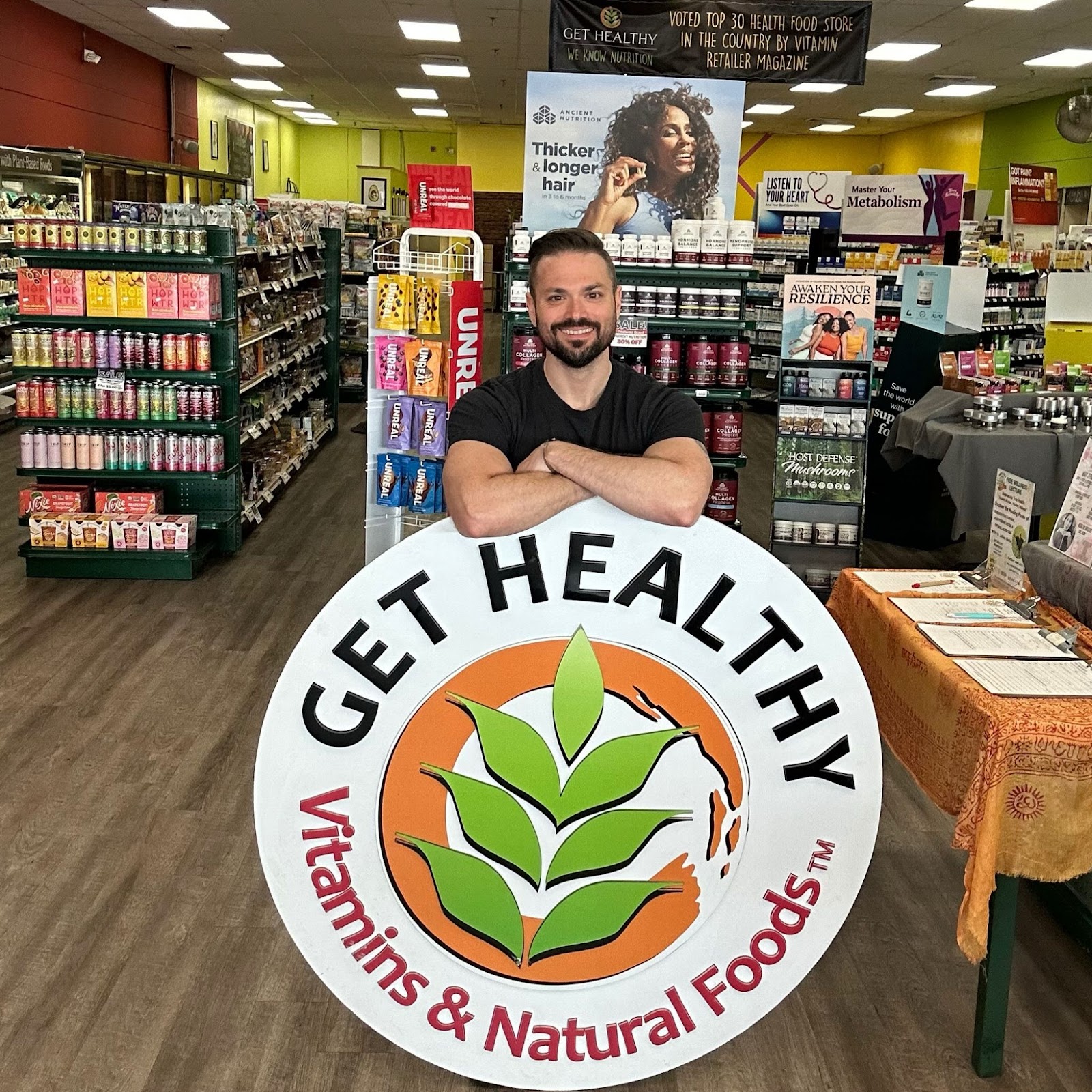 Get Healthy Vitamins & Natural Foods, Brooksville, FL, Brian Mosser, Owner
Mosser: “At the recent SOHO trade show, I spoke with Heather [Wainer, publisher of WholeFoods Magazine] about my process of buying the store from the previous owners. I am also a board member of [industry trade association] SENPA, and chair of its emerging industry leaders effort, which encourages the younger generation to understand all parts of the natural industry value chain. As an industry, we are feeling a lack of those in the younger generation with the same passion of our forefathers who built the industry. What I see is encouraging, though.
“We hosted a small event at SOHO [regional natural products trade show], with an open mike, to hear the goals of our current emerging leaders. At age 37, I’m young compared to those who built the industry. The average age of our emerging leaders is 40 to 45. My goal is to make it 20s to early 30s. The main reason is that I recall my frustration when I started in the natural industry of not feeling I had a voice. Although it wasn’t only men, but women too, it still had the feeling to me of an ‘old boy’s’ club. Every year at the trade shows, it was the same men and women who led the industry apparently without room for what the younger generation had to say. My ideas could have been horrible then, but that doesn’t mean I don’t want to give the younger generation a voice now. Issues include how to handle the big box stores and online competition. Gone are the days we independents saw each other as competitors. There are enough common issues we independents face, and we separately don’t have all the right answers. But together we can find them. And that is why I believe it is critical to encourage the upcoming generation.
“The previous owners, Karen Greenway and Laura DeWitt, retired eight years ago. Laura’s two sons had no interest in coming into the business and Karen had no children. So, there was no family contingency plan. Right before COVID hit, we started looking at what my ownership would look like, which then fell apart with the pandemic. I started with the store in 2006, when I was 17. It was just going to be a summer job. But as I got involved, I quickly saw what a difference being proactive with your health could make to me personally, and what Karen and Laura were able to accomplish with their customers’ health. I got promoted to manage their largest location within six months after getting bit by the industry bug.
“For me, being a store owner is part of my long-time goal for what I’m doing for the industry, as is being on the SENPA board. I am laying down the groundwork for my succession transition 20 years from now. Already there are people on my staff I see that I could cultivate and who could be a replacement for me down the road. I have not disclosed this to them. I want it to grow in their interest, and there’s a lot of time between now and then.
“One thing I appreciate about Karen and Lauren: When I was a newbie, they took me to my first SOHO show when I didn’t know if I was there for more than the summer. It showed me a bigger portion of the industry beyond just selling vitamins in my store. I wish other store owners would see the value of showing even one employee each year the bigger picture by taking them to trade shows. I don’t think you’ll cultivate the same passion without educational seminars, networking, and experiencing other parts of the industry value chain. That is what I believe stokes the coals of personal passion to become more deeply involved.”
Serving the Community
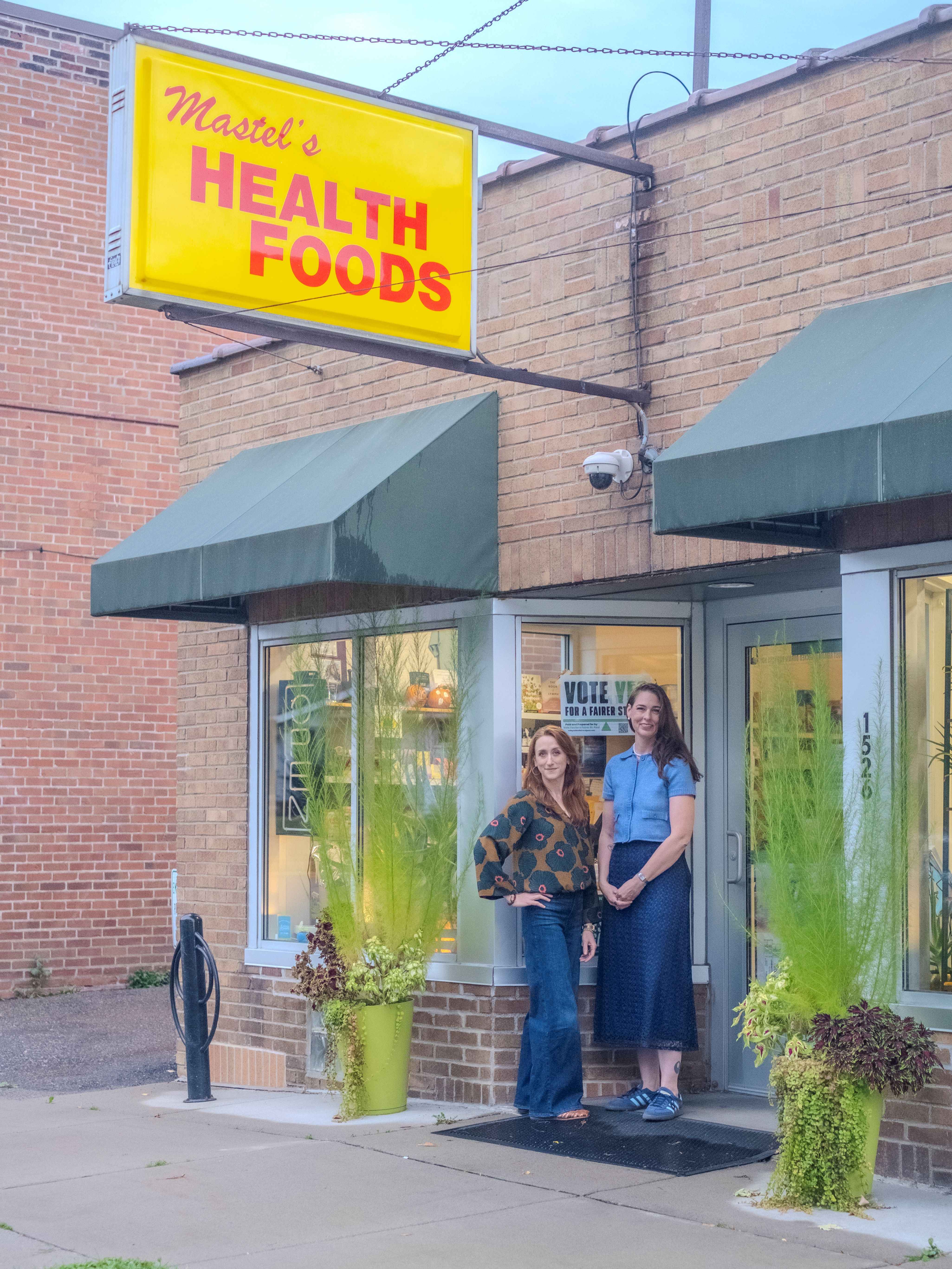
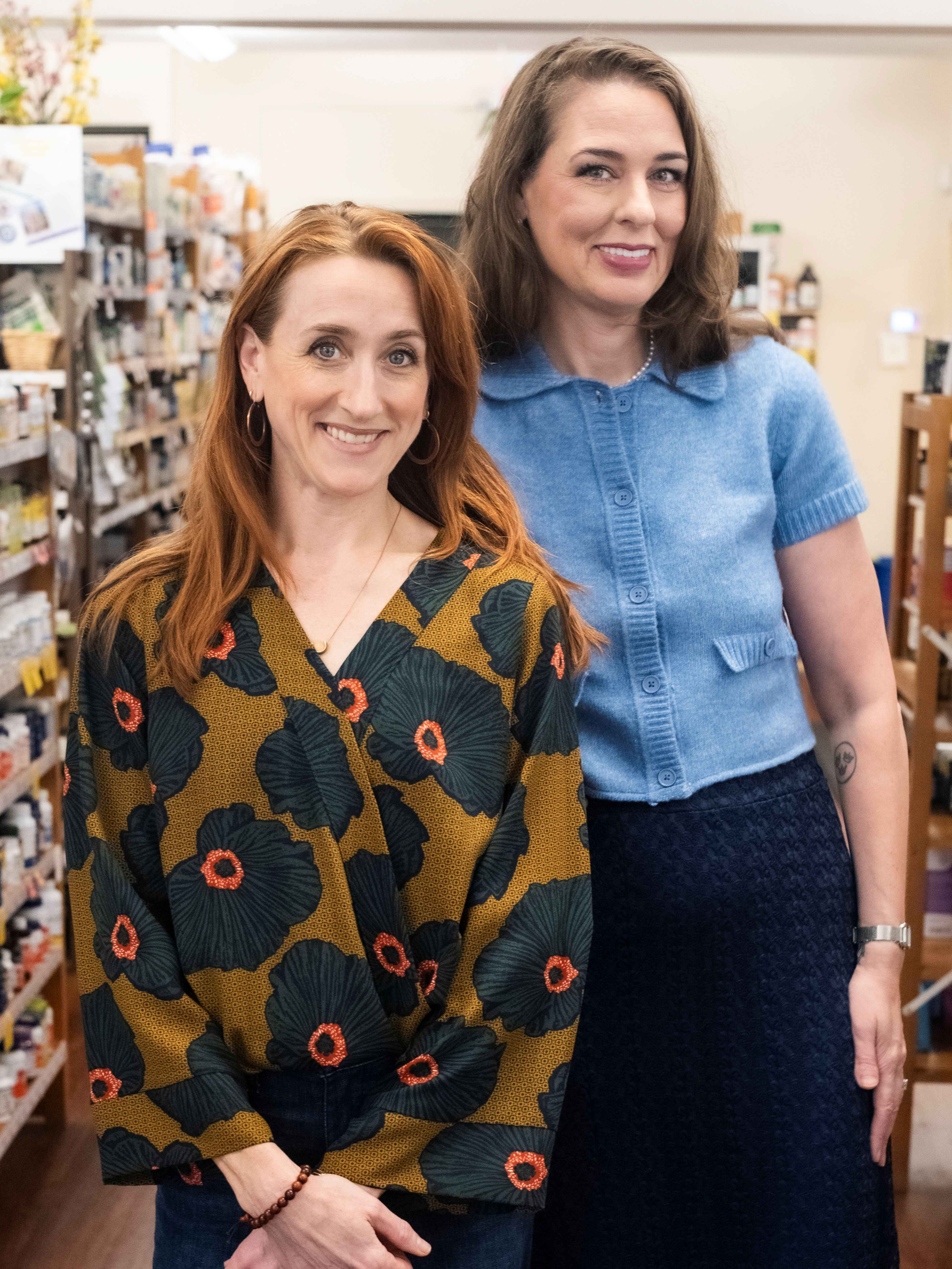 Mastel’s Health Foods,
Saint Paul, MN, Lauren Gaffney and Alina Hornfeldt, Co-Owners
Mastel’s Health Foods,
Saint Paul, MN, Lauren Gaffney and Alina Hornfeldt, Co-Owners
Hornfeldt: “In 2017, I came to Mastel’s and began working with Lauren who had been with the store since 2002. By 2005, Lauren had worked her way up from a front-line position to purchasing manager. After attending the Natural Products Expo that year, folks at the store realized we needed a marketing and media person, so that’s where I came in. By 2019, Lauren had grown into store general manager. Store owner and founder, in 1968, John Mastel, had mostly retired by the year 2000, and by 2020, there had been a series of GMs and Mr. Mastel was hands-off. So, when the pandemic hit, it was Lauren who handled the PPP [federal paycheck protection plan] loans. At the point, we realized there wasn’t much of a plan for what would happen to the store in any transition.”
Gaffney: “The pandemic caused people to think more carefully about their health and for the first time to really think about the benefit of having hyperlocal sources. This put into high relief how important this store is to the community. Alina and I realized, We can’t let anything happen to Mastel’s! Mr. Mastel has no kids of his own, nor were any of his family interested to continue the store. So, Alina and I talked to each other and came up with a plan. Because we had no experience being owners, we talked the folks who had just bought a local art supply store about how they had bought out their owners. We asked them, ‘How do we do it?’ We know how to run a health food store but not how to buy a business. They said, ‘You need Steve.’ Steve was a local business consultant who had helped them. We engaged him and he helped us figure out what we didn’t know. Steve told us we needed a banker, a business plan, a purchase agreement, an appraisal to value the business, and to decide whether to purchase the entire corporation or just selected assets of the business.
 “[It took] the next 18 months, and really two full years from start to finish to work out all the details. When we were done with all this preparation, we approached the Mastel family with our plan. Mr. Mastel, then in his 80s, had delegated power of attorney to his nephew, and we had been working with his niece in the store for quite some time. So, we were hopeful that there would be a lot of trust when we presented our plan. In the end, everybody had the feeling they got what they wanted.
“Our main goal was to make sure the community didn’t lose Mastel’s. Not only the community, but the staff at Mastel’s is long term, with many of them here for decades; 20 and 30 years. Preserving the workforce was very important for us.
“We took over in March of 2023. Our ownership has changed a lot of things. It is like getting married. Not that the customers would notice, but because it was now our investment, we became empowered as owners. We joined the local chamber of commerce and began acting in the community as business owners.”
Hornfeldt: “One surprise for us was, because Mr. Mastel had taken such a big step back from running the business, and we had been running it for years, we effectively had to sell the business to ourselves. For example, we’d been doing repairs on the building ourselves, so there wasn’t anyone else who knew the ins and outs of the building. The additional labor of doing both the buy- and sell-sides of the succession was a real surprise. We depended on there being lots of trust between us and family. We think this is unique.”
Gaffney: “It required an enormous amount of mutual trust that we were able to represent both sides of the transaction in pursuit of fairness and good feelings. It was really important to us that the process remained open and honest. We paid a fair price. We needed the family’s cooperation, and they needed us. They could have sold the business for parts, but they needed it to continue, too.”
Hornfeldt: “One of the important things we found was the value of networking. We had joined a local community group, the Metropolitan Independent Business Alliance, which is now defunct. It was a group of mentors. We found our banker through that association. Being hyperlocal, we found other businesses that had been there, done that. We learned from them about how to handle the sticky times, when things are overwhelming and how to get through that. We learned the value of networking.”
“Lauren has been with Mastel’s since she was 19. It was hard to put yourself out there publicly in the new role of owner. We had already been participating in the business as if we were owners. We had been ‘trying it on’ a bit. How does it feel as owners? We grew. We were learning to fly a plane that was already in the air. Figuring out how a business works, demystifying the business. Through other seminars, trainings, and working with businesses in other industries, we learned behind the scenes how businesses and organizations develop and then take that to Mastel’s. Even if no one from outside the industry does it exactly like a health food store, we are able to bring that back to Mastel’s.”
Gaffney: “We’re in it for the long run. We are asking ourselves What business would we like to pass on? We know what we inherited. The things that were missing, like some paperwork and records, that would have helped us in the transition. We would like to have a nice well-run, well-documented business to pass on to the next owner, and that is what we are setting up. We are invested as much as ever.”
Guiding the Next Generation
Manna Natural Foods, Tuscaloosa, AL, Frances Drennen, Owner
Drennen: “My family was never interested in taking over the business, for various reasons. They saw their parents working hard to build a business that was not a cash cow. It made us a living, and we kept it going, but it did not make life easy in the sense that we could take proceeds and retire early.
“The kids all had higher aspirations for the life they wanted to live than the one they saw their parents living. They were not interested and all moved away. I used to say my husband and I were pioneers in the industry in the ‘70s because at the time there was not much going on in Alabama in the natural industry. We had started out as a married couple when we became business partners.
“After our divorce, we were just business partners. When he decided in 2020 he couldn’t work anymore, he wanted me to buy him out. He was no longer active in the business, but he was still an owner. I was running the business, navigating the COVID years, which were difficult for all of us. Then in 2023, he passed away. When that happened, it shook me up in a way—even though he hadn’t been actively involved for several years—that having a silent business partner, if something happened to me, I knew what would happen to the business.
“I had been looking around at what employees I could develop into owners, but that had not panned out. At that point I realized I’ve got to have at least an emergency contingency plan. My lawyer and accountant also said so. I can’t just pull a plan out of my hat. So, it turned out at that time that one of my daughters had moved back to the vicinity and could help me out. I could put her on some accounts, give her some crucial information, so in the event, she could liquidate or sell the business. That was my first contingency plan.
“I also trained a long-term employee in bookkeeping, so we would have redundancy if I were to become ill. I started training her on payroll and taxes even though I had never wanted anyone else to do that. I had always felt very protective. But my employee was at a new point in her life, and her loyalty and trustworthiness she had earned over 20 years with us. That started working out well. That was in Spring 2024 when I began her training.
 “At the time, my daughter also had concerns over ownership issues. This was all while I was still working on a long-term plan. None of the employees wanted to be owners. They liked our business concept but did not like the idea of ownership. There is a difference between ownership and being an employee and not having that responsibility. It has given me a respect for owners and the burden of responsibility. You either accept it, or you don’t, but it requires a level dedication 24/7.
“After about a year of that, my daughter had started coming down to the store occasionally, and we were going through some transfer of my knowledge to make things easier for her. It wasn’t that I felt impending doom, but my realization that for me after 50 years in the business, there’s an endpoint, so I would be remiss if I didn’t figure out a plan.
“About a year into the plan, because she was coming into the business, her children had come to love the business. Our business had grown too, and we were in a big growth cycle. On the one hand, this surprised me, but on the other hand, I realized people are waking up about their health choices. My daughter said she would be willing to start taking on some of the ownership responsibility if I wanted her to, and if I wanted to begin a transition. So, I could begin to step away more from the business. I had to step away more, otherwise everyone would continue to rely on me for decisions and my owner’s sensibility that was there every day with me. So, my daughter started coming down a couple days a month, and I started stepping away more.
“Over the last several months I stopped going in every day, stopped calling them every day, and began transferring tasks to my daughter. So far so good.
“The challenge was: My daughter didn’t want me to feel as if I was being pushed out. And I don’t. No, I’m like, Where’s the exit? That’s only because I have a competent person in place. It really is serendipity; her skill sets she acquired in her career being away from Manna for 20 years, managing huge budgets, big staffs, recruiting, training, and motivation had prepared her to run Manna. All the things that make her perfect for this job. In addition, she understands the meaning of Manna to the community. It’s kind of a fairy tale.
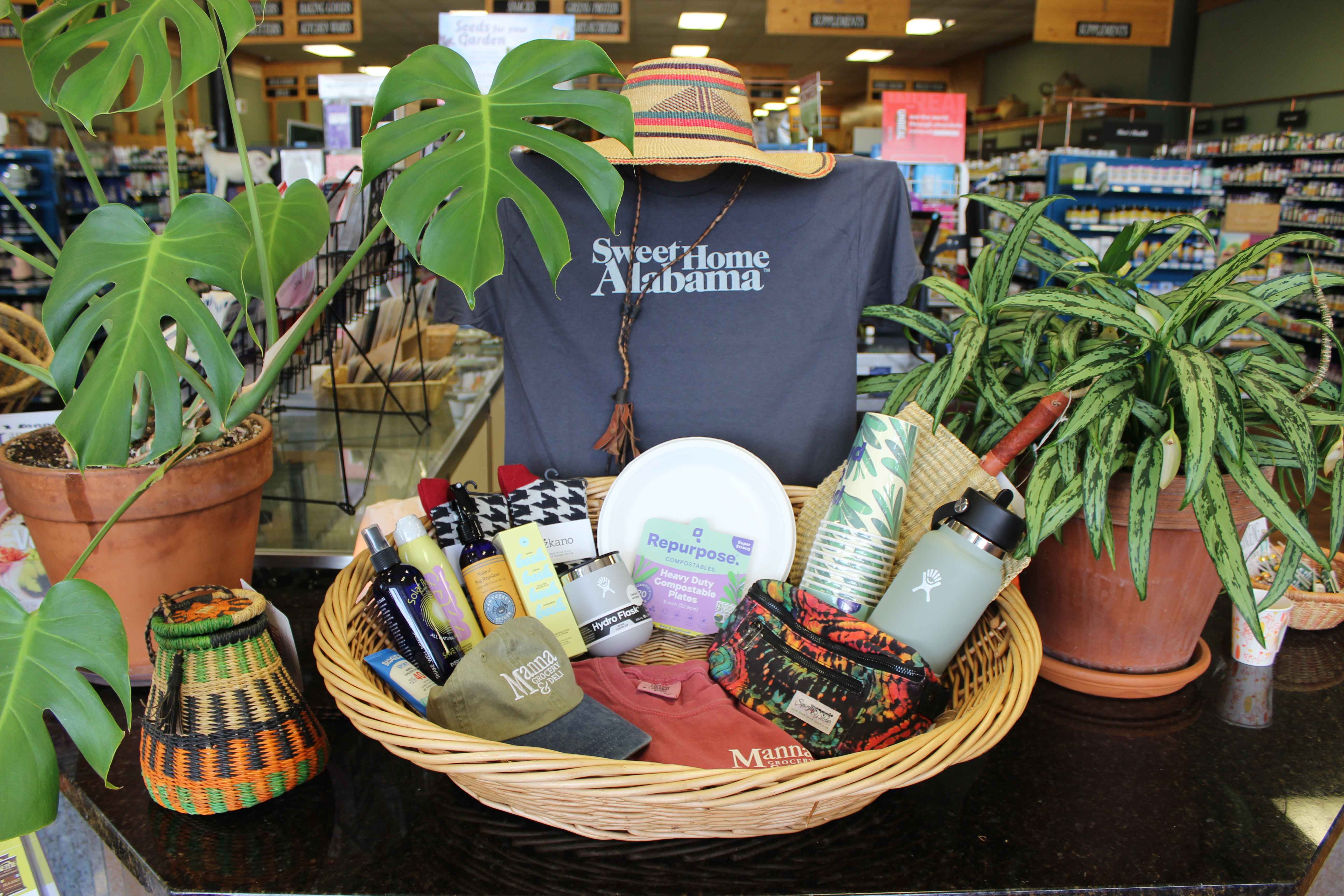 “I don’t know how it could be duplicated with anyone else, the particular circumstances that make it work for us. She gets to ask me questions, to check and see if I’m still sure I want to do this. I get to ask her questions to not be remiss. Mom, I’ve got this. I am relieved!
“Over 50 years of running the business, the idea of not having this responsibility on my shoulders. It is a lot of detail. I don’t want to let anyone down. Before I had my daughter as an option, I had to set that idea aside, because there was nobody standing behind me. My former partner’s role was so different from mine—more promoting and being the public face of Manna—that he couldn’t have picked up my level of responsibility.
“What is most important to me is the integrity and continuity of the business. I had never seen anyone that I believed could take over the business. I get emails and letters soliciting me all the time. They ‘know someone interested’ in buying the business. But they are just money people, and I’m not interested in that. In our case, it turned out to be my daughter, but it had to be someone who truly valued the reason Manna exists, besides the products, but the knowledge, the customer service, caring about customers, were more important to me.”
We’d Love to Share Your Story!
If you have a succession story you’d like to share, please contact us at editor@wfcinc.com. WF