RSS
RSS
Quicklinks
WholeFoods Magazine
The Supply Chain Crisis Impacts Shoppers With Allergies
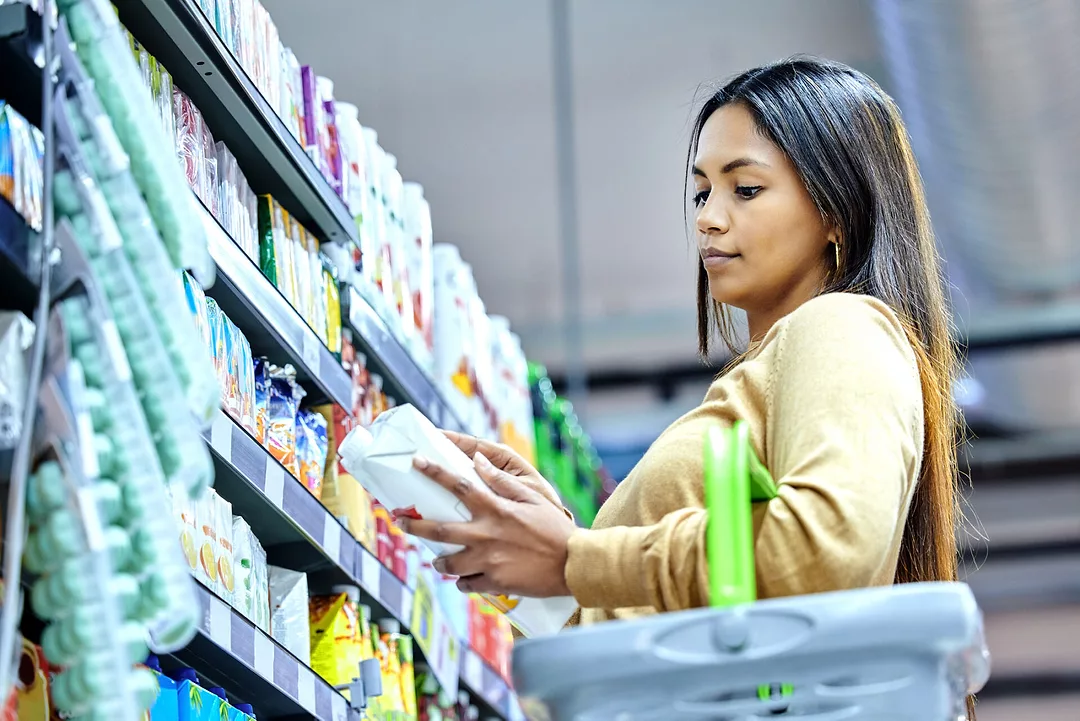
For the 85 million Americans that avoid purchasing certain foods due to allergies, the supply chain crisis and inflation only compound their stress around food shopping.
If a consumer can’t find their preferred, allergy-free food in stock or they’re unable to afford it, their risk of allergy exposure increases. Without proper and straightforward labeling, it’s challenging for shoppers with allergies to identify which replacement products fulfill their desired attributes—especially considering these consumers already spend 5% more per month on food than the average consumer.
To combat this issue, CPG brands need to invest in clear labeling (including digital disclosure solutions) and accurate product content. Proper labeling helps ensure FDA compliance. But just as importantly, complete product information helps consumers more easily find products online and in stores, and determine whether products meet their families’ unique needs.
The unforeseen effects of the supply chain crisis on consumers with allergies
The supply chain crisis has exacerbated a problem that many allergy consumers are already experiencing. In fact, more than half of food allergy consumers say that current labeling practices are a significant problem that interferes with their daily lives. For example, product labels with statements like “made in a facility that also processes tree nuts” can be confusing for consumers to read when the product does not actually include tree nut ingredients. Not only are these types of statements confusing, but they are also unregulated and don’t protect CPG brands from a liability standpoint.
It’s on brands to step up and reduce confusion for consumers. Consumers are searching for allergy-free attributes in products, so there’s a great opportunity for brands to capture this market. In fact, 60% of consumers with allergies and intolerances have switched to a product’s competitor because the brand had more robust and trustworthy information.
Brands that are ready to take advantage of the $19 billion allergy-free market need to build consumer trust. To capture this opportunity and create this trust, companies need to tell their brand story and show how they prioritize keeping customers safe—and this starts with accurate product content and standardized labeling.
3 best practices for improving product labeling and building consumer trust
Accurate and consistent product information is critical to capturing market share and minimizing stress around allergens. To improve product labeling and help consumers shop more confidently—especially with limited inventory—there are several things you may need to invest in:
Capture market share with accurate product content
Building consumer trust is vital to capturing market share—especially when it comes to consumers with allergies. To alleviate shoppers’ concerns amid the current supply chain crisis and win over potential customers, show consumers you care by providing accurate and consistent information on product labels—whether online or on the shelf. With these best practices in place, consumers can rest assured that any replacement products they might receive won’t accidentally expose them to allergens.For the 85 million Americans that avoid purchasing certain foods due to allergies, the supply chain crisis and inflation only compound their stress around food shopping.
If a consumer can’t find their preferred, allergy-free food in stock or they’re unable to afford it, their risk of allergy exposure increases. Without proper and straightforward labeling, it’s challenging for shoppers with allergies to identify which replacement products fulfill their desired attributes—especially considering these consumers already spend 5% more per month on food than the average consumer.
To combat this issue, CPG brands need to invest in clear labeling (including digital disclosure solutions) and accurate product content. Proper labeling helps ensure FDA compliance. But just as importantly, complete product information helps consumers more easily find products online and in stores, and determine whether products meet their families’ unique needs.
The unforeseen effects of the supply chain crisis on consumers with allergies
The supply chain crisis has exacerbated a problem that many allergy consumers are already experiencing. In fact, more than half of food allergy consumers say that current labeling practices are a significant problem that interferes with their daily lives. For example, product labels with statements like “made in a facility that also processes tree nuts” can be confusing for consumers to read when the product does not actually include tree nut ingredients. Not only are these types of statements confusing, but they are also unregulated and don’t protect CPG brands from a liability standpoint.
It’s on brands to step up and reduce confusion for consumers. Consumers are searching for allergy-free attributes in products, so there’s a great opportunity for brands to capture this market. In fact, 60% of consumers with allergies and intolerances have switched to a product’s competitor because the brand had more robust and trustworthy information.
Brands that are ready to take advantage of the $19 billion allergy-free market need to build consumer trust. To capture this opportunity and create this trust, companies need to tell their brand story and show how they prioritize keeping customers safe—and this starts with accurate product content and standardized labeling.
3 best practices for improving product labeling and building consumer trust
Accurate and consistent product information is critical to capturing market share and minimizing stress around allergens. To improve product labeling and help consumers shop more confidently—especially with limited inventory—there are several things you may need to invest in:
Capture market share with accurate product content
Building consumer trust is vital to capturing market share—especially when it comes to consumers with allergies. To alleviate shoppers’ concerns amid the current supply chain crisis and win over potential customers, show consumers you care by providing accurate and consistent information on product labels—whether online or on the shelf. With these best practices in place, consumers can rest assured that any replacement products they might receive won’t accidentally expose them to allergens.
If a consumer can’t find their preferred, allergy-free food in stock or they’re unable to afford it, their risk of allergy exposure increases. Without proper and straightforward labeling, it’s challenging for shoppers with allergies to identify which replacement products fulfill their desired attributes—especially considering these consumers already spend 5% more per month on food than the average consumer.
To combat this issue, CPG brands need to invest in clear labeling (including digital disclosure solutions) and accurate product content. Proper labeling helps ensure FDA compliance. But just as importantly, complete product information helps consumers more easily find products online and in stores, and determine whether products meet their families’ unique needs.
The unforeseen effects of the supply chain crisis on consumers with allergies
The supply chain crisis has exacerbated a problem that many allergy consumers are already experiencing. In fact, more than half of food allergy consumers say that current labeling practices are a significant problem that interferes with their daily lives. For example, product labels with statements like “made in a facility that also processes tree nuts” can be confusing for consumers to read when the product does not actually include tree nut ingredients. Not only are these types of statements confusing, but they are also unregulated and don’t protect CPG brands from a liability standpoint.
It’s on brands to step up and reduce confusion for consumers. Consumers are searching for allergy-free attributes in products, so there’s a great opportunity for brands to capture this market. In fact, 60% of consumers with allergies and intolerances have switched to a product’s competitor because the brand had more robust and trustworthy information.
Brands that are ready to take advantage of the $19 billion allergy-free market need to build consumer trust. To capture this opportunity and create this trust, companies need to tell their brand story and show how they prioritize keeping customers safe—and this starts with accurate product content and standardized labeling.
3 best practices for improving product labeling and building consumer trust
Accurate and consistent product information is critical to capturing market share and minimizing stress around allergens. To improve product labeling and help consumers shop more confidently—especially with limited inventory—there are several things you may need to invest in:
- Updated documentation: All of your manufacturing facilities need to have well-documented, frequently updated information about ingredient suppliers and manufacturing practices. This documentation should also be made available to employees who respond to consumer inquiries about ingredients—particularly those who are allergic or sensitive to ingredients outside of the top nine allergens.
- Clear and easy-to-understand labels: Clearly label all products using the standard “Contains:” statement for the top nine allergens while calling out the specific tree nut, fish and/or shellfish that are used in the product formulation (e.g., almonds, tuna, lobster). With 71% of food allergy consumers saying they spend 3-5 minutes on average reading the labels of every single food item they purchase, providing direct and prominent information will minimize time spent reading labels and help your brand stand out on the shelf and in online search results.
- On-package callouts: It’s rare for brands to feature on-package callouts about how a product is free from certain allergens. But taking the time to improve your packaging to include this callout is worth the investment because food allergy shoppers are more loyal to their favorite brands than the average consumer. If you manufacture your products in allergen-free facilities, communicate this information on-package or online, even if it’s just one of the top nine allergens. For example, a statement such as, “Produced in a peanut-free facility” would greatly improve allergen consumers’ shopping experience.
Capture market share with accurate product content
Building consumer trust is vital to capturing market share—especially when it comes to consumers with allergies. To alleviate shoppers’ concerns amid the current supply chain crisis and win over potential customers, show consumers you care by providing accurate and consistent information on product labels—whether online or on the shelf. With these best practices in place, consumers can rest assured that any replacement products they might receive won’t accidentally expose them to allergens.For the 85 million Americans that avoid purchasing certain foods due to allergies, the supply chain crisis and inflation only compound their stress around food shopping.
If a consumer can’t find their preferred, allergy-free food in stock or they’re unable to afford it, their risk of allergy exposure increases. Without proper and straightforward labeling, it’s challenging for shoppers with allergies to identify which replacement products fulfill their desired attributes—especially considering these consumers already spend 5% more per month on food than the average consumer.
To combat this issue, CPG brands need to invest in clear labeling (including digital disclosure solutions) and accurate product content. Proper labeling helps ensure FDA compliance. But just as importantly, complete product information helps consumers more easily find products online and in stores, and determine whether products meet their families’ unique needs.
The unforeseen effects of the supply chain crisis on consumers with allergies
The supply chain crisis has exacerbated a problem that many allergy consumers are already experiencing. In fact, more than half of food allergy consumers say that current labeling practices are a significant problem that interferes with their daily lives. For example, product labels with statements like “made in a facility that also processes tree nuts” can be confusing for consumers to read when the product does not actually include tree nut ingredients. Not only are these types of statements confusing, but they are also unregulated and don’t protect CPG brands from a liability standpoint.
It’s on brands to step up and reduce confusion for consumers. Consumers are searching for allergy-free attributes in products, so there’s a great opportunity for brands to capture this market. In fact, 60% of consumers with allergies and intolerances have switched to a product’s competitor because the brand had more robust and trustworthy information.
Brands that are ready to take advantage of the $19 billion allergy-free market need to build consumer trust. To capture this opportunity and create this trust, companies need to tell their brand story and show how they prioritize keeping customers safe—and this starts with accurate product content and standardized labeling.
3 best practices for improving product labeling and building consumer trust
Accurate and consistent product information is critical to capturing market share and minimizing stress around allergens. To improve product labeling and help consumers shop more confidently—especially with limited inventory—there are several things you may need to invest in:
- Updated documentation: All of your manufacturing facilities need to have well-documented, frequently updated information about ingredient suppliers and manufacturing practices. This documentation should also be made available to employees who respond to consumer inquiries about ingredients—particularly those who are allergic or sensitive to ingredients outside of the top nine allergens.
- Clear and easy-to-understand labels: Clearly label all products using the standard “Contains:” statement for the top nine allergens while calling out the specific tree nut, fish and/or shellfish that are used in the product formulation (e.g., almonds, tuna, lobster). With 71% of food allergy consumers saying they spend 3-5 minutes on average reading the labels of every single food item they purchase, providing direct and prominent information will minimize time spent reading labels and help your brand stand out on the shelf and in online search results.
- On-package callouts: It’s rare for brands to feature on-package callouts about how a product is free from certain allergens. But taking the time to improve your packaging to include this callout is worth the investment because food allergy shoppers are more loyal to their favorite brands than the average consumer. If you manufacture your products in allergen-free facilities, communicate this information on-package or online, even if it’s just one of the top nine allergens. For example, a statement such as, “Produced in a peanut-free facility” would greatly improve allergen consumers’ shopping experience.
Capture market share with accurate product content
Building consumer trust is vital to capturing market share—especially when it comes to consumers with allergies. To alleviate shoppers’ concerns amid the current supply chain crisis and win over potential customers, show consumers you care by providing accurate and consistent information on product labels—whether online or on the shelf. With these best practices in place, consumers can rest assured that any replacement products they might receive won’t accidentally expose them to allergens.
Recommended For You
Latest Publication
August 2026
June/July 2026
2026 Deep Dive Active Nutrition Market

2026 Deep Dive Cardiovascular Health