RSS
RSS
Sweets, Snacks, and the New Better-for-You Mood
July 3, 2026
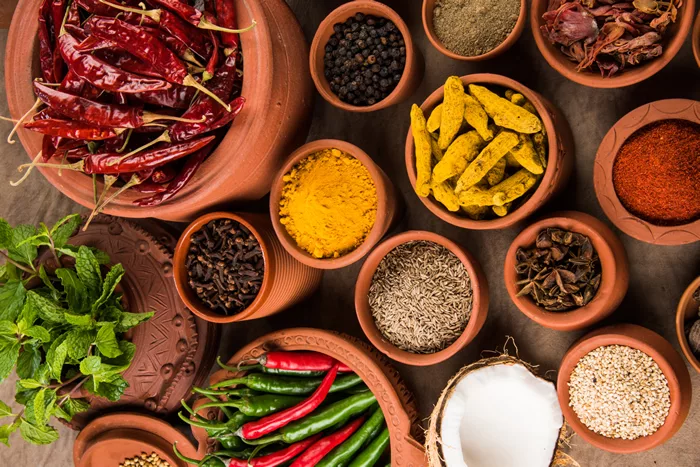
The use of spices in the United States has increased dramatically in the last 50 years. In 1966, the United States imported 241M pounds of spices, and this number increased to 1.3B pounds by 2013. That represents a change from 1.2 pounds to almost 3.5 pounds per person per year1. While the United States produces some spices, like mustard seed and chile peppers, it is the largest single-country importer of spices, with the biggest suppliers being India, China, Madagascar and Indonesia2. Although Americans clearly love their spices, recent recalls and studies have demonstrated some major health concerns in the imported spice supply.
In 2013, the U.S. Food and Administration (FDA) conducted a study to examine the levels of filth and bacterial contamination in spices imported to the United States3. The bacteria they focused on were Salmonella and Bacillus species, which had accounted for all of the spice-related bacterial illnesses reported between 1973 and 2010. Examples of filth that were found included live and dead insects, excrement, hair and other materials including stones, staples, wood slivers and plastic. This study found that approximately 6.6% of spice imports were contaminated with Salmonella, while approximately 12% of imported spices contained one or more forms of filth.
At the end of 2014 and continuing into 2015, the FDA conducted its largest recall on record based on contamination of cumin with peanut and almond, both of which are allergens. The cumin recalls began in Canada, triggered by a random test by the Canadian Food Inspection Agency (CFIA) that found peanut in a taco seasoning mix4.
The CFIA conducted similar random testing of single-ingredient spices for gluten as part of the Food Safety Action Plan enhanced surveillance initiative in 2011. This survey of 268 ground spices found that 63 samples (24%) contained detectable levels of gluten (greater than 5 ppm)5. Only one of these samples contained a level of gluten high enough to initiate a recall, but this data suggests that gluten contamination may be as widespread as the cumin contamination of commercial spices.
In order to examine the extent of gluten contamination of spices in the United States, in 2015 the Gluten Intolerance Group of North America (GIG-NA) conducted a survey of gluten levels in retail single-ingredient spices. Twenty-five samples of eight common spices (cumin, coriander, cloves, fenugreek, sage, thyme, white pepper and mace) from multiple suppliers were tested for gluten using antibody-based ELISA assays, the currently accepted method for gluten analysis.
Of the 25 total samples analyzed, eight (32%) had detectable gluten levels that were replicated by a second test method. Gluten levels were greater than 10 parts per million (ppm), the GFCO threshold, in six (24%) samples. Three (12%) of the samples, representing two different spices, had levels of gluten greater than 20 ppm, the FDA limit for a recall.
The reason for this level of contamination is unknown, but it may result from cross contamination in facilities that process both spices and grains, or from intentional adulteration of spices with less expensive fillers.
These recent data indicate that spice contamination is still an issue, and that gluten contamination in particular is widespread. Based on this, the Gluten Free Certification Organization (GFCO), a program of GIG-NA, has increased its risk level for all spice ingredients and recommends that all manufacturers of gluten-free foods conduct testing of spices whenever they change their supplier or when their supplier changes their source. Although spices are generally consumed at low levels, on average 0.15 ounces per person per day, and are typically less than 1-2% of a prepared food, neither GFCO nor the FDA permit dilution of gluten-contaminated ingredients to achieve a safe level in finished product.

The Gluten Intolerance Group of North America (GIG-NA) is a 501(c)(3) non-profit association funded by private donations, membership proceeds and industry programs. It relies on tax-deductible contributions to support its many innovative industry, service, social and awareness programs. GIG has been a highly respected leader in the gluten-free community since it was founded in 1974. In addition to our local branches across the United States, GIG has also increased its presence internationally to 29 countries. It is headquartered in Auburn, WA.
 The Gluten-Free Certification Organization (GFCO), a program of GIG, is a leader in the verification of quality, integrity, and purity of gluten-free products. One of the top certification programs in the world, GFCO inspects products and manufacturing facilities for gluten, in an effort to maintain strict industry standards. GFCO has currently certified over 30,000 products in 29 different countries.
References
1http://www.ers.usda.gov/data-products/food-availability-(per-capita)-data-system.aspx (accessed 1/18/2016)
2UNIDO and FAO (2005). Herbs, spices and Essential Oils: Post-harvest operations in developing countries. (accessed at http://www.fao.org/3/a-ad420e.pdf on 1/18/16).
3US-FDA (2013). Draft Risk Profile: Pathogens and Filth in Spices. (accessed at http://www.fda.gov/downloads/Food/FoodScienceResearch/RiskSafetyAssessment/UCM367337.pdf on 1/19/16).
4Bennett, P. Inside the Peanut-Tainted Cumin Recalls: What Happened? Allergic Living March 13, 2015. Accessed at http://allergicliving.com/2015/02/14/inside-the-peanut-tainted-cumin-recalls-what-happened/ on 6/1/15
5Canadian Food Inspection Agency. 2010-2011 Gluten in Ground Spices (accessed at http://www.inspection.gc.ca/food/chemical-residues-microbiology/chemical-residues/ground-spices/eng/1347987900293/1347988112489 on 6/1/15).