RSS
RSS
Sweets, Snacks, and the New Better-for-You Mood
July 3, 2026
What exactly is real food? Some years ago, internationally respected agricultural consultant and physician Dr. Arden Andersen introduced the term, "nutrient dense" to describe it. “Nutrient density means the quantity of nutrient per quantity of food,” he said. “Typically, the USDA analyzes how many milligrams or how many micrograms of nutrient there are per 100 grams of food. If you take an apple and you weigh it, then take 100 grams of that apple, how many milligrams and how many micrograms of various different nutrients do you find in those 100 grams of apple? With nutrient density, we want to increase the amount of nutrients—calcium, magnesium, selenium, chromium, iodine, whatever there might be—per 100 grams of that apple. If you eat an apple and it is highly nutritious, highly nutrient dense, you get a lot more nutrients out of that single apple than if you pick up another apple which has half that nutrient density.”

Organic farmer and executive director of the Real Food Campaign, Dan Kittredge, tells me, “You’re aiming for a higher percent of dissolved solids in the plant—a higher percentage of complex carbohydrates, sugars and proteins. These are the elements that correlate directly with increased flavor, increased nutrition, increased shelf life, and increased pest and disease resistance.”
Sounds good? Well, this is not just a theoretical discussion—it’s something you can actually taste.
Not too long ago, I visited a farm that grew nutrient-dense crops. Keep in mind I’m used to eating organic and farmers’ market produce. What I sampled out of Bob Cannard’s field was nothing short of amazing. A tomato I picked off the vine was firm, juicy and bursting with sweet, tomato flavor. It’s no accident that Cannard is one of the prime suppliers to Alice Waters’ Chez Panisse restaurant.
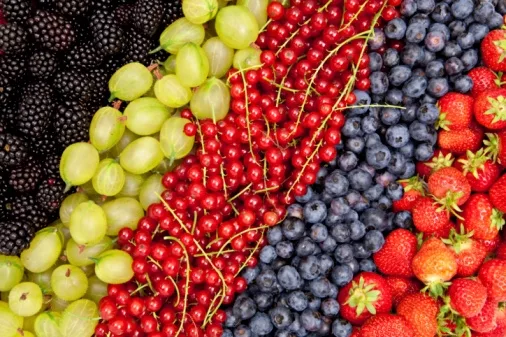
Sunset Valley Organics grows nutrient-dense blueberries. Again, I’ve been eating fresh and frozen organic and wild blueberries. The taste difference is remarkable. The nutrient-dense berries really taste the way you think a blueberry should taste. I’m hooked without a doubt.
Dan Kittredge finds that his own nutrient-dense vegetables have incredible sheen and that the flavor is “far, far better” and they last longer.
Northern California farmer Mark Nakata grows nutrient-dense grapes for raisins, several varieties of stone fruit, citrus, berries, tomatoes, melons and avocados. He says that “the better we get at doing our farming, the higher the nutrient-density level goes and the better the fruit tastes.” Nakata told me, “When you bring the soil in balance and really work on providing great nutrition for the plants and what they need, you find the fruit is firmer, it’s usually larger, and you have a higher percentage of number one quality and a lot better flavor. Ultimately you have a much happier customer.”
We all want to be happier and healthier customers. As president of a supplement company, I of course believe in nutritional supplements. At the same time, I’m very excited about the idea of the bulk of our nutritional needs being supplied from the food we eat. It used to be that way about 70 years ago, but industrial agriculture traded quality for quantity. That ill-advised trade resulted in a rich, powerful and bloated healthcare industry and a population high on stress, low on energy and plagued with diseases, allergies and obesity.
 Natural Vitality has supported the propagation of nutrient density and the establishment of a nutrient-dense standard for over three years as part of our Natural Revitalization environmental action initiative. But improving the nutrient value of our food is something that will be of benefit to us all. I encourage you to get more information and become involved in this very exciting evolution in agriculture. Visit www.realfoodcampaign.org and www.remineralize.org for more information.
Ken Whitman is the president of Peter Gillham’s Natural Vitality and the publisher of Organic Connections magazine.