Article updated on January 12, 2026, with additional industry response.
Washington, DC—The next phase of the Make America Healthy Again (MAHA) agenda was set in motion on Wednesday, January 7, with the publishing of the updated version of the U.S. Dietary Guidelines for Americans (DGAs), under the directive of Secretary of Health and Human Services, Robert F. Kennedy Jr., and the U.S. Health Department. The 2025-2030 Dietary Guidelines call for:
- Prioritizing protein intake at every meal
- Aiming for three servings of vegetables and two servings of fruits per day
- Minimizing the consumption of large amounts of ultra processed foods (UPFs), artificial additives, and added sugar
- Greater focus on healthy fats from whole foods (meats, seafood, eggs, nuts, seeds, olives, avocados)
- Incorporating more whole grains and reducing refined carbohydrates
- Opting for water and unsweetened beverages to address hydration needs
- Individualized eating portions based on age, sex, size, and activity level
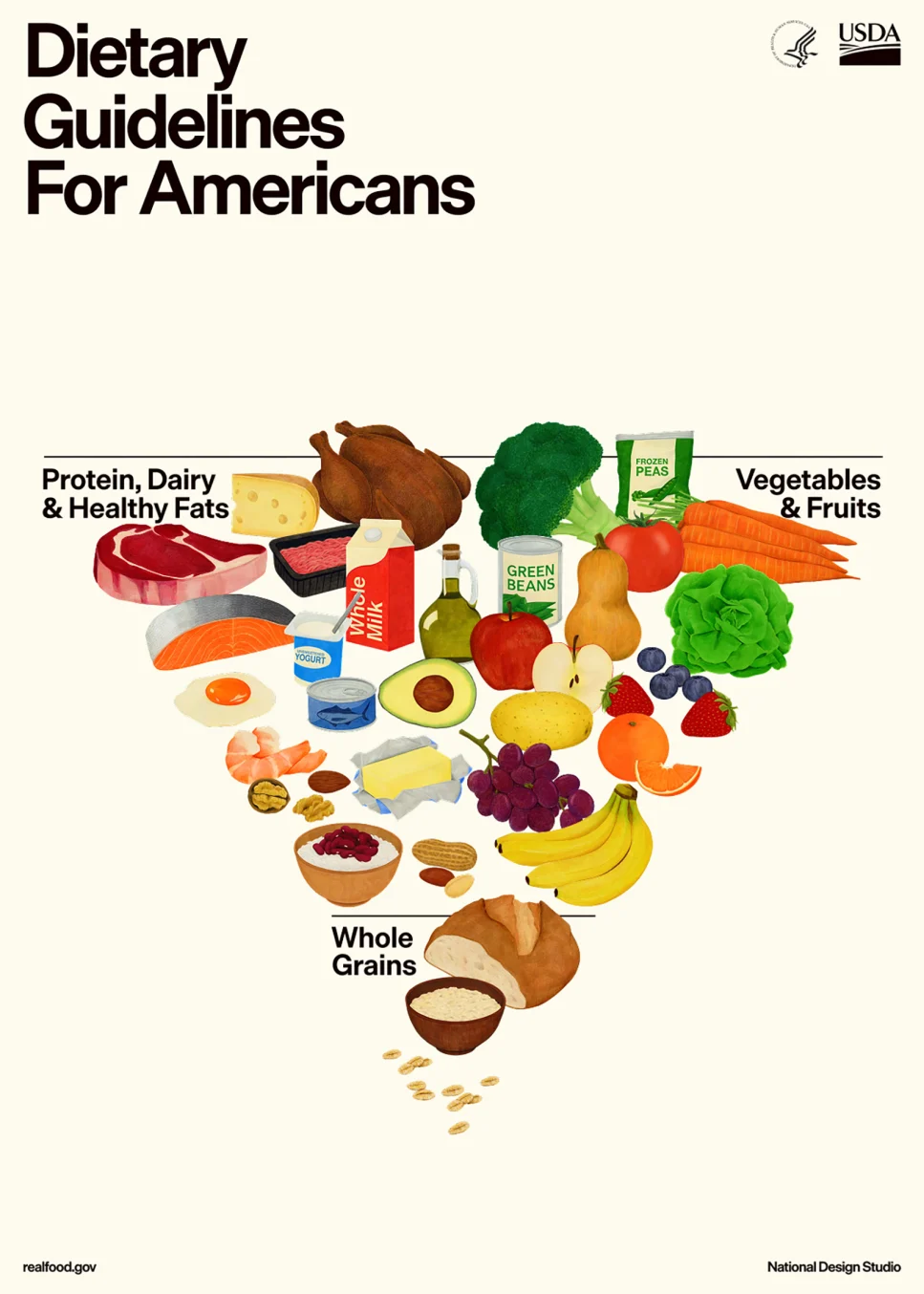 The last time the dietary guidelines received an update was five years ago, in 2020. As the Natural Products Association (NPA). noted, the release of the revised Dietary Guidelines for Americans is an important milestone in federal nutrition policy and will shape health programs, consumer behavior and regulatory priorities for years to come.
With the newly issued guidelines, school meals, the WIC (Women, Infants and Children) program, and the Supplemental Nutrition Assistance Program (SNAP) will update their recommendations to better reflect the Administration's objectives.
The parameters are a contrast to the MyPlate figures and the older food pyramid, which had served as the graphic tools used by healthcare, media, and school officials when promoting nutritional education. Now, with an emphasis on protein consumption, the newly issued recommendations have inverted the pyramid visual—placing meats, cheese, and vegetables at the widest top portion.
“My message is clear: Eat real food,” said Secretary Kennedy, during his White House briefing.
Natural products industry impressions
NPA
While NPA welcomed the Guidelines’ emphasis on nutrient-dense diets and improved overall diet quality, the trade group added perspective on implementation, noting that as policymakers and health professionals consider how Americans can realistically meet these recommendations, it is critical to acknowledge a longstanding reality.
"Millions of Americans fail to obtain adequate intake of key vitamins, minerals and other essential nutrients solely from food," NPA pointed out in its statement. "Dietary supplements play a vital and complementary role in closing these nutrient gaps, particularly for vulnerable populations such as pregnant women, older adults, children and individuals with chronic health conditions. Supplements are not a substitute for healthy eating, but they are a proven, science-based tool that support public health objectives when dietary intake falls short.
"As federal nutrition guidance evolves, NPA encourages policymakers to ensure that dietary supplements are accurately represented as part of a comprehensive nutrition strategy. This includes recognizing the essentiality of specific nutrients, reflecting modern nutrition science on bioavailability and life-stage needs, and avoiding outdated assumptions that overlook how Americans actually consume nutrients in the real world.
"We also urge alignment between the Dietary Guidelines and the regulatory framework governing dietary supplements, which already imposes rigorous requirements for safety, manufacturing quality, labeling and adverse event reporting. Clear, science-driven policy signals are essential to maintaining consumer confidence and encouraging continued innovation in nutritional products."
AHPA
National trade association, American Herbal Products Association (AHPA), met news of the guideline's developments with excitement and maintained their stance towards ensuring herbs and herbal products continue receiving their due recognition. "We're thrilled that the guidelines acknowledge the vital role of herbs and dietary supplements in a healthy diet," said Graham Rigby, President & CEO of the American Herbal Products Association (AHPA). "AHPA will continue its outreach to ensure herbs and herbal products are recognized and appreciated for the benefits they bring to all Americans."
CRN
The Council for Responsible Nutrition (CRN) praised the agencies for acknowledging that while nutrient-dense foods should remain the foundation of nutrition guidance, dietary supplements can serve as a practical and science-based tool to help address persistent nutrient shortfalls across the population.
“For many Americans, meeting nutrient recommendations through food alone is challenging—sometimes due to limited food sources, increased nutritional needs during certain life stages, or other real-world barriers,” said Steve Mister, President & CEO of CRN. “By appropriately recognizing dietary supplements as a way to help fill nutrient gaps, the agencies have taken an important step toward improving public health and ensuring the Dietary Guidelines are both evidence-based and practical.”
CRN noted that evidence shows Americans fall short of many key nutrients, including vitamin D, calcium, potassium, and dietary fiber, and supplements have been shown to help reduce the prevalence of nutrient inadequacy. "CRN has long underscored the importance of addressing life-stage-specific nutrient needs in the Dietary Guidelines, including infancy, adolescence, pregnancy and lactation, and older adulthood. Consistent with CRN’s public comments, the new guidelines maintain that supplementation should be considered in these special populations in consultation with health care professionals."
Mister added: “We support the agencies’ goal of improving the health of American families. Recommendations for the appropriate use of dietary supplements strengthen the Dietary Guidelines and help consumers and healthcare providers make informed decisions. CRN has long urged consumers to have meaningful discussions with their healthcare providers about their supplement regimens, and we are delighted that the new Dietary Guidelines underscore the importance of these conversations.”
IFT
The Institute of Food Technologists (IFT) focused on the broad stroke importance of the guideline updates and emphasized their support would be seen through the supply of scientific evidence needed to support the new agenda. "The guidelines are a notable shift from previous editions and from the original scientific report of the 2025 Dietary Guidelines Advisory Committee. The Administration has pursued an important and worthwhile goal of simplifying the guidelines to improve accessibility and understanding for the American public. The more accessible language is a notable improvement over previous editions of the Dietary Guidelines and emphasizes high-level messaging. The clear acknowledgement of the critical role of healthcare professionals in supporting infants, children, adolescents, and others with specific health conditions through nutrition and dietary interventions is also an important and much-needed update. IFT is strongly supportive of providing the rigorous food science to validate the 'food is medicine' approaches which are increasingly recognized as beneficial to supporting the health of our population."
Changing the lens
"Prioritize whole, healthy, and nutritious foods with the new Dietary Guidelines for Americans!" reads the homepage of the Dietary Guidelines for Americans, which offers several information resources for individuals looking to dig further into the new protocols. For consumers and our industry as a whole, it remains to be seen exactly how these recent advances will shape 2026 and the next four years. What is immediately evident is that the current Administration is in fact, taking seriously what it set out to do; Make us all healthier.
The full press briefing is available for viewing courtesy of The White House YouTube page.
Looking ahead, CRN and NPA said they are ready to continued engagement with federal policymakers to advance nutrition policies. NPA noted its intention to work to ensure that national nutrition policy fully reflects the role dietary supplements play in helping Americans achieve optimal health, prevent nutrient deficiencies, and support wellness across the lifespan.