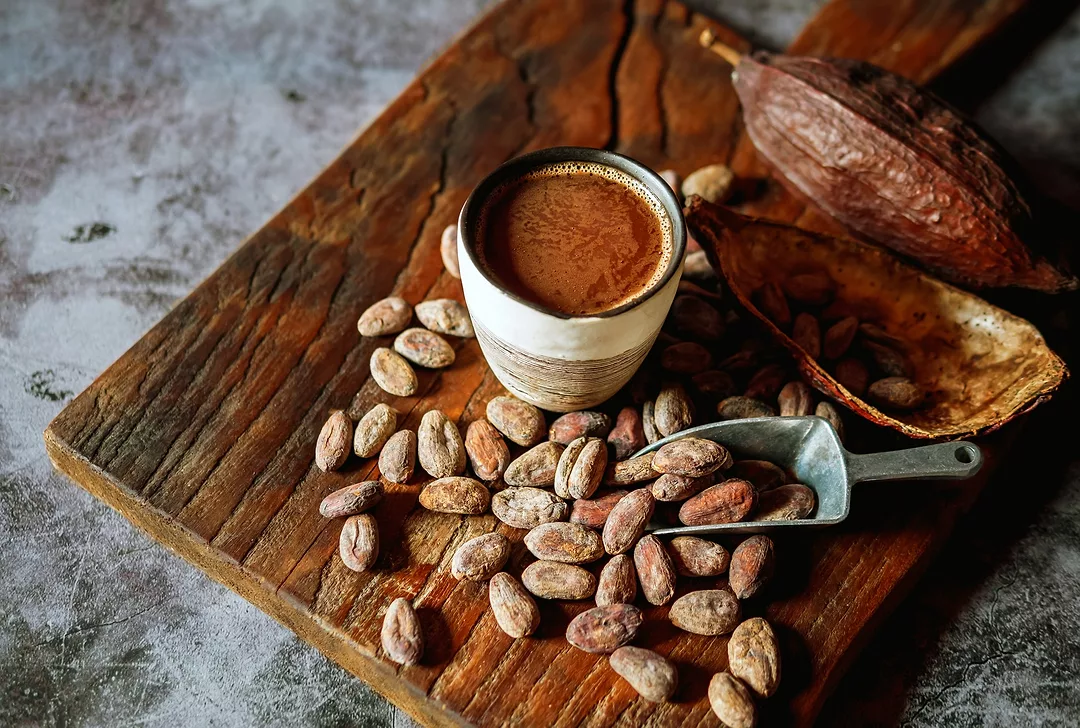
Cocoa, the rich and complex base of chocolate, offers more than indulgent flavor—it delivers a host of health benefits rooted in its potent polyphenol content. Yes, something this delicious might actually be good for you. While its antioxidant and anti-inflammatory powers are well-known, emerging science points to cocoa’s lesser-known role, shaping the gut microbiota in ways that may enhance immunity, reduce inflammation, and support metabolic health.
In this article, IPA dives into how cocoa’s polyphenols interact with the gut microbiota—highlighting their potential prebiotic effects, the mechanisms behind them, and what current studies reveal about cocoa’s role in supporting gut health.
Cocoa, in brief
Theobroma cacao L., the botanical name for the cacao tree, means “food of the gods”—a fitting title for a plant that has played a significant role in human history for thousands of years. Cocoa, derived from its seeds, is enjoyed globally not only for its rich flavor but also for its array of potential health benefits. Native to Central and South America, the cacao tree now grows in tropical regions around the world, with millions of tons of cocoa produced annually. Its three main cultivars—Criollo, Forastero, and Trinitario—vary in taste and phytochemical content. Cocoa beans are processed into a variety of products—including powder, butter, and liquor—and contain lipids, proteins, fibers, and hundreds of bioactive compounds. Notably, polyphenols are among the most abundant phytochemicals in cocoa beans and their derivatives.
While processing can reduce these phytochemicals, cocoa remains a notable source of antioxidant and anti-inflammatory agents. Regular consumption of cocoa and its products has been linked to numerous health benefits, including improved cardiovascular function, enhanced cognition, and reduced risk of metabolic disorders and certain chronic diseases.
Recent research has explored how cocoa polyphenols interact with gut microbiota to influence health.
Cocoa and gut microbiota
Polyphenols are the most significant cocoa compounds interacting with the gut microbiota, as they require microbial transformation to become bioavailable. Though thousands of types of polyphenols have been identified, they can be divided into two main categories, flavonoids and non-flavonoids. Cocoa primarily contains flavonoids such as epicatechins, catechins, and procyanidins, but also contains phenolic acids, representing the non-flavonoid type of polyphenol.
Only a small fraction of cocoa polyphenols is absorbed in the small intestine; about 95% reach the colon, where they are broken down by gut bacteria into smaller, bioactive metabolites.
Dietary polyphenols, such as those in cocoa, interact bidirectionally with the gut microbiota, promoting the growth of metabolizing microbes while inhibiting others through antimicrobial actions. In turn, the microbiota's diversity and composition shape how effectively these compounds are transformed into bioactive metabolites that impact human health. As a result, individual differences in gut microbiota can influence the degree of benefit derived from cocoa polyphenol consumption.
Cocoa polyphenols have been shown to exhibit prebiotic-like effects* by promoting beneficial bacteria like lactobacilli and bifidobacteria, while inhibiting potentially harmful species such as Clostridium perfringens.
* A prebiotic is “a substrate that is selectively utilized by host microorganisms conferring a health benefit”. Notably, polyphenols are not classic prebiotics, as they aren't always directly metabolized by gut microbes. However, because they selectively influence microbial activity and produce health-promoting effects, they are widely recognized as having prebiotic-like properties.
Cocoa’s effects on the gut microbiota extend beyond polyphenols, with theobromine (the primary methylxanthine in cocoa) playing a distinct modulatory role. In an animal study, theobromine alone reduced levels of E. coli, Bifidobacterium, Streptococcus, and Clostridium species, altered microbial composition, and increased butyrate production—highlighting its independent influence on gut health alongside polyphenols. In addition, fiber in cocoa also contributes to microbiome modulation by serving as a substrate for bacterial fermentation.
Many studies—in vitro, in vivo and clinical—have explored the effects of cocoa and its derivatives on the growth of gut bacteria and health outcomes.
In vitro
An in vitro study used a lab system mimicking the human colon to show how gut bacteria break down the above-mentioned catechin and epicatechin into smaller metabolites. It found that these flavanols may support beneficial bacteria such as Bifidobacterium, suggesting potential prebiotic effects.
Animal
Cocoa intake has been shown to modulate gut microbiota in animal models by reducing harmful bacteria (e.g., Clostridium and Staphylococcus species) and promoting beneficial species like lactobacilli, bifidobacteria, and Faecalibacterium prausnitzii, while also increasing short-chain fatty acid production linked to reduced inflammation. One illustrative study in Zucker diabetic fatty rats showed that a cocoa-rich diet improved gut barrier integrity, reduced inflammatory cytokines, and shifted microbial populations toward a healthier profile, enhancing glucose metabolism and immune balance.
Humans
In humans, it is challenging to isolate the specific effects of cocoa polyphenols on the gut microbiota due to the limited number of clinical trials and the complex, individualized interactions among polyphenols, gut microbes, and diet. Nevertheless, some studies offer promising insights.
In a randomized, double-blind, crossover trial involving 22 healthy adults, daily intake of high-flavanol cocoa significantly increased beneficial gut bacteria such as bifidobacteria and lactobacilli, while reducing potentially harmful Clostridium species. These microbial shifts were linked to lower inflammation and blood triglyceride levels, suggesting cocoa flavanols may offer prebiotic and metabolic benefits.
In addition, a recent clinical trial in adults with moderate obesity found that daily consumption of dark chocolate increased the relative abundance of lactobacilli in the gut microbiota and was associated with improvements in liver metabolism, muscle oxygenation, and skin health, suggesting systemic benefits.
In a randomized controlled trial, daily consumption of 85% dark chocolate for three weeks reduced negative mood and increased gut microbial diversity in healthy young adults. These mood improvements were linked to changes in specific gut bacteria, suggesting that dark chocolate may influence emotional well-being through gut-brain axis interactions.
A study in elite football players found that intense exercise increased intestinal permeability compared to amateur athletes. After 30 days of consuming >85% dark chocolate, which is rich in polyphenols, intestinal barrier markers improved, suggesting cocoa polyphenols may help protect against exercise-induced gut barrier damage.
Takeaway
Cocoa does more than satisfy a sweet tooth—it actively supports gut health. Rich in polyphenols, cocoa promotes beneficial bacteria, reduces harmful species, and enhances the production of anti-inflammatory metabolites. Compounds like theobromine and cocoa fiber add to its microbiome-friendly profile. Studies—from lab models to human trials—link cocoa consumption to improved gut integrity, reduced inflammation, and even better mood and metabolism. While individual responses vary based on gut microbiota and cocoa type, the evidence suggests that high-flavanol cocoa and dark chocolate can offer meaningful health benefits. The key is quality—opt for minimally processed, low-sugar options to unlock cocoa’s full potential.
Key references
- “Theobromine.”Coffee, Tea, Mate, Methylxanthines and Methylglyoxal, International Agency for Research on Cancer, 1991. NCBI Bookshelf, https://www.ncbi.nlm.nih.gov/books/NBK507032/.
- Álvarez-Cilleros, David et al. “Cocoa diet modulates gut microbiota composition and improves intestinal health in Zucker diabetic rats.” Food research international (Ottawa, Ont.) vol. 132 (2020): 109058. doi:10.1016/j.foodres.2020.109058
- Andújar, I et al. “Cocoa polyphenols and their potential benefits for human health.” Oxidative medicine and cellular longevity vol. 2012 (2012): 906252. doi:10.1155/2012/906252
- Castillejos-Mijangos, Lucero Azusena et al. “Identification of Variety and Prediction of Chemical Composition in Cocoa Beans (Theobroma cacao L.) by FT-MIR Spectroscopy and Chemometrics.” Foods (Basel, Switzerland) vol. 12,22 4144. 16 Nov. 2023, doi:10.3390/foods12224144
- Gibson, Glenn R et al. “Expert consensus document: The International Scientific Association for Probiotics and Prebiotics (ISAPP) consensus statement on the definition and scope of prebiotics.” Nature reviews. Gastroenterology & hepatology vol. 14,8 (2017): 491-502. doi:10.1038/nrgastro.2017.75
- Kawabata, Kyuichi et al. “Role of Intestinal Microbiota in the Bioavailability and Physiological Functions of Dietary Polyphenols.” Molecules (Basel, Switzerland) vol. 24,2 370. 21 Jan. 2019, doi:10.3390/molecules24020370
- Lippolis, Tamara et al. “Bioaccessibility and Bioavailability of Diet Polyphenols and Their Modulation of Gut Microbiota.” International journal of molecular sciences vol. 24,4 3813. 14 Feb. 2023, doi:10.3390/ijms24043813
- Martín-Peláez, Sandra et al. “Effect of cocoa's theobromine on intestinal microbiota of rats.” Molecular nutrition & food research vol. 61,10 (2017): 10.1002/mnfr.201700238. doi:10.1002/mnfr.201700238
- Massot-Cladera, Malen et al. “Cocoa polyphenols and fiber modify colonic gene expression in rats.” European journal of nutrition vol. 56,5 (2017): 1871-1885. doi:10.1007/s00394-016-1230-0
- Montagna, Maria Teresa et al. “Chocolate, "Food of the Gods": History, Science, and Human Health.”International journal of environmental research and public health vol. 16,24 4960. 6 Dec. 2019, doi:10.3390/ijerph16244960
- Nocella, Cristina et al. “Dark Chocolate Intake Positively Modulates Gut Permeability in Elite Football Athletes: A Randomized Controlled Study.” Nutrients vol. 15,19 4203. 28 Sep. 2023, doi:10.3390/nu15194203
- Plamada, Diana, and Dan Cristian Vodnar. “Polyphenols-Gut Microbiota Interrelationship: A Transition to a New Generation of Prebiotics.” Nutrients vol. 14,1 137. 28 Dec. 2021, doi:10.3390/nu14010137
- Rodríguez-Daza, Maria Carolina et al. “Polyphenol-Mediated Gut Microbiota Modulation: Toward Prebiotics and Further.” Frontiers in nutrition vol. 8 689456. 28 Jun. 2021, doi:10.3389/fnut.2021.689456
- Schwan, Rosane F, and Alan E Wheals. “The microbiology of cocoa fermentation and its role in chocolate quality.” Critical reviews in food science and nutrition vol. 44,4 (2004): 205-21. doi:10.1080/10408690490464104
- Shin, Ji-Hee et al. “Consumption of 85% cocoa dark chocolate improves mood in association with gut microbial changes in healthy adults: a randomized controlled trial.” The Journal of nutritional biochemistry vol. 99 (2022): 108854. doi:10.1016/j.jnutbio.2021.108854
- Singla, Rajeev K et al. “Natural Polyphenols: Chemical Classification, Definition of Classes, Subcategories, and Structures.” Journal of AOAC International vol. 102,5 (2019): 1397-1400. doi:10.5740/jaoacint.19-0133
- Sitarek, Przemysław et al. “Exploring the Therapeutic Potential of Theobroma cacao L.: Insights from In Vitro, In Vivo, and Nanoparticle Studies on Anti-Inflammatory and Anticancer Effects.” Antioxidants (Basel, Switzerland) vol. 13,11 1376. 11 Nov. 2024, doi:10.3390/antiox13111376\
- Sorrenti, Vincenzo et al. “Cocoa Polyphenols and Gut Microbiota Interplay: Bioavailability, Prebiotic Effect, and Impact on Human Health.” Nutrients vol. 12,7 1908. 27 Jun. 2020, doi:10.3390/nu12071908
- Tzounis, Xenofon et al. “Flavanol monomer-induced changes to the human faecal microflora.”The British journal of nutrition vol. 99,4 (2008): 782-92. doi:10.1017/S0007114507853384
- Tzounis, Xenofon et al. “Prebiotic evaluation of cocoa-derived flavanols in healthy humans by using a randomized, controlled, double-blind, crossover intervention study.” The American journal of clinical nutrition vol. 93,1 (2011): 62-72. doi:10.3945/ajcn.110.000075
- Wiese, Maria et al. “Prebiotic Effect of Lycopene and Dark Chocolate on Gut Microbiome with Systemic Changes in Liver Metabolism, Skeletal Muscles and Skin in Moderately Obese Persons.” BioMed research international vol. 2019 4625279. 2 Jun. 2019, doi:10.1155/2019/4625279