Continue To Site >
Quicklinks
  • Ask Whole Foods Mag
  • Magazine Subscription
  • View Back Issues
  • Advertise
  • Education Center
  • Ashwagandha / Shatavari Experience
  • Naturally Informed
  • Move Nutrition
  • India-America Boardroom Series
Free Newsletter Subscription
Ask WholeFoods Mag
  • News
    • All News
    • In Case You Missed It
    • Breaking News
    • Grocery News
    • Dietary Supplements News
    • Supplier News
    • Health & Beauty Aid News
    • Green News
    • Research
  • Features
    • Supplements
    • Grocery
    • Health & Beauty Aids
    • Suppliers
  • Columns
    • Debates
    • Editorial
    • Good Health Reads
    • Happy Customer
    • Herb of the Month
    • Leadership Profiles
    • Legal Tips
    • Mentors
    • Merchandising Insights
    • Recipes
    • Naturally Informed Education
    • The Nutrition Mythbuster
    • Trade Secrets
    • Vitamin Connection
    • What's Selling
    • WholeFoods Blogs
  • Products
    • Dietary Supplements
    • Grocery Products
    • Gourmet Products
    • Health & Beauty Aid Products
    • New Product Reviews
      • 2021 Archives
      • 2019 Archives
      • 2018 Archives
    • Suppliers
  • Multimedia
    • Videos
    • Podcast
    • The Natural View
  • Directory
Ask WholeFoods Mag
  • Log In
  • Register
  • Log Out
  • My Account
Free Newsletter Subscription
Quicklinks
  • Ask Whole Foods Mag
  • Magazine Subscription
  • View Back Issues
  • Advertise
  • Education Center
  • Ashwagandha / Shatavari Experience
  • Naturally Informed
  • Move Nutrition
  • India-America Boardroom Series
Home » Blogs » WholeFoods Magazine » Google’s Helpful Content Update: What You Need to Know

WholeFoods Magazine
WholeFoods Magazine RSS FeedRSS

Phelps sarah morgan photography 0010 2

Jane Phelps is the CEO and co-founder of Know Agency, a digital marketing agency specializing in SEO, paid search, and AI visibility strategies for health and wellness brands. Since founding Know Agency in 2010, Jane has focused exclusively on the nutritional supplement industry, helping brands improve both traditional search performance and emerging visibility within AI-driven platforms. Jane is a public speaker and conference presenter at industry trade shows and events, where she speaks on AI, search, and digital marketing strategies for wellness and nutrition brands.


Google’s Helpful Content Update: What You Need to Know

Use my helpful content checklist to verify your content quality.

October 20, 2023
Jane Phelps, CEO, Know Agency
3d vector illustration of phone with internet search and results popping out. Finding information online concept.
Getty Images/iStockphoto

Google rolled out its Helpful Content System update in mid-September. 

This update means you need to do 2 things:

  1. Review your search data for changes since September 19.
  2. Review all of your content to make sure it is helpful, high-quality, and experience-based.

This applies to every website – regardless of changes in your search volume and traffic.
What is the Helpful Content System Update?

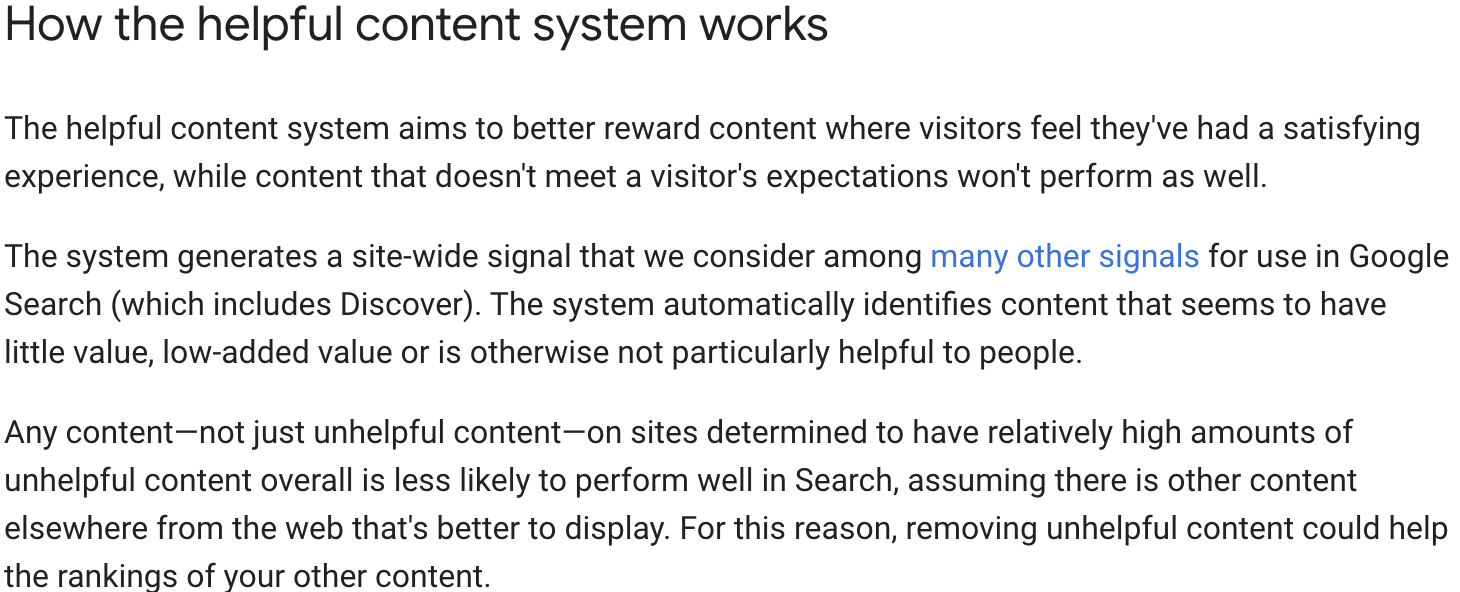
Here is how Google explains the helpful content system update:

Google explains the helpful content system update.

In other words – create content for people – not content for search engine rankings. 

E-E-A-T Refresher

In December 2022, Google updated their quality rater guidelines to prioritize experience. Google’s human quality raters are evaluating your content based on how it communicates: Experience, Expertise, Authoritativeness, and Trustworthiness.
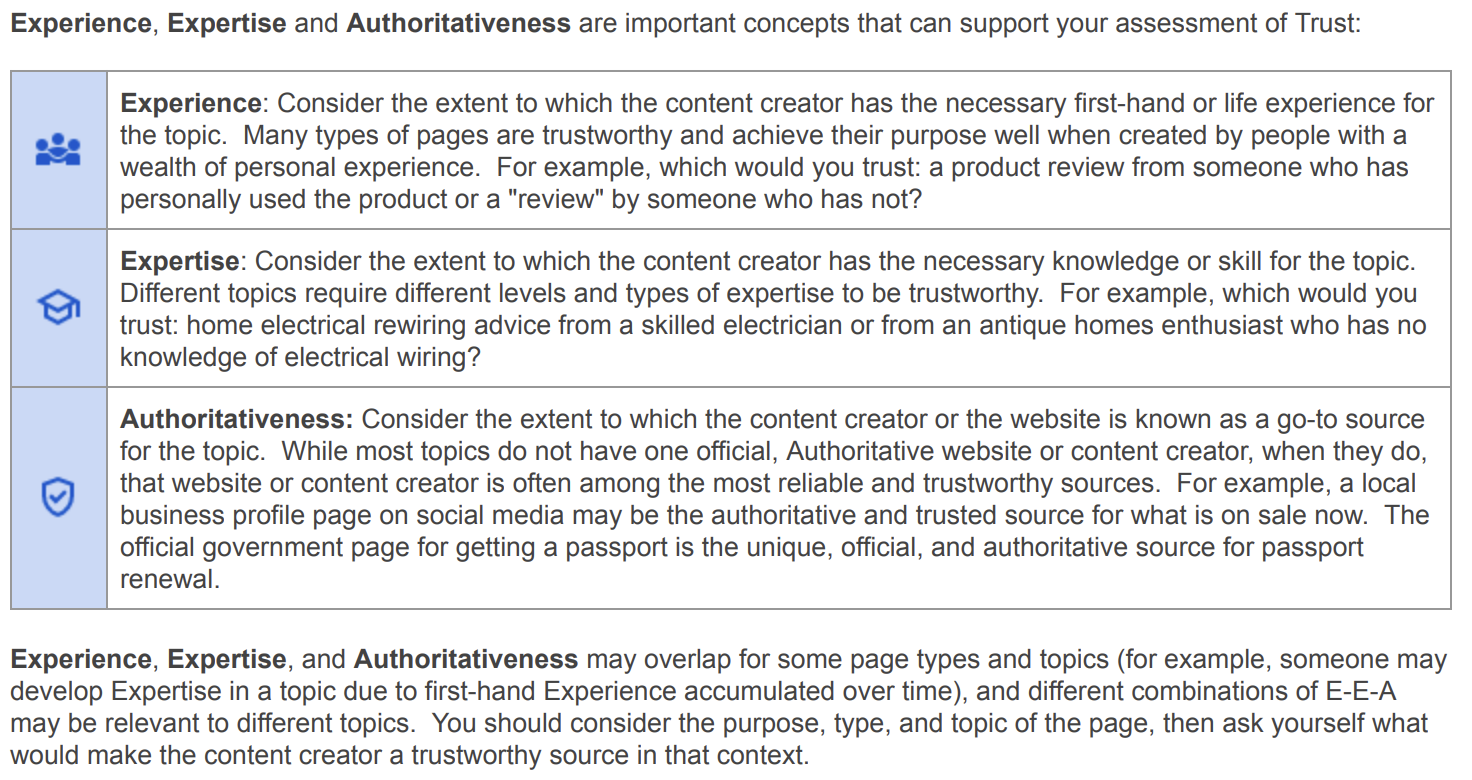
An explaination of E-E-A-T: Experience, Expertise, Authoritativeness, and Trustworthiness.

Do you have first-hand experience about the topic you’re writing about? Are you a trusted expert on the topic? Have you used the product or service you’re writing about? Do you have real-life customers? Have you conducted independent research on the topic?

Your Helpful Content Checklist

Your search volume, traffic, clicks, conversions, and sales all depend on consistently publishing helpful, high-quality, experience-based content.

Use this helpful content checklist to verify if your content is hurting or helping your search traffic:

1) Review your search data for changes since September 19. 

Use Google Analytics, BrightEdge, SEMrush, or your search traffic tool of choice to review your search data. Pay attention to your organic and branded search traffic, page visits, and your search engine results ranking.

2) Audit your content to ensure it meets Google’s expectations for helpful content.

Google has explicit instructions on how to assess and review the helpfulness of your content. Make sure you’re creating people-first content. Google describes this as: People-first content means content that’s created primarily for people, and not to manipulate search engine rankings.

Can you answer Yes to these questions?
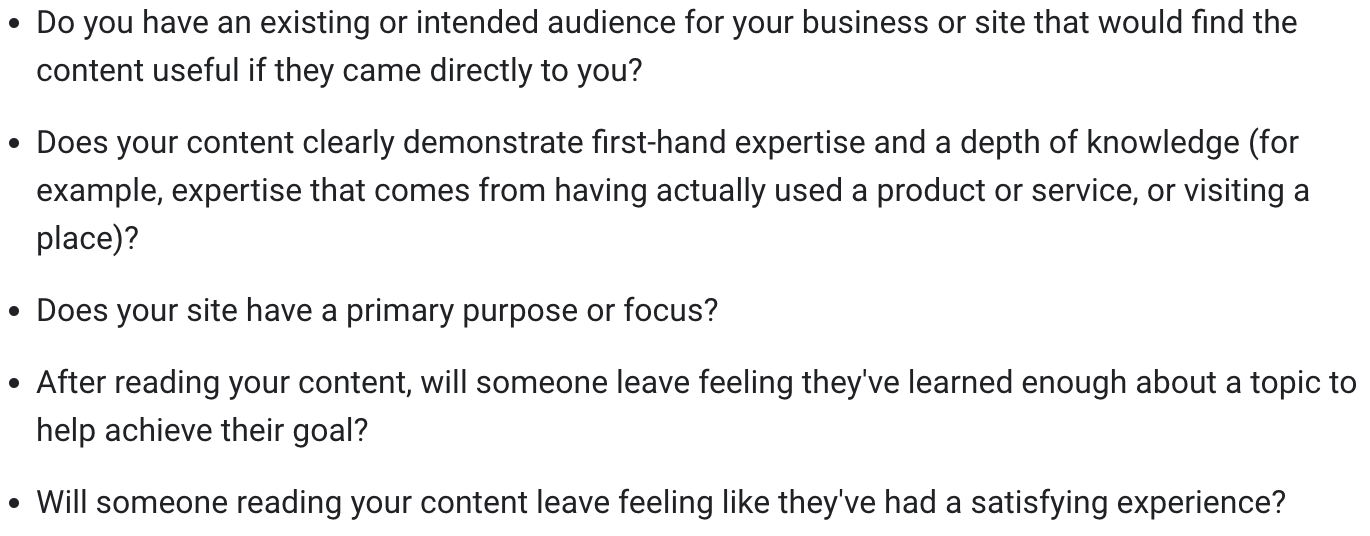
Questions to ask to help determine if your content meets Google’s expectations for helpful content.

Do not create content for search engines. Your content needs to be focused on helping your readers. If you can answer yes to any of the questions in the section titled Avoid creating search engine-first content, you need to change your approach to creating content.    

Think beyond keywords. Helpful, high-quality, experience-based content answers reader questions, provides them with new information they can’t find elsewhere, gives insights that only you can provide, focuses on search intent, and incorporates keywords.

Do not start writing content based on keywords – start with search intent. What problems or questions do your readers have? Do I have the experience and expertise to answer these? If yes – then write the content. When you write like this, you naturally use the keywords that fit the search intent.

3) Assess your content for E-E-A-T. This is especially important for YMYL websites. Any websites in the health, nutrition, supplement, fitness, food, or medical domains are YMYL sites.

Every single page must clearly prove experience, expertise, authoritativeness, and trust.

The importance of experience is amplified in the latest helpful content update. And for Google, experience and trust are linked. Do what Google says – read the guidelines.

Make sure your content is based on experience – without experience, you cannot build trust.

4) Focus on Who, How, and Why.

Who is creating the content? Who are you creating the content for?

How is the content created? If you’re using AI tools to help create the content, make sure you’re very clear about this. People trust other humans – so be very careful about using AI tools to write your content. And remember, people don’t like being tricked or lied to – so if you use AI tools to create content, you need to be upfront and honest about this.

How did you come to the conclusions, ideas, thoughts in the content? Did you conduct independent research, do you have medical training or experience in the subject matter, are you a recognized leader in this topic – be clear about your expertise and experience.

Why are you creating this content? The answer to this should be to help people. Here's what Google says about the Why of your content: 
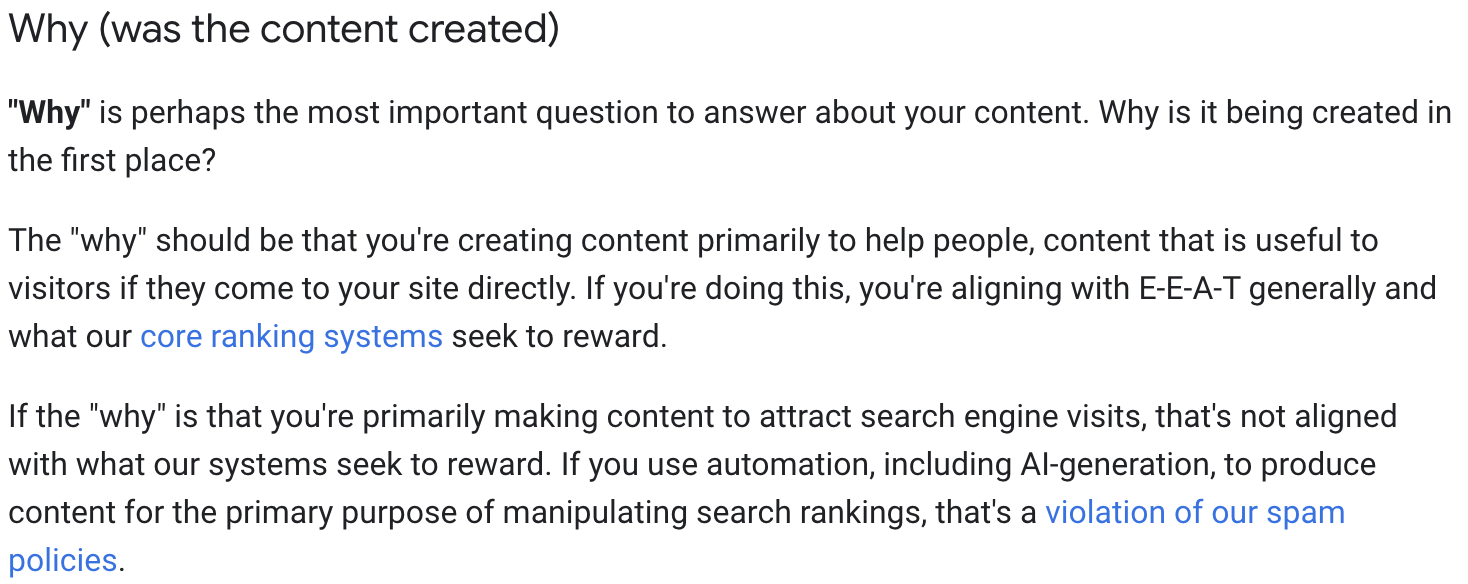
5) Update all content that does not conform to Google’s content guidelines.

If you have thin pages that don’t provide any value – update them.

If you have blogs without an author and bio – add this.

If you have pages that are confusing and don’t really say anything – edit them.

If you make scientific, health, or medical claims that aren’t backed by science – update this content and add in endnotes linking to the science.

If you used AI tools to write your content – include a statement that clearly communicates this.

If you created content for search engines – update it to be helpful, high-quality, experience-based content.

    You cannot ignore the helpful content update. You must provide helpful, high-quality, experience-based content on every single page of your website. 

    Recommended For You
    Latest Publication
    Screenshot_2026-05-26_at_7.47.16_AM.jpg
    June/July 2026
    CovHeart.jpg
    2026 Deep Dive Cardiovascular Health
    Screenshot_2026-04-16_at_11.51.39_AM.png
    May 2026
    CovMi26.jpg
    2026 Mastering the Microbiome Market
    Most Popular
    • DOP Venkat8707T01.JPG

      KSM-66 Ashwagandha/Shatavari Experience: Explore Shatavari

      By WholeFoods Magazine Contributor
      June 9, 2026
    • Anaheim Convention Center hosted four days of innovation, education, networking, and trendspotting at Expo West 2026.

      Expo West 2026 Trend Report: Innovation, Transparency & Functional Wellness

      By WholeFoods Magazine Staff
      May 26, 2026
    • Fostering mental wellness.

      The Pillars of Mental Resilience

      By Jennifer Joseph
      June 1, 2026

    WholeFoods Magazine is your one-stop resource for health and nutrition articles. We provide important information regarding industry news, research, and trends.

    The Magazine

    • Current Issue
    • Subscribe
    • Renew
    • Change of Address

    Information

    • Source Directory
    • Helpful Resources
    • Job Finder

    About Us

    • About Us
    • Contact Us
    • Advertise

    Social

    NOTE: WholeFoods Magazine is a business-to-business publication. Information on this site should not be considered medical advice or a way to diagnose or treat any disease or illness. Always seek the advice of a medical professional before making lifestyle changes, including taking a dietary supplement. The opinions expressed by contributors and experts quoted in articles are not necessarily those of the publisher or editors of WholeFoods.

    © Copyright 2026 WFC, Inc. All Rights Reserved.
    Privacy PolicyTerms