RSS
RSS
Vote Now! 2026 Ingredient Choice Awards
July 22, 2026
If you work in the natural products industry you probably know that the non-GMO category is growing and retailers are responding by stocking an increasing array of non-GMO certified products. In fact, Whole Foods Market recently announced that by 2018 products containing GMOs as ingredients will require special labels in all stores.
If you work in the natural products industry you probably know that the non-GMO category is growing and retailers are responding by stocking an increasing array of non-GMO certified products. In fact, Whole Foods Market recently announced that by 2018 products containing GMOs as ingredients will require special labels in all stores.
And in July 2016 Vermont’s GMO labeling law will go into affect requiring many products sold in the state to carry a label disclosing whether they are produced, or partially produced, with genetically engineered ingredients. But this doesn’t apply to dietary supplements.
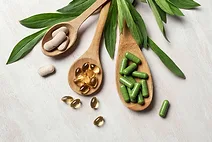
There’s no denying, non-GMO is a hot topic, and a hot seller, but exactly how do dietary supplements fit in with all this? What does it take to produce a truly non-GMO certified dietary supplement?
“There’s a lot that goes into non-GMO validation”, said Conor Mulroney, R&D Special Projects Manager at Source Naturals and Planetary Herbals. “The supplement industry faces a lot of challenges in trying to meet any real criteria that customers expect,” he added.
The road to declaring a dietary supplement GMO-free can be very complex. For example, some very common supplement ingredients may contain genetically modified elements such as GM corn, which serves as the fermentation medium for some vitamin C’s. Genetically modified soy oil yields vitamin E used in some dietary supplements, and several B vitamins may be manufactured with genetically altered microorganisms.
Additionally, many dietary supplements use ingredients from all over the world where language barriers may exist and trade secrets may be held close. And perhaps most important, requirements for non-GMO certification often vary country-by-country. India, China, Europe, America we all have different requirements for non-GMO certified status.
Plus, many dietary supplements often contain ingredients manufactured via a multilayer processes which may use a range of solvents, fillers, binders and excipients all with varying degrees of a possible GM presence.
Manufacturers Respond Supplement manufacturers are responding to the increasing interest in non-GMO products by pursuing various certification options, as well as by self-regulating with the development of company non-GMO criteria and policies.
The most popular agency offering support for verification is the Non-GMO Project. The Project helps coordinate the verification process and contracts out to other companies doing the actual verification. Some affiliates of the Non-GMO Project also offer their own verification options including FoodChain ID, Inc. and NSF International, but with less visibility then the Non-GMO Project.
And some dietary supplement manufacturers are opting to validate non-GMO ingredients using criteria based on the European Union labeling regulations ED 1829/2003 and EU 1830/2003. The EU regulations are legally mandated regulations in Europe and often used as the international standard by the industry supply chain.
Although the demand for non-GMO products has been growing for years, in the dietary supplement world, it may seem like this journey has only just begun. And yet, as long as consumers continue to demand non-GMO verified products, the supplement industry will continue to work towards a consensus and standardized requirements for all.
Julie Dennis has been a lecturer, writer and consultant in the natural products industry for over 20 years. Currently she lectures nationwide discussing health-related topics and intelligent usage of nutraceutical and botanical supplements. She graduated from Dr. Michael Tierra’s East West School of Herbology in 1996, contributed to major natural products industry trade publications, and assisted with editing on books including the American Botanical Council’s Clinical Guide to Herbs, and The Handbook of Clinically Tested Herbal Products, Haworth Press.
NOTE: The statements presented in this blog should not be considered medical advice or a way to diagnose or treat any disease or illness. Dietary supplements do not treat, cure or prevent any disease. Always seek the advice of a medical professional before adding a dietary supplement to (or removing one from) your daily regimen. WholeFoods Magazine does not endorse any specific brand or product.
Posted on WholeFoods Magazine 3/28/2016