Continue To Site >
Quicklinks
  • Ask Whole Foods Mag
  • Magazine Subscription
  • View Back Issues
  • Advertise
  • Education Center
  • Ashwagandha / Shatavari Experience
  • Naturally Informed
  • Move Nutrition
  • India-America Boardroom Series
Free Newsletter Subscription
Ask WholeFoods Mag
  • News
    • All News
    • In Case You Missed It
    • Breaking News
    • Grocery News
    • Dietary Supplements News
    • Supplier News
    • Health & Beauty Aid News
    • Green News
    • Research
  • Features
    • Supplements
    • Grocery
    • Health & Beauty Aids
    • Suppliers
  • Columns
    • Debates
    • Editorial
    • Good Health Reads
    • Happy Customer
    • Herb of the Month
    • Leadership Profiles
    • Legal Tips
    • Mentors
    • Merchandising Insights
    • Recipes
    • Naturally Informed Education
    • The Nutrition Mythbuster
    • Trade Secrets
    • Vitamin Connection
    • What's Selling
    • WholeFoods Blogs
  • Products
    • Dietary Supplements
    • Grocery Products
    • Gourmet Products
    • Health & Beauty Aid Products
    • New Product Reviews
      • 2021 Archives
      • 2019 Archives
      • 2018 Archives
    • Suppliers
  • Multimedia
    • Videos
    • Podcast
    • The Natural View
  • Directory
Ask WholeFoods Mag
  • Log In
  • Register
  • Log Out
  • My Account
Free Newsletter Subscription
Quicklinks
  • Ask Whole Foods Mag
  • Magazine Subscription
  • View Back Issues
  • Advertise
  • Education Center
  • Ashwagandha / Shatavari Experience
  • Naturally Informed
  • Move Nutrition
  • India-America Boardroom Series
Home » Blogs » WholeFoods Magazine » Top 3 Herbal Product Consumer and Market Trends

WholeFoods Magazine
WholeFoods Magazine RSS FeedRSS

Top 3 Herbal Product Consumer and Market Trends

March 27, 2014
Haley Chitty and Haley Chitty, American Herbal Products Association

Women and younger generations are generally more likely to consume herbal supplements and the economic downturn contributed to an increase in supplement use, according to Steve French, managing partner of Natural Marketing Institute (NMI). French highlighted several trends in the herbal products market during a presentation at AHPA’s annual member meeting on March 6 at Natural Products Expo West in Anaheim, CA.

“The botanical/herbal marketplace presents many opportunities, yet some challenges also exist,” French said. “These challenges can turn into opportunities if you have a complete understanding of the consumer and the marketplace.”

Who Uses Herbal Products The number of consumers who believe in the importance of herbal supplements for health maintenance is increasing. In 2013, 23% of consumers said that taking herbal supplements is important to maintain a healthy, balanced lifestyle, up from 17% in 2011.

French noted that women and younger generations are more likely to use herbal supplements. Not surprisingly, younger generations are more likely to view herbal supplements as safe and effective.


Generation

Believe Herbals Are “Very Safe”

Believe Herbals Are “Very Effective”

Millennials

40%

25%

Gen X

30%

21%

Boomers

21%

13%

Matures

19%

8%


Those who consume herbal supplements are also more likely to consume other supplements, according to French. On average, herbal users use roughly five different supplements daily compared to other supplement users who average three different supplements daily and vitamin/mineral users who average four supplements per day.

“Herbal product consumers are an extremely valuable consumer of the total supplement market; they are the leaders and trend predictors of opportunities that lie ahead,” French said.

The Recession and Supplements The recent economic downturn helped increase American adults’ herbal supplement usage, according to French. Today, roughly 36 million U.S. adults use herbals, a 33% increase since 2011. In fact, 13% of herbal supplement consumers said they increased their supplement usage during the downturn in the economy, a reflection of increased self-responsibility combined with a decrease in the trust in conventional (treatment-focus) healthcare. French highlighted several factors likely contributing to this increase, including:
  • Consumers taking more responsibility for their personal health
  • Growing concern about prescription medications, including side effects, interactions and increasing co-payments
  • Youth-centric trends prompting consumers to find ways to prevent aging
  • Aging population rapidly increasing based on cases of age-related conditions like heart and joint issues
  • Alternative supplement formats expanding into the mainstream
Herbal Market Opportunities In 2012, 44% of herbal supplement consumers preferred to get their supplements in other forms, up from 29% in 2007. The fastest growing supplement forms are soft chew, liquid, soft gel and chewable while capsule, tablet and dissolving tablet forms have generally remained stable.

A growing number of herbal supplement users also say they are more likely to buy dietary supplements that use sustainable or environmentally friendly ingredients. In 2013, 56% of herbal supplement users said they are more likely to buy sustainable products, up from 38% in 2009.

French said that herbal supplement companies can also capitalize on growing consumer concerns like ingredient sources and ecologically friendly products. More than 80% of herbal supplement consumers said that knowing the source of supplement ingredients and whether ingredients come from natural sources are important factors in their purchasing decision. In addition, nearly 70% said that organic ingredients are an important factor and roughly half look for vegetarian products.

Herbal supplement users have expressed concern about the nutrient absorption of supplements. Half of supplement users and 56% of herbal users said that they are concerned their body “doesn’t absorb enough of the nutrients the supplements are supposed to provide.” French said that this suggests an opportunity for companies to capitalize on the bioavailability platform.


Herbal users are also more concerned about correct dosages. One-third of herbal supplement consumers indicated that they are concerned supplements may contain a higher level of nutrients than what is on the label compared to only 23% of all supplement consumers. Similarly, 43% of herbal supplement users are concerned that there is a lower level of nutrients compared to 33% of all supplement users. WF

Haley Chitty, is the director of communications at the American Herbal Products Association, www.ahpa.org

Posted March 27, 2014
Recommended For You
Latest Publication
Screenshot_2026-05-26_at_7.47.16_AM.jpg
June/July 2026
CovAcNut26.jpg
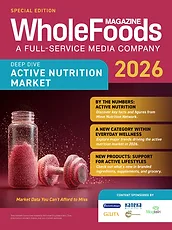
2026 Deep Dive Active Nutrition Market
CovHeart.jpg
2026 Deep Dive Cardiovascular Health
Screenshot_2026-04-16_at_11.51.39_AM.png
May 2026
Most Popular
  • imagem_2026-06-30_134813366.png

    UNPA Ceasing Operations in 2026

    By Rick Polito
    June 30, 2026
  • ADM_Reformulation_20.jpg

    Challenge Accepted: How ADM is Solving the Industry's Toughest Formulation Questions

    By Richard Ortega, Associate Editor, WholeFoods Magazine
    June 20, 2026
  • GettyImages-1742506652.jpg

    Natural Products News Briefs: Sabinsa, Layn, JAMBAR & More

    By Richard Ortega, Associate Editor, WholeFoods Magazine
    June 21, 2026

WholeFoods Magazine is your one-stop resource for health and nutrition articles. We provide important information regarding industry news, research, and trends.

The Magazine

  • Current Issue
  • Subscribe
  • Renew
  • Change of Address

Information

  • Source Directory
  • Helpful Resources
  • Job Finder

About Us

  • About Us
  • Contact Us
  • Advertise

Social

NOTE: WholeFoods Magazine is a business-to-business publication. Information on this site should not be considered medical advice or a way to diagnose or treat any disease or illness. Always seek the advice of a medical professional before making lifestyle changes, including taking a dietary supplement. The opinions expressed by contributors and experts quoted in articles are not necessarily those of the publisher or editors of WholeFoods.

© Copyright 2026 WFC, Inc. All Rights Reserved.
Privacy PolicyTerms