Continue To Site >
Quicklinks
  • Ask Whole Foods Mag
  • Magazine Subscription
  • View Back Issues
  • Advertise
  • Education Center
  • Ashwagandha / Shatavari Experience
  • Naturally Informed
  • Move Nutrition
  • India-America Boardroom Series
Free Newsletter Subscription
Ask WholeFoods Mag
  • News
    • All News
    • In Case You Missed It
    • Breaking News
    • Grocery News
    • Dietary Supplements News
    • Supplier News
    • Health & Beauty Aid News
    • Green News
    • Research
  • Features
    • Supplements
    • Grocery
    • Health & Beauty Aids
    • Suppliers
  • Columns
    • Debates
    • Editorial
    • Good Health Reads
    • Happy Customer
    • Herb of the Month
    • Leadership Profiles
    • Legal Tips
    • Mentors
    • Merchandising Insights
    • Recipes
    • Naturally Informed Education
    • The Nutrition Mythbuster
    • Trade Secrets
    • Vitamin Connection
    • What's Selling
    • WholeFoods Blogs
  • Products
    • Dietary Supplements
    • Grocery Products
    • Gourmet Products
    • Health & Beauty Aid Products
    • New Product Reviews
      • 2021 Archives
      • 2019 Archives
      • 2018 Archives
    • Suppliers
  • Multimedia
    • Videos
    • Podcast
    • The Natural View
  • Directory
Ask WholeFoods Mag
  • Log In
  • Register
  • Log Out
  • My Account
Free Newsletter Subscription
Quicklinks
  • Ask Whole Foods Mag
  • Magazine Subscription
  • View Back Issues
  • Advertise
  • Education Center
  • Ashwagandha / Shatavari Experience
  • Naturally Informed
  • Move Nutrition
  • India-America Boardroom Series
Home » Blogs » WholeFoods Magazine » Exploring Nature’s Fiber-Bound Polyphenols in Microbiome Health

WholeFoods Magazine
WholeFoods Magazine RSS FeedRSS

Brendankesler vdf fc

Brendan Kesler is the R&D Innovation Director for Van Drunen Farms and FutureCeuticals, and has over 15 years of experience in the consumer health and nutrition industry.  Additionally, Brendan is a PhD Candidate in Human Nutrition at The Rowett Institute at University of Aberdeen. Prior to joining The Rowett, Brendan earned a Bachelors in Exercise Science (B.S.), a Masters in Health Administration (MHA), and Master of Science in Nutrition Science (M.S.).  Brendan’s primary research focus is exploring the relationships between dietary fiber, fiber-bound polyphenols, and human health and obesity. Brendan is passionate about bringing evidence-based nutrition into food products where it can play a pivotal role promoting human health. 

Exploring Nature’s Fiber-Bound Polyphenols in Microbiome Health

June 11, 2024
Brendan Kesler, R&D Innovation Director, Van Drunen Farms and FutureCeuticals
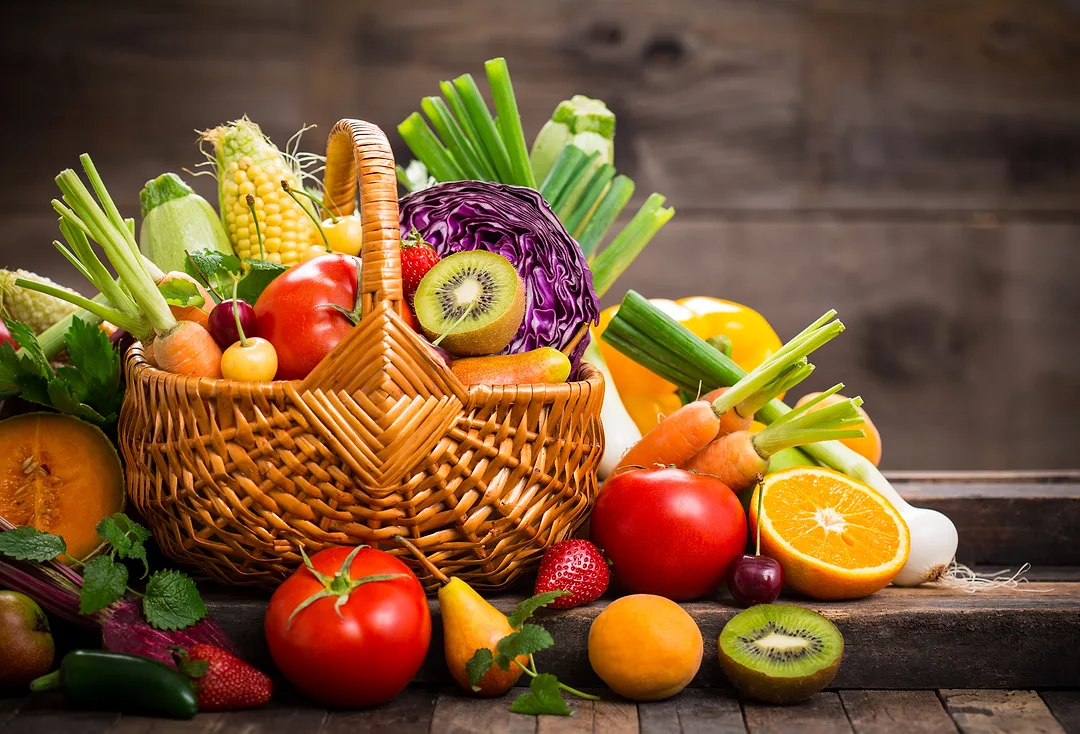
Produce_Fruit_Vegetables_GettyImages-541822810.jpg
Getty Images/iStockphoto

Working in nutrition, I always eagerly await the release of the Dietary Guidelines for Americans (DGA). The DGA is updated every five years and provides an evidence-based overview of what we should eat as part of a healthy dietary pattern, what we actually consume, and, most interesting to me, where the gaps are. The gaps between the recommendations and actual consumption are, to say the least, vast: Approximately 90% of the population does not consume enough vegetables, there is an 80% gap in fruit consumption, and although Americans consume lots of grains, 98% do not consume enough whole, unrefined grains (1).These gaps in healthy food groups have many potential health impacts, but my main interest is the resulting gap in dietary fiber, which impacts a staggering 90% of women and 97% of men in the United States (1).

The health benefits of dietary fiber are well-documented and well-understood. Dietary fiber plays a pivotal role maintaining the health of our gastrointestinal tract, promoting satiety, reducing the absorption of sugar and cholesterol, and, perhaps most intriguing, supports the nourishment of healthy microbes that reside in our gut (collectively referred to the as the “gut microbiome”). But one of the most fascinating aspects of dietary fiber is the fairly recent discovery that dietary fiber from plant foods is a carrier of powerful antioxidants called polyphenols. These polyphenols are often physically bound to dietary fiber and often referred to as “fiber-bound polyphenols.” That’s a bit of a mouthful, but from a simplistic perspective the important thing to know is that when nature creates fiber it’s often not alone. When fiber and bound polyphenols occur together, it’s a powerful synergy where both dietary fiber and fiber-bound polyphenols are capable of reaching, interacting, and positively modulating the gut microbiome (prebiotic effect) and both can be transformed by microbes into absorbable metabolites (postbiotics) (2,3).

I first learned about fiber-bound polyphenols several years ago when I was researching the Mediterranean Diet and discovered a publication that characterized the type of polyphenols found in the Spanish Mediterranean Diet (4). Fascinatingly, the researchers found that of the dominant plant foods in the Spanish Mediterranean Diet, 78.5% (942 mg) of the polyphenols were associated with a food component, such as dietary fiber, and only 21.5% (258 mg) were free polyphenols easily separable from food (4). This insight forever changed the way I think about dietary fiber because it means that if we are not consuming enough fiber from real food sources, we may also reduce our intake of fiber-bound polyphenols and miss the benefits they offer to our gut microbiome. It also creates a possibility that the health benefits historically attributed to fiber alone may be in some part also related to associated polyphenols.

There’s so much more to be researched and discovered, but for now I’ll leave you with the simple encouragement to fill your plate with diverse plant foods, loaded with dietary fiber and, your new friend, fiber-bound polyphenols: Your gut, your microbiome, and your health will all thank you!    


For a deeper dive into the topic of Fiber-Bound Polyphenols in Microbiome Health, don't miss Naturally Informed's virtual education conference Microbiome: Mastering the Market, taking place June 25-27, 2024. The event is free to attend, and sessions can be viewed live or on demand after the event. Register here.


References:

  1. U.S. Department of Agriculture and U.S. Department of Health and Human Services. Dietary Guidelines for Americans, 2020-2025. 9th Edition.

  2. Perez-Jimenez, et al. Non-extractable polyphenols, a major dietary antioxidant: occurrence, metabolic fate and health effects. Nutrition Research Reviews. 26, 118–129. doi:10.1017/S0954422413000097  
  3. Saura-Calixto, F. & Perez-Jimenez, J. (2018) Non-Extractable Polyphenols and Carotenoids: Importance in human. Royal Society of Chemistry.  
  4. Arranz, S., Silván, J. M., & Saura-Calixto, F. (2010). Nonextractable polyphenols, usually ignored, are the major part of dietary polyphenols: a study on the Spanish diet. Molecular Nutrition & Food Research, 54(11), 1646–1658. https://doi.org/10.1002/mnfr.200900580
Recommended For You
Latest Publication
Screenshot_2026-05-26_at_7.47.16_AM.jpg
June/July 2026
CovAcNut26.jpg
2026 Deep Dive Active Nutrition Market
CovHeart.jpg
2026 Deep Dive Cardiovascular Health
Screenshot_2026-04-16_at_11.51.39_AM.png
May 2026
Most Popular
  • DOP Venkat8707T01.JPG

    KSM-66 Ashwagandha/Shatavari Experience: Explore Shatavari

    By WholeFoods Magazine Contributor
    June 9, 2026
  • Research-Innovation-GettyImages-2228817853.jpg

    Research Updates: Pet Longevity, Metabolic Health, Stress Relief & More

    By WholeFoods Magazine Staff
    June 11, 2026
  • GettyImages-1356683353.jpg

    In Memoriam: John James Mastel Sr., Founder of Mastel's Health Foods

    By Richard Ortega, Associate Editor, WholeFoods Magazine
    June 9, 2026

WholeFoods Magazine is your one-stop resource for health and nutrition articles. We provide important information regarding industry news, research, and trends.

The Magazine

  • Current Issue
  • Subscribe
  • Renew
  • Change of Address

Information

  • Source Directory
  • Helpful Resources
  • Job Finder

About Us

  • About Us
  • Contact Us
  • Advertise

Social

NOTE: WholeFoods Magazine is a business-to-business publication. Information on this site should not be considered medical advice or a way to diagnose or treat any disease or illness. Always seek the advice of a medical professional before making lifestyle changes, including taking a dietary supplement. The opinions expressed by contributors and experts quoted in articles are not necessarily those of the publisher or editors of WholeFoods.

© Copyright 2026 WFC, Inc. All Rights Reserved.
Privacy PolicyTerms