“You mean to tell me that the way we have been doing it the last 60-plus years has been wrong?” That conversation with my father still echoes in my mind today. He and my grandfather had been very successful, raised close to 40 crops before I came home from college, and had always been able to turn a profit. He had watched me and supported me through my struggles, trying to understand why I couldn’t be as successful as he was.
You see, farmers rarely retire. If the older generation is lucky enough, they start to slow down and become more of a consulting partner that allows the next generations to do the heavy lifting. This slow down doesn’t remove them from the business, it just gives them a better bird’s eye view. My father was just as baffled as I was, watching our yields start to slip in our vegetable crops, then came the quality issues, profitability, and ultimately our joy and our sense of fulfillment of finishing a crop. We attempted to change rotations, fertilizers, varieties...and continued to feel as if we were beating our head against the wall. I had pretty well arrived at my lowest point both in farming, and in my own self esteem.
I caught wind of this new buzz word “regenerative agriculture,” so I started producing huge amounts of compost, and started planting cover crops all because I just couldn’t shake the hunch that something was lacking and regenerative practices might be the answer. Conversations with many different consultants, both organic and conventional, started to reveal to me that maybe I was to blame for my own misery, but I just wasn’t willing to hear it. After all, I had some college education. I had one of the most sought-after consultants in my area. I thought I had it all figured out, and just kept thinking in my mind I was cursed with bad luck.
Looking for something different took me to a cotton grower’s school taught by John Kempf, the Founder of Advancing Eco Agriculture. John had been contacted the year prior by a group of west Texas farmers looking to produce a better product. He started the morning session by telling his own story of struggle on his farming operation with his father. It absolutely blew me away that the story he told of the issues on their Ohio farm was nearly identical to my own in southwest New Mexico. He talked a lot that day about plant health, mineral balance within the plant, and ultimately soil health. He revealed to me that his issues, and in reflection my own, had been self-inflicted. Powdery Mildew, Fusarium, Phytophthora, thrip, aphids, leaf miners, virus, bacteria, and even weeds all went back to an imbalance of nutrition and lack of biology in our soils.
I was so blown away by what I learned that day that on our way home I told my son that we were going to try this system on a big scale. I explained to him what a gift it was that at 18 years of age he had not been confused by the aging science of the college textbook. This was going to be a little harder on me as I would have to forget most of what I had been taught, and dangle near everything I thought I knew or had learned along the way. We started working with our AEA consultant and got a crop in the ground in the spring with only a few struggles.
My first ah-ha moment came after the cotton crop had gotten to a size that it was time to start setting fruit and the lygus bugs started to move in. A conventional consultant that scouts for me recommended a light chemical application. I passed the info along to our new regenerative consultants, who had a different idea: They had me apply a simple organic nutrient recipe.
The next week when the crop scout was out, he asked if we had sprayed everything. I assured him that I had and off he went to look. A little over an hour later he returned to ask again if I had sprayed. I assured him I had, so he then asked if I used the chemical. I replied with another question: "Are the lygus still a problem?"
His answer: “We don’t have any lygus and the beneficials are still alive!”
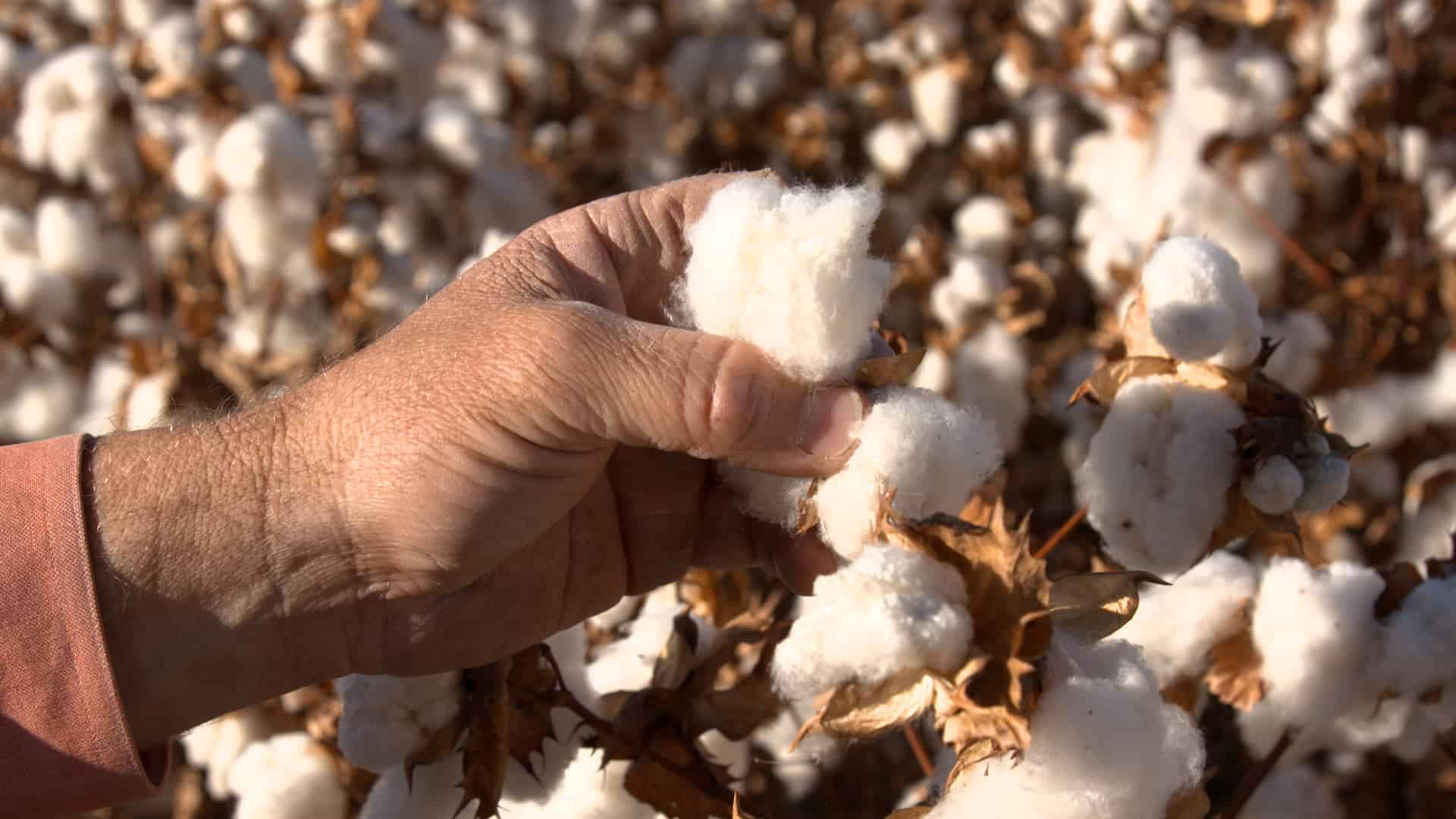
Image courtesy of James Johnson.
I then shared what we had used, and his first comment was, “Maybe we should try it on the onions.”
That day both he and I changed a little. By the end of the season, we looked back and realized that with a few minor changes to the program we could have been organic.
Organic certification seemed impossible to me a few years earlier, but I now realize that that was because I was listening to those sales people who kept handing me a jug and whispering in my ear that life is better through chemistry. I had learned in my first season of regenerative production that I had been the one farmed rather than my crop.
A funny reminder popped up on my Facebook memories from six or seven years ago that was me discounting the need for, or the purpose of, organic production. Oh how my ways changed once that lump of grey matter between my ears was changed.
Long story short: Old dogs can learn new tricks if they are willing to learn and have the right team behind them. Consultants and product reps are important, but the support system also comes from the brands and retailers, and ultimately the consumer wanting to help someone “do it better."
I am James Johnson. I am a former chemical farmer trying to kick bad habits. I consider myself a recovering glyphoholic who now just wants to “feed my soil, feed my community, and feed my soul.”
 RSS
RSS