Ashwagandha Enters a Root-Only Era in India
June 30, 2026
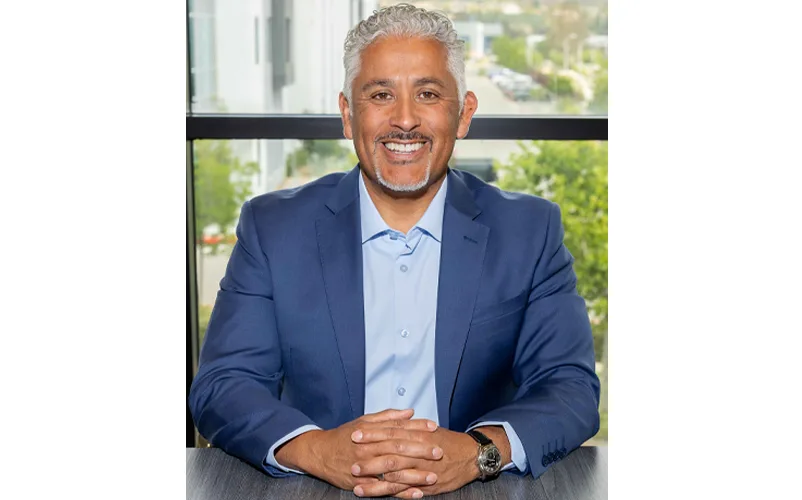
Every mistake you make is an opportunity to get better. —Adel Villalobos
When Adel Villalobos entered the dietary supplement industry in the mid 1990s, he wasn’t driven by revenue targets or dreams of building a massive company. He was driven by a desire to learn.
That mindset would shape a career spanning R&D, manufacturing, advocacy, and industry stewardship. Along the way, Villalobos helped champion ideas that would become foundational to modern dietary supplement manufacturing, including quality-by-design systems in the supplement space, continuous improvement philosophies, stronger regulatory alignment, and scientific rigor.
Villalobos entered the industry shortly after passage of the Dietary Supplement Health and Education Act of 1994 (DSHEA), a moment he describes as the beginning of the modern supplement industry.
“I felt like I had the great luck to be joining an industry that was on the cusp of becoming huge,” he shares. “It was a renaissance period for the industry.”
Armed with a biochemistry background and an intense curiosity about emerging ingredients and formulation science, Villalobos immersed himself in every aspect of the business. Working at Natrol under founder Elliott Balbert proved especially formative.
Balbert’s leadership style made an impression. Villalobos was struck not only by Natrol’s scientific and manufacturing sophistication, but by Balbert’s accessibility and deep commitment to protecting the integrity of the industry itself.
“He was a steward of the industry,” Villalobos says. “He battled for consumer rights, and he had pride of ownership.”
At Natrol, Villalobos gained exposure to product development, marketing, compliance, quality control, and scientific education. He educated sales teams on vitamins, minerals, botanicals, and emerging nutraceutical ingredients while simultaneously learning the operational procedures of manufacturing and regulatory oversight. He also aimed to continuously expand his knowledge, reading everything he could on all aspects of the industry every day and every night, including Herbs of Commerce, The Complete German Commission E Monographs: Therapeutic Guide to Herbal Medicines, and every bodybuilder magazine, including Flex, Muscle & Fitness, Iron Man and more.
His hunger for education and open mindset helped Villalobos see a growing problem: inconsistency in manufacturing quality across the supplement landscape. While Natrol maintained rigorous internal standards, Villalobos discovered many companies did not. During his early days of exploring entrepreneurial opportunities in the 2000s, he toured multiple manufacturing facilities in Southern California and was alarmed by the low standards he encountered.
Initially, after Natrol, Villalobos had started his own dietary supplement business (which he later sold) in an attempt to compete as a low-cost leader with high standards. These experiences lead to a major turning point in his career.
“I wasn’t using my biochemistry degree nor was I passionate about engaging in operations to truly become a low-cost leader…It’s ironic, because originally I thought being a low-cost leader was what would make me a big company, but I found that by following my passions and beliefs, I created a company that had something the big companies wanted but had difficulty replicating.”
That success, though, led to an internal conflict: Villalobos wrestled with the tension between being purpose-driven and building a profitable company. “You have to reconcile being a good-natured individual with the idea of being profit-driven or cause-driven,” he says.
Over time, he came to see business success not as a contradiction to industry stewardship, but as a prerequisite for it. “If you do not succeed as a business, you can’t impact an industry, you can’t impact consumers,” he explains. “It is your responsibility to succeed as a business.” That realization reshaped his thinking around growth, profitability, and scale—not as personal ambitions, but as tools that would allow him to contribute more meaningfully to the future of the dietary supplement industry.
This background and mindset became the foundation for what ultimately would distinguish his company, Lief Labs, from its competitors. Villalobos shifted his focus toward scientific problem-solving, formulation creativity, and operational excellence.
At the same time, the regulatory environment was evolving rapidly. While some manufacturers viewed upcoming cGMP regulations as burdensome or threatening, Villalobos gradually came to see them differently.
By embracing good manufacturing practices early, and investing heavily in procedures, testing systems, documentation, and compliance, Villalobos positioned Lief ahead of competitors. By the end of 2009, the company had achieved NSF GMP certification before many similarly sized manufacturers.
That decision proved transformative. As larger retailers and brands began requiring stronger compliance standards, companies that lacked certifications increasingly turned to Lief for manufacturing support. Some competitors even asked Lief to manufacture for their clients.
Villalobos credits much of Lief’s growth to viewing cGMPs not as obstacles, but as operational playbooks. “DSHEA was really a blueprint for success and I leaned into that blueprint,” he says.
Others did not, and DSHEA regulations closed companies that were giving the industry a bad reputation, Villalobos recalls.
Innovation also played a major role in Lief’s successful expansion. Villalobos increasingly differentiated the company by offering product design and development services rather than functioning solely as a contract manufacturer.
“Everyone knows the term CMO or Contract Manufacturing Organization, but I like to refer to Lief as a DDCMO or a Design and Development Contract Manufacturing Organization,” he says.
A delicious example: Drawing inspiration from childhood cereals, ice cream flavors, Kool-Aid™, Gatorade™, and flavors rooted in his cultural background, Villalobos introduced more adventurous formulation concepts into the supplement space long before flavor licensing collaborations became mainstream.
“I would look at Cinnamon Toast Crunch™, Fruity Pebbles™, horchata, jamaica,” he says. “There were no limits.”
That willingness to experiment set Lief apart in an increasingly competitive market. “Trying things that hadn’t been done before was what took Lief to the next level,” he says.
Another defining moment came in 2008 when a friend asked whether a supplement could be guaranteed free of sports banned substances for a USC athlete subject to testing. Villalobos realized that despite being the manufacturer, he couldn't confidently make that promise without implementing additional safeguards throughout the supply chain. The experience led him to collaborate with anti-doping and lab testing expert Oliver Catlin of BSCG to develop systems focused on ingredient traceability, chain-of-custody controls, testing and “quality by design”—a concept that would later become far more common in the industry.
Today, certifications for sports-safe supplements are widely recognized. At the time, however, Villalobos was among the early adopters pushing those standards forward.
Throughout his career, Villalobos says leadership never felt like a destination so much as a responsibility that evolved over time. “I lead by example,” he explains. “But leadership is painful because you’re constantly doubting yourself and constantly getting things wrong.”
That openness about mistakes, uncertainty, and self-reflection has become central to his leadership philosophy. Villalobos emphasizes transparency, mentorship, and helping employees understand not only their jobs, but the broader realities of business and industry dynamics. “I believe a good leader develops people for the sake of the greater community,” he says.
As Lief expanded from just a handful of employees to hundreds, Villalobos increasingly focused on creating opportunities beyond the company itself. He partnered with colleges to establish internship pipelines and workforce development initiatives, particularly for underserved communities.
Among the projects he is most proud of is helping support a four-year biotechnology bachelor’s program at Los Angeles Mission College, which graduates its first class this year. “My relationships with Mission College started with offering internships to develop local area students, many of whom are from historically underserved communities. I never thought it would lead to a four-year degree and that’s been very satisfying. I’ve also become a member of the Board of Regents at LMU.”
Villalobos also has had the opportunity to do more with advocating for workforce development as part of the LA CEO Council and through a partnership with College of the Canyons. “We created a certificate in electrical engineering for my employees who were looking to increase their skillset not just for their time at Lief, but beyond,” he shares. “We’ve had 20 employees take advantage of that opportunity.”
Villalobos’ long-standing involvement with the Natural Products Association (NPA) has become a major extension of his leadership philosophy. Influenced early on by Balbert and other mentors who advocated for DSHEA and industry self-governance, he became increasingly active in policy conversations surrounding compliance, FDA collaboration, and the future of dietary supplement regulation.
Over the years, Villalobos attended industry meetings, debated evolving GMP proposals, and, despite earlier opposition, ultimately came to view strong standards as essential to protecting both consumers and the credibility of the industry itself. Today, he works with Daniel Fabricant, Ph.D., at NPA on issues such as regulatory alignment and innovation.
Organizations like NPA play a critical role in ensuring the industry evolves thoughtfully, Villalobos says. “If we want to continue innovating, we have to stay engaged, collaborate with regulators, and help shape the future of the industry instead of waiting for others to shape it for us. We need collaboration with FDA. That’s the only way we remain credible and trusted by consumers.”
Today, Villalobos continues to view the industry through the lens that first inspired him decades ago: stewardship. “That's why today, as I moved to chairman of Lief so I can do more for industry, I put together an incredible leadership team led by CEO David Schwendimann, who believes in the vision and has the values and industry acumen to take what I started to the next level.”
Always focused on the greater good, he adds, “If the industry flourishes, consumers benefit. If consumers benefit, we all benefit.”
Sponsored content.