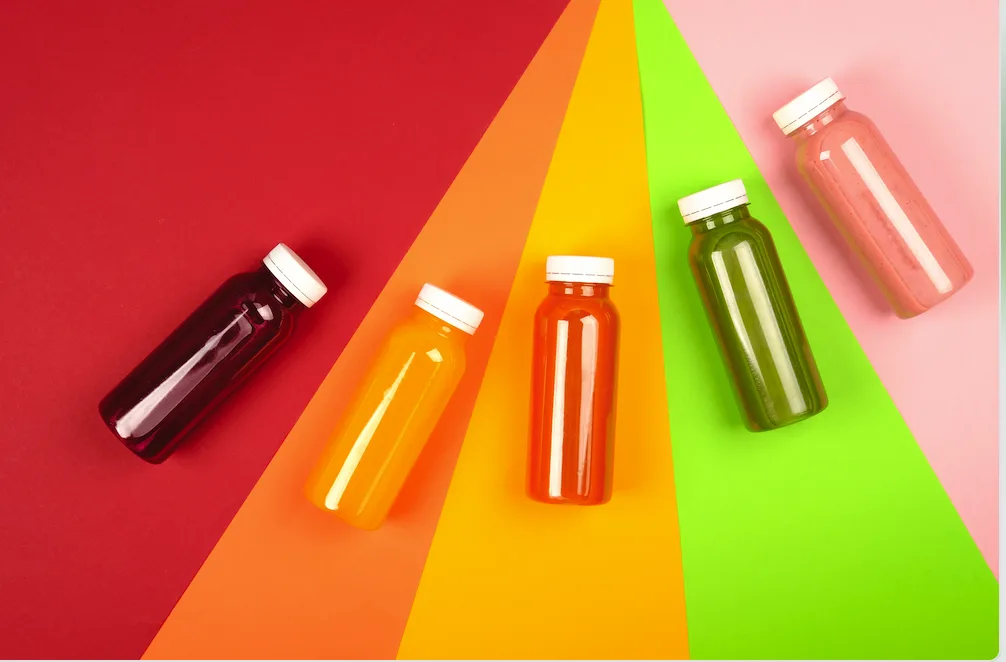
Food isn’t just food anymore. It’s vitamin-boosted, probiotic-infused, nourishment-plus. The same goes for the beverage market. Feeling thirsty? You could have a glass of water or reach for a citrus-flavored beverage that can aid digestion and support immunity. Or better yet, why not opt for a refreshment that supports skin health and gives you energy to power through the day?
If the options seem endless, it’s because the functional food and beverage market is undergoing a major overhaul. For insight, we connected with category experts to discuss the trends setting the segment’s pace, the products connecting with today’s consumers, and a look at what's ahead.
Rise of Multifunctional Wellness
Consumer understanding of how gut health is connected to overall wellness is growing at a rapid pace, creating a pathway for functional brands to get creative with their offerings, like in the wellness shots category, which GoodBelly CMO Lella Rafferty says has been built around quick, targeted solutions for benefits like digestion. “One thing that’s changing is a deeper understanding of gut health itself—how the gut is not just responsible for digestion, but also connected to mood, immunity, and even mental clarity. Gut health is not something you fix in the moment—it’s something you build over time.”
Shoppers want maximum returns, adds Di Tan, Technical Sales, CarnoSyn Brands, Natural Alternatives International, Inc. “Consumers are gravitating toward multi-functional, ready-to-drink beverages. They want products that offer more value. Companies can meet them where they are with multi-benefit formulations, such as energy + immune support, gut health + muscle support, hydration + creatine, and more.”
Marc Doggett, CEO of COCO5 sees the hydration sector as the one with the highest potential for upside, "Some of the strongest growth areas we continue to see include functional hydration beverages, better-for-you energy drinks and of course protein-forward beverages and recovery products. Within hydration specifically, products with natural electrolytes, coconut water, lower sugar formulations, and clean-label positioning continue gaining momentum with consumers. At COCO5, we have seen firsthand how consumers are shifting toward hydration products that deliver both performance and cleaner ingredients. Our hydration platform is built with 26% real coconut water, not coconut juice, which is an important distinction as consumers become more educated about ingredient quality and sourcing within the category."
Understanding benefits has altered the dynamic between certain products and their target audience. “What we’re hearing from consumers is that their relationship with energy drinks is changing,” shares Maria Stanieich, Senior Marketing Manager, Kyowa Hakko USA. “For a long time, these products were pretty straightforward—high caffeine content and big flavors. But nearly a third of energy drink consumers we surveyed said what they actually want now is sharper focus, better memory, sustained mental energy, and support for productivity. That’s a different kind of consumer walking into your store, and it’s causing us to rethink what we mean when we say ‘energy drink.’”
"The biggest shift isn't about a single ingredient. It's a fundamental change in what consumers expect a beverage to do for them," explained Ravi Jhala, VP of Commercialization at FedUp Foods. "Refreshing and low or zero sugar call-outs" no longer cuts it. Today's consumer is asking: what does this actually do for my body? That's fueling function stacking. Consumers want one beverage to cover multiple need states: gut health and energy, hydration and cognitive support, protein and metabolic balance. You can see it on the shelf: Starbucks launched Coffee and Protein with 22 grams of protein plus 5 grams of prebiotic fiber; Recess Mood stacks magnesium, L-theanine, and adaptogens into a sparkling water targeting relaxation and stress relief. For us, this is an exciting space to be in. FedUp Foods has been producing functional beverages for nearly 20 years, and fermentation has always been our foundation. It's a natural base for building multi-functional beverages, from our kombucha, prebiotic soda, electrolyte beverages and beyond."
Pointing to Mintel data, Tom Druke, Senior Marketing and Business Development Manager, Balchem Human Health & Nutrition, says energy remains the leading functional health claim globally, with digestive well-being and immunity close behind. "Brain health is also rapidly gaining momentum, now ranking among the top five functional claims in North America and Europe, signaling a clear interest in cognitive performance and day-to-day resilience.”
Zooming in, Abby Stickney, Vice President of Marketing, Innovation & E-commerce, Nutiva, says consumers seek ingredient familiarity, as well benefits built into both pantry staples and easy-to-use formats. To support wellness, consumers are building daily rituals—think cooking with functional oils or adding collagen to a morning coffee.
There also is growing demand for clean-label formulations, clinically backed ingredients, and products that deliver multiple health outcomes in a single serving, says James Roza, VP of Technical Services, BioVivo Science.
Of course, it better taste good. Angie Rimel, Marketing Communications Manager, GELITA, sees particular consumer interest in products centered on protein enrichment and sugar reduction, and notes, “Consumers are actively seeking foods and drinks that support wellness goals, but they are still unwilling to compromise on taste and texture, which remain the top drivers of purchase decisions.”
Taking a closer look at protein, Chad Clem, Vice President, R&D, FSQA & PLM, Applegate, says the conversation is evolving. “Consumers are now looking for protein paired with ingredient transparency, nutrient density, and simplicity. We’re also seeing a growing ‘real life’ approach to eating, where convenience, value, and health are all being balanced at once, rather than food preferences being driven by strict diet identities. We’re also seeing convenience emerging as something consumers value for its inherent functionality within their busy lifestyles. As a result, we’re seeing strong demand for convenient, ready-to-eat or ready-to-heat protein formats that fit into everyday routines.”
Todd Jones, Senior Director of Omnichannel Strategy for ZBiotics, says that more than everyday regimen integration, these products are finding their way into everyday life—at restaurants, at parties. "One of the more interesting shifts is where these products are showing up. We’re starting to see functional offerings move into hospitality environments, festivals, and intimate gatherings like weddings, becoming part of the overall experience rather than something separate from it. At ZBiotics, for example, our Pre-Alcohol product is now being offered on menu at restaurants and bars across major markets, including concepts like COTE Korean Steakhouse, Boia De, and Hestia, where it’s positioned as a wellness-focused 'first-round' before drinking. That kind of integration reflects a broader trend: functional products becoming embedded into real-world moments, not just taken at home."
Tan points to collagen’s emergence: “As the category continues to grow, we will see sports nutrition ingredients make their way into more mainstream health and wellness applications. This pattern has occurred with collagen and creatine, and we’re about to see it with ingredients like BCAAs and beta-alanine.”
Collagen is a popular GLP-1 companion product, adds Moreno Torres. “GLP-1 companion products are seeing a surge. One-in-eight adults currently take a GLP-1 drug, according to a poll from KFF, a leading health policy organization. To protect the investment in themselves, people turn to companion products as invaluable tools to support their progress. Enhanced nutrition can also help address common concerns associated with GLP-1 use—such as skin health, muscle retention, gut health, and mobility. A multifunctional product like Peptan collagen peptides can support these consumers on their GLP-1 journey by providing gut comfort, skincare benefits, and extra protein.”
Another emerging impact of GLP-1 use: “There is a surge in mood support ingredients, muscle and gut health, and the search for alcohol alternatives in the functional food and beverage category. One of the micro-trends driving growth in mood support is the use of GLP-1 medications,” explains Keely Johnson, VP of Sales and Marketing, Arjuna Natural. “According to Mintel, GLP-1 snackers have fewer cravings; however, this also means less indulgent flavors and fewer mood-boosting signals to the brain, leading to low mood, also known as ‘Ozempic personality.’”
While the GLP-1 effect might be new, Florencia Moreno Torres, Global Marketing Manager at Rousselot by Darling Ingredients, says the product development it has inspired strikes a familiar chord: “GLP-1’s influence can be seen throughout functional foods and beverages. However, the effect on product development should also feel familiar: high-protein, high-fiber, and nutrient-dense formulations have been top of mind since long before GLP-1 went mainstream. Now it’s about combining those qualities to reach consumers on GLP-1 treatments, either through portion management, symptom mitigation, or even alternative methods to support metabolic wellness.”
Indeed, consumers are no longer just seeking basic nutrition; they are eating with intention, choosing nutrient-dense foods that support specific health outcomes, says Cecilia Lu, Senior Trade Marketing Manager at Felicia. Lu notes that along with strong demand for recognizable, minimally processed ingredients, transparency in sourcing and formulation, greater attention is being paid to dietary needs such as gluten-free and allergen-friendly.
What to Stock at Retail
What do all of these market shifts mean for retailers? “High-protein versions of everything from coffee creamers and sodas to chips and cereals are flying off shelves,” says Dominick DeLegee, Co-Founder of Prima. “Also beef tallow: Once dismissed in favor of seed oils, beef tallow is staging a major comeback as consumers reject ultra-processed vegetable oils and embrace traditional, stable animal fats for cooking and skincare.”
At Applegate, Clem says the company is seeing momentum across its entire portfolio with convenient, protein-forward formats that can move across dayparts—from deli to fully cooked refrigerated or frozen “ready-to-heat-and-eat” offerings. “We’re also seeing traction in larger pack sizes as consumers look for products that deliver taste and value in current economic realities.”
Gut support products are another solid bet, says Rafferty. “Gut health-focused products, particularly those that go beyond single-ingredient solutions, are resonating as consumers look for more effective, holistic ways to support the microbiome. Our GoodBelly Prebiotic & Probiotic Wellness Shots are a strong example—they’ve seen significant growth since launching at Whole Foods last summer for exactly this reason.”
Nutrition powders are another standout, says Stickney. “Collagen is rapidly growing and evolving beyond providing only one benefit into multi-functional solutions that support skin, gut health, and energy all in one simple daily addition to a routine.”
Collagen’s popularity has been a key commercial force for its suppliers, including GELITA. “OPTIBAR—GELITA’s innovative collagen protein solution—is designed specifically for high-protein and low-sugar bars,” shares Rimel. “OPTIBAR enables manufacturers to create bars with exceptional texture, stability, and shelf life, helping overcome common formulation challenges such as hardening, brittleness, or stickiness over time. The result is a superior sensory experience combined with the functional and nutritional benefits today’s active consumers demand.”
Hanna Charron, Associate Director Global Product Management, UC-II Ingredient, Lonza Capsugel, says the momentum behind collagen, combined with consumer focus on healthspan, has helped UC-II undenatured type II collagen grow. “When it comes to choosing the preferred ingredient among mobility consumers in particular, collagen comes out on top,” Charron says, adding that undenatured type II collagen (such as Lonza Capsugel’s UC-II) delivers meaningful mobility benefits at a low daily dose of 40 mg, so it can be easily formulated into functional foods and beverages.
Speaking of healthspan: “With growing consumer interest in cognitive and performance support, choline has emerged as a promising ingredient in the functional beverage market,” says Druke. “This nutrient sits at the intersection of brain health and physical performance through its role in the production of acetylcholine. This neurotransmitter helps coordinate the response of neuronal networks and transmit messages from the brain to the muscle, facilitating essential cognitive functions like memory, mood, and muscle control.”
Women in the Spotlight
With the industry’s growing investment in women’s health, the functional foods and beverages segment will also see a rise in women-led brands. “One of the more notable growth trends in the functional beverage space is the rise of female-founded brands,” says Trisha Ashworth, founder of Productive Energy Co. and creator of AUTOFOCUS. “It’s something I am very proud to be part of.”
Charron echoes that: “Women’s health across all life stages is gaining momentum. While women have long been the most engaged consumers in the health and wellness space, many of their long-term concerns remain underserved, and over 30% of female consumers worldwide remain unsatisfied with the products available to address their health concerns. This demonstrates both a demand and a need for innovation in targeted solutions that better support women’s unique health needs.”
Order Up: What’s Next in Functional Food & Bev
Companies like Kyowa are investing in research to determine where the next wave will emerge. “Kyowa invested in a survey to help chart the brand’s next course,” explains Stanieich. “Our consumer survey from earlier this year revealed that people want to get the benefits of energy drinks—focus, memory, mental energy—in new types of beverages like fruit juice, tea, and water. That opens up a lot of interesting opportunities to reach new consumers. An ingredient like Cognizin works across those formats, which means brands that have historically played in one category can bring something new to the shelf without entirely reinventing themselves. A consumer who would never pick up a traditional energy drink might actually consider a functional tea or a clean-label water that supports focus and mental clarity. It’s the same consumer need, just a new way to meet it.”
Johnson says herbal innovation is a focus at Arjuna: “Innovation with ashwagandha and curcumin is really exciting, and I am seeing functional food and beverage brands pay more attention to it. A new branded ingredient, Shoden-R Ashwagandha, has completely changed this for many brands.” Backed by multiple clinical studies and safe, Johnson says Shoden has been shown to reduce anxiety, improve sleep at a low dose of 60 mg, plus it is 100% water-soluble, odorless, and nearly tasteless.
Greater water solubility is a centerpiece for BioVivo Science as well, says Roza. “BioVivo Science is currently engaged in new research to demonstrate the benefits of its American ginseng. The study is measuring biomarkers associated with stress relief, cognitive function, and safety. BioVivo Science sources American ginseng from Wisconsin to produce an extract with improved water solubility that is complementary to beverage and gummy formats. Its improved solubility also benefits the absorption of the naturally occurring ginsenosides, which generally have poor water solubility.”
Herbs, Etc. is focusing on the basic human need to hydrate. “The idea is to meet consumers where they already are, turning something as ordinary as drinking water into something more intentional,” says Sara Steinbeck, Director of Sales & Marketing at Herbs, Etc. “One clear area of momentum is ChlorOxygen, the brand’s long-standing chlorophyll concentrate that recently expanded into beverage format with the launch of ChlorOxygen Lemonade. Available as both a liquid drop and a first-ever powder stick, the product brings chlorophyll into a daily hydration ritual rather than a supplement routine.”
Developments in technology have shortened the gap between companies determining their next target and identifying the best road to success. Johnson believes prioritizing communication will be key. “Innovation in functional foods and beverages has historically centered on convenience, on-the-go formats, flavor variety, and easier ways to consume familiar ingredients. However, we are seeing this change, with new product launches leaning into health-benefits-first messaging, reflecting consumer expectations for products that deliver meaningful functionality without compromising taste or format.”
Steinbeck sees a clearer pattern emerging. “We’re definitely seeing a trend where newer, digital brands that know how to market are capturing market share,” she says. “But the bigger opportunity is in taking the categories that already have strong consumer interest and delivering them in creative formats that meet people where they are—formats that are easy to incorporate into everyday life.” She points to the rise of non-alcoholic beverages with functional ingredients as a good example: familiar, approachable, and built around a habit people already have.
As the category grows, Druke says personalization will flourish. “Personalization continues to be in high demand, both for supplements and functional foods. Manufacturers are increasingly combining health benefits in targeted products for occasion-based usage. This might take the form of increased protein during workouts, calming ingredients like magnesium and l-theanine for relaxation and sleep, or choline for energy and focus during high mental output occasions. While individuals recognize the value of everyday wellness, there’s growing interest in targeted, ‘in-the-moment’ support where they may just want a little extra nutritional support for their specific endeavor.”
Lu's forecast: “The next phase of growth in functional foods and beverages will be driven by increased personalization and scientific precision. Advances in microbiome research, metabolic health, and nutrient bioavailability are enabling brands to develop more targeted solutions that better align with individual health needs and dietary preferences, including gluten-free, high-protein, and nutrient-dense eating patterns.”
To keep pace with future breakthroughs, brands must be diligent, says Roza. “Demonstrating the efficacy, transparency, and scientific validation of ingredients will be of the utmost importance.”
Overall, validated effectiveness will prove to be a chief determiner in what succeeds, says Stickney. “Ultimately, the future of functional foods will be about making wellness feel effortless, trustworthy, and seamlessly integrated into daily life, whether through cooking or adding products into a daily routine.” WF