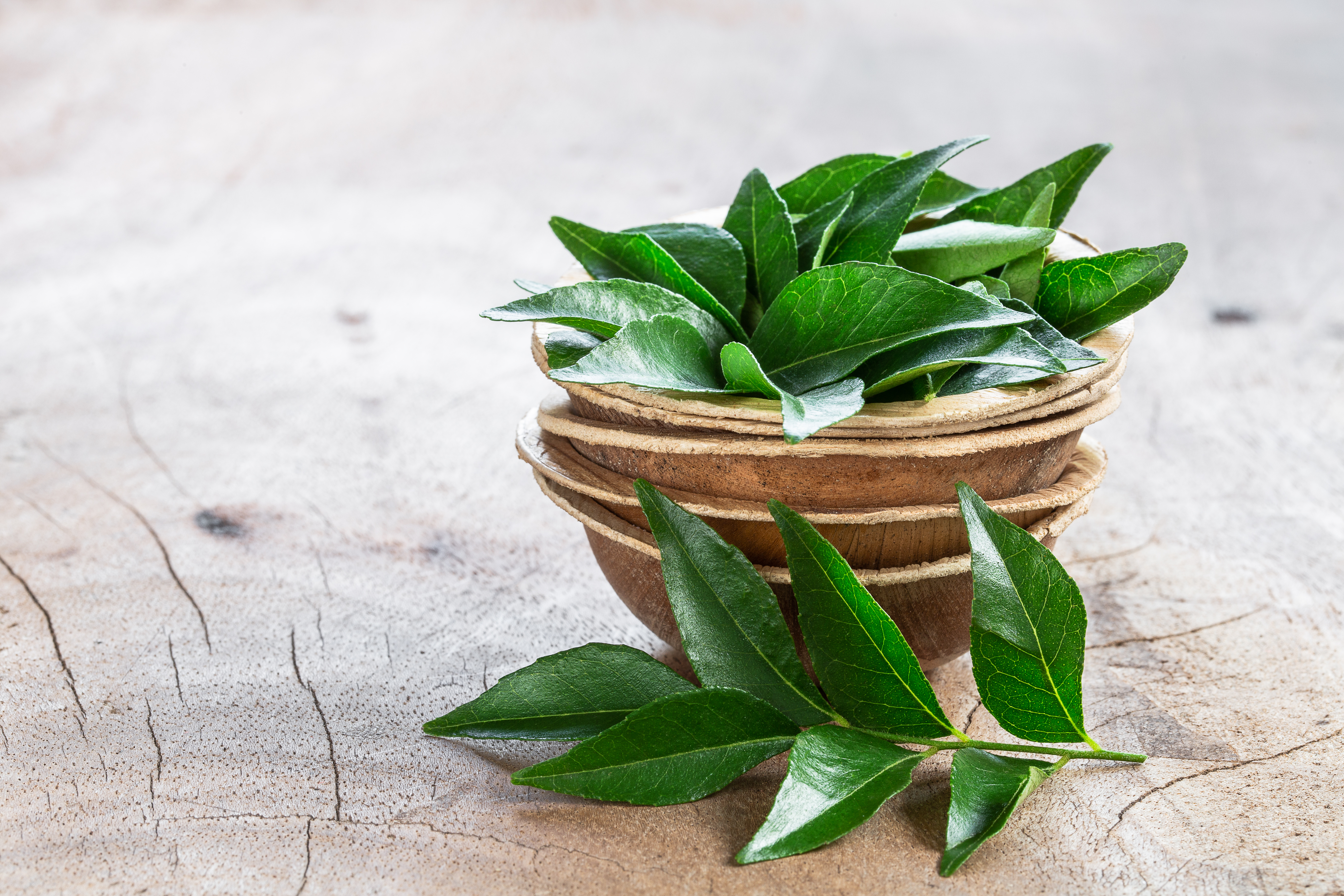
Native to India and Sri Lanka, curry leaves (Murraya Koenigil) have many applications, and are praised for their medicinal and culinary benefits. This fragrant perennial has been used for thousands of years to flavor food. In India, curry leaves symbolized vitality, protection, and overall well-being.
There is sometimes confusion between curry leaves and curry powder. The leaves provide a nutty-citrus taste when added to culinary dishes. The powder is a blend of cumin, coriander, turmeric, and sometimes fenugreek, and is commonly used for that potent and savory flavor. Although both carry the curry name, they are not interchangeable. Curry leaves are picked green, and are usually fried in the oil at the start of the food preparation to add flavor. Curry powder is usually added like other powdered spices and rarely contains curry leaves.
The health benefits of curry leaves are well known. “Curry leaves are celebrated not only for their culinary versatility, but also for their medicinal uses, such as aiding and supporting digestion, promoting hair health, and possessing anti-inflammatory properties,” experts report, noting that the leaves are rich in antioxidants, vitamin including A and C, and minerals such as calcium, phosphorus, and iron.
The versatility of curry leaves is great. It is common to see them used in cultural and religious events. In addition, the cosmetic and personal care categories embrace the leaves. You can commonly find curry leaves in soaps, essential oils, and hair care products.
Although nutritious, wonderfully flavorful, and generally safe, there are those that should use caution before consumption of curry leaves. As always, one should consult a healthcare practitioner. There is not sufficient information on using curry leaves when pregnant or breast feeding, so physician consultation is recommended. There may also be a gut sensitivity for younger children, so use caution here as well. There have been noted complications with those with hypertension and blood sugar issues, so once again, one should consult their medical practitioner.