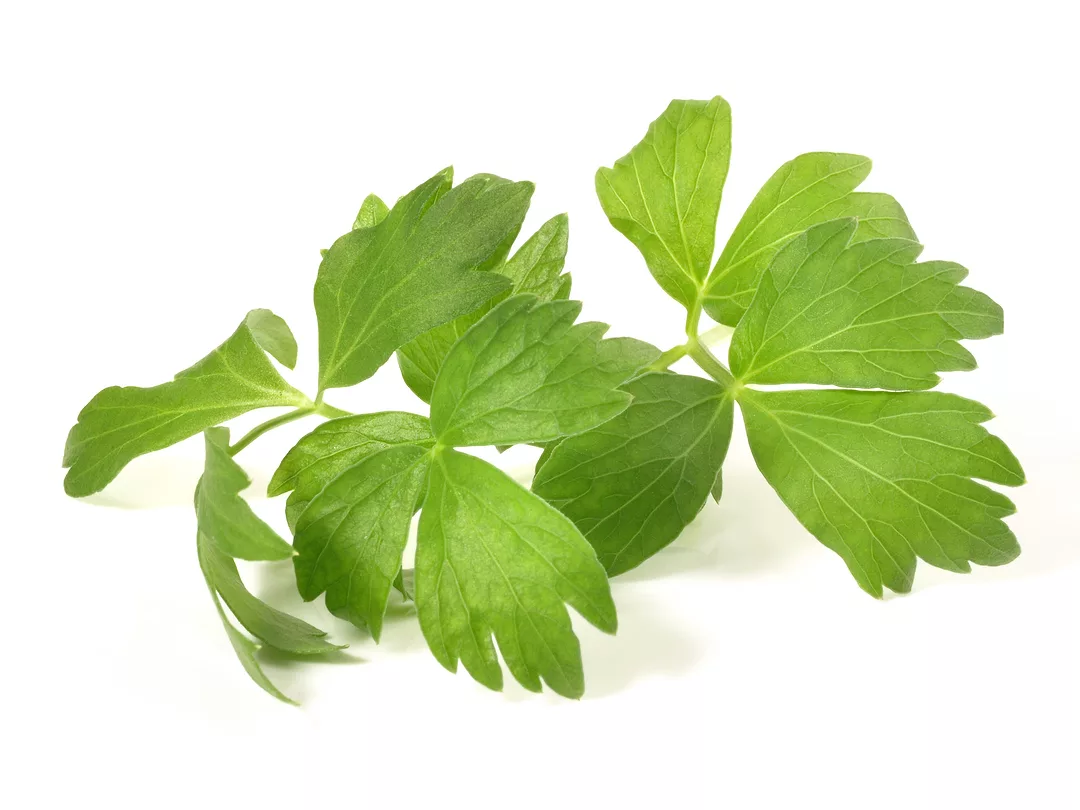
Belonging to the Apiaceae family (along with carrot, celery, and parsley), Lovage (Levisticum officinale), has many uses, from supplement (with a long history for supporting wellness) to culinary (where it adds distinct flavors in dishes). Lovage is native to Southwest Asia and the Mediterranean, and has been introduced to South and North America. Today it also is commonly grown all over Europe.
Lovage has a robust parsley-celery flavor combination, with a citrus aftertaste. The leaves resemble parsley and celery leaves, with bright green color that adds a visual beauty to dishes. Lovage may be used in soups, stews, salads, and meat and fish dishes. Still, it is not as popular as many other culinary herbs, and in many recipes that call for lovage, people replace it with parsley and celery. That said, people who discover the unique flavor of lovage for the first time often become fans.
This herb has been enjoyed worldwide for centuries as a savory tea and documented in Greek ancient writings. Internally, as a blended beverage, it is commonly mixed with water or milk, as well as steeped in very hot water as a strong tea, sometimes sweetened with honey or stevia.
Although lovage is known as a culinary herb, you can find it available as an essential oil, tea, and supplement. The essential oil has been used traditionally for wounds and sores to initiate healing. Lovage has been used as an antiseptic, acne helper, and for soothing irritated skin. It also has been used as a diuretic and an antimicrobial, and it may induce menstruation.
As with most herbs, studies are frequently completed to show benefits that may have always been assumed, and now may need and documented for clarity. Authors of one study report: “The purpose of this study was to gather information about the effects of the herb Levisticum officinale (lovage) and of its phenolic ingredients and to elucidate the potential health benefits of the plant in relation to its polyphenolic content. Polyphenols belong to the classes of flavonoids (quercetin, rutin, kaempferol and anthocyanins) and phenolic acids (chlorogenic, neochlorogenic, ferulic, gallic, ellagic). They contribute to potent antioxidant properties of the plant.”
The study authors spotlight the demonstrated anti-inflammatory, anticancer, neuroprotective, antidiabetic, antibacterial, and hepatoprotective properties of L. officinale extracts. They also note that phenolic substances in lovage have shown to be protective in models of osteoporosis and cardiovascular diseases.
It should be noted that lovage is considered to be generally safe, but is not suited for everyone. Consulting with a personal healthcare practitioner is always a recommendation for most herbs; in this case, use is discouraged during pregnancy because of its effect on inducing menstruation, and it should not be used while breastfeeding. Although safety studies for children are not always addressed, it is not recommended for children.