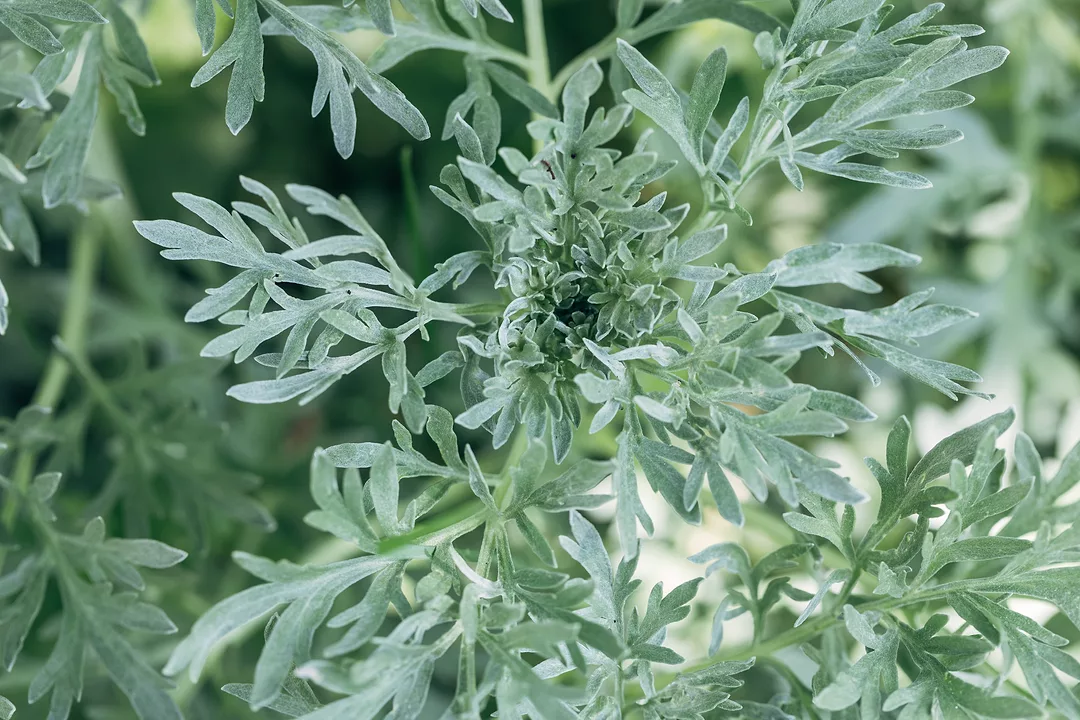
Artemisia absinthium, commonly known as wormwood, is a bitter-tasting perennial plant with green and grayish foliage. Native to Asia, Europe, and Africa, it also can be found widely naturalized in Canada and the Northeast U.S.
Writings on wormwood date back to Hippocrates. It is recorded as being used for jaundice, premenstrual issues, and other gynecological conditions. Research reveals the use of wormwood for inflammatory conditions, liver support, and digestive health.
More recent writings note that wormwood is commonly used in herbal remedies targeting gastrointestinal problems such as Crohn’s, dyspepsia, and irritable bowel syndrome, though experts note that scientific evidence supporting these uses is limited. Research does show that wormwood has success for intestinal worms like pinworms and roundworms.
Wormwood’s most notable plant compound is thujone, and while it offers benefits, it can be toxic in excess. Artemisinin, another plant compound found in wormwood, may help fight inflammation in the body. One study evaluated the anti-inflammatory, antioxidant, and antimicrobial effects of artemisinin extracts generated from Artemisia annua L. using four different solvents. The result: Artemisinin was shown to have anti-inflammatory, antioxidant, and antimicrobial activities against periodontopathic bacteria.
Wormwood is typically consumed as a tea or extract. Interestingly, wormwood also is an ingredient in alcoholic beverages such as absinthe and vermouth, as well as Jägermeister, which uses wormwood as one of its 56 spices, fruits, and roots.
The stems and leaves of wormwood are where the oil is from, although you will see formulations as a full spectrum, utilizing the entire plant. Formulations also are available combining wormwood, black walnut, and cloves.
When considering wormwood, one should know the cautions. Just a few of the health situations that need a conversation with a medical practitioner, and or avoidance, include: Pregnancy or breastfeeding; environmental allergies to ragweed, marigold, and other related plants; kidney and seizure disorders, including epilepsy. Wormwood is a good reminder that just because plants are natural and have a long history, it is important to use caution.