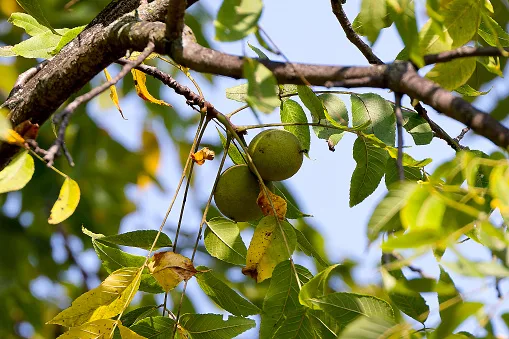
There's nothing more exciting than learning that many parts of a plant—the seeds, flowers, stalks, stems, roots, and more—are beneficial to well-being. In some cases, each has different benefits, and some, when combined, add to the overall goodness. Case in point: black walnut, or the black walnut plant/tree in general. The kernels, the outer husk seed coverings, the inner bark, and the leaves all provide various benefits.
The black walnut tree can grow to tower over us at heights of 100 feet or more. Black walnut trees (Juglans negra) grow wild across North America, commonly in areas with occasional rainfall and humidity; many grow near ponds, lakes, and streams.
The nuts of the tree are known to have the highest protein content of any of the tree nut species, high antioxidant levels, and a power-packed punch of polyunsaturated fatty acids. Omega-3 fatty acids and other antioxidants in black walnuts can contribute to heart health and help support a healthy inflammatory response. Plus, the amino acid arginine in the nuts turns into the vasodilator nitric oxide in the body. According to research in the International Journal of Food Properties and elsewhere, vasodilators can potentially lower blood pressure.
Supplements, made primarily from the hulls of the tree’s fruit, are valued for digestive support, microbial balance, and cleansing. Also of note: Juglone, aka 5-hydroxy-1,4-naphthalenedione, is an active part of the black walnut outer hull that is commonly found as a more natural insecticide within the organic agricultural sector. Internally for humans, it is added to cleansing products, including parasite cleansing products.
You can find black walnut in liquid extracts and tinctures, capsules, and powders, and as always, one should consult a medical practitioner, especially if pregnant or breastfeeding, as use is generally advised against at these times.