
The human microbiome market, in all its applications, is literally exploding. With anticipated growth over 15%, it represents a huge commercial opportunity for suppliers, brands and service providers to address current and emerging consumer needs. For years, consumers have known the general benefits of probiotics, but the family has now effectively expanded to include prebiotics, synbiotics, and even postbiotics. For supplements, when it comes to ingredient familiarity, globally, probiotics ranks 7th, behind such stalwarts as multivitamins, single vitamins and omega-3s. Prebiotics now rank 12th in overall familiarity and while rising, postbiotics are still in the bottom third of the over 30 ingredients measured (ITC 2025 Supplement Consumer Insights).
Building Personas
Marketing personas are research-based representations of ideal customers crafted and named as semi-fictional characters that combine demographic and behavioral data to guide targeting and messaging. They can be used to determine marketing strategy, identify targets, product positioning, channel planning, engagement approaches and much more. With the five age groups in the ITC 2025 reports, across both genders, ITC can produce 10 different personas, along with strategies to engage. This can be done for all users, or for users by ingredient category.
About the data:
Industry Transparency Center (ITC), a global data, insights and strategy organization, conducts annual consumer research covering perceptions about the use of health ingredients in foods, beverages, and supplements. The research focuses on health concerns and examines the ingredients consumers are currently consuming, or are willing to consume, to address these concerns. ITC has gathered insights and behaviors of consumers of numerous ingredients, including probiotics, prebiotics, and postbiotics, and is now able to compare attitudes and behaviors across countries, demographic groups, and ingredients. With its deep dive into prebiotics, the ITC insights fuel the Global Prebiotic Association (which ITC manages) and broadly help suppliers and brands to produce winning products for higher lifetime value consumers. For brands, this data ensures products match consumers’ interests, needs and values. Learn more at itcstrategy.com or contact len@itcstrategy.com.
Prebiotic Persona: Gut-Curious Wellness Starter
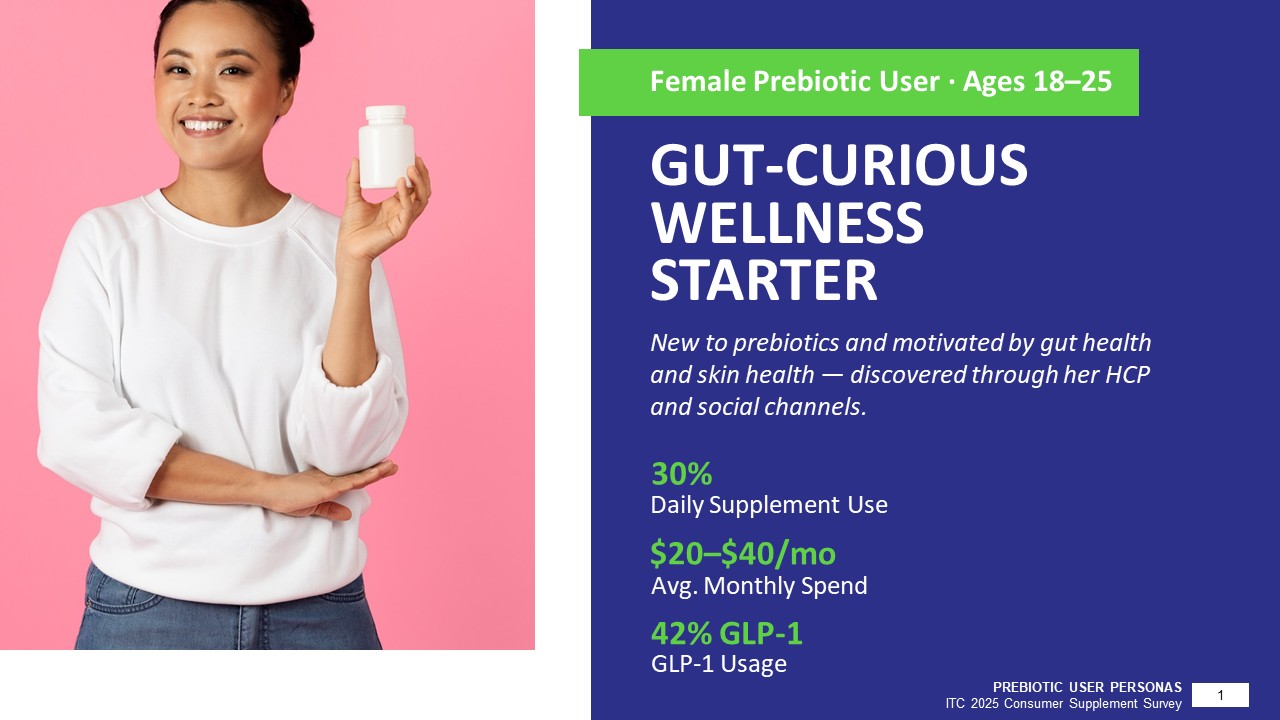
Figure 1 (above) discusses the ITC Prebiotic Persona called a Gut-Curious Wellness Starter. This individual is an 18- to 25-year-old female, “new to prebiotics and motivated by gut health and skin health—discovered through her Health Care Professional and social channels.” She has relatively high GLP-1 medication use (the highest of any prebiotic cohort), which is a critical consideration for prebiotic users.
The top three health concerns overall for the Gut-Curious Wellness Starter are anxiety/stress, fatigue, and skin health, and there are huge opportunities to engage users like her, including co-use positioning for GLP-1s, synbiotics (she’s likely already taking prebiotics), leading with solid, credible education, and connected to that, micro-influencer engagement.
Probiotic Persona: Total Wellness Gut-Health Manager
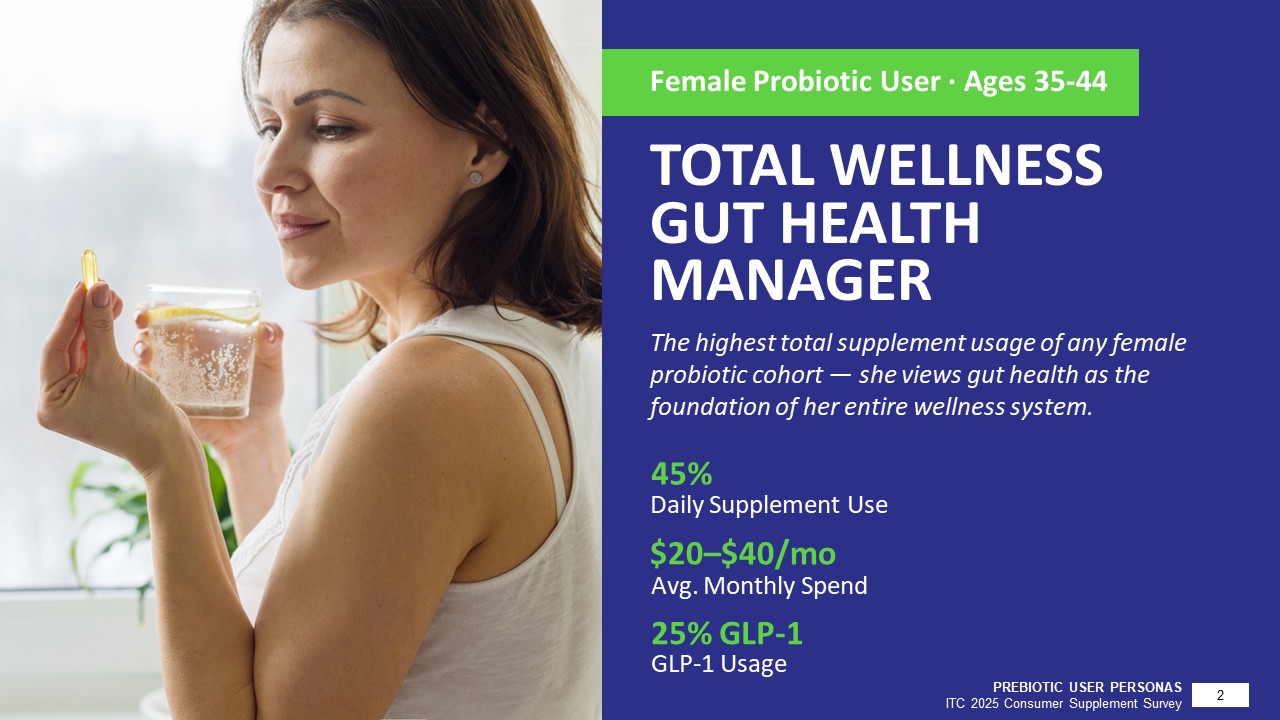
Figure 2 (above) describes a Persona for Probiotic users of supplements: the Total Wellness Gut-Health Manager. This individual represents the highest total supplement usage of any female probiotic cohort. She views gut health as the foundation of her entire wellness system. This group consists of females between the ages of 35 to 44, with much less GLP-1 drug use and a totally different set of value-drivers and purchase behaviors.
Postbiotic Persona:
Microbiome Science Investor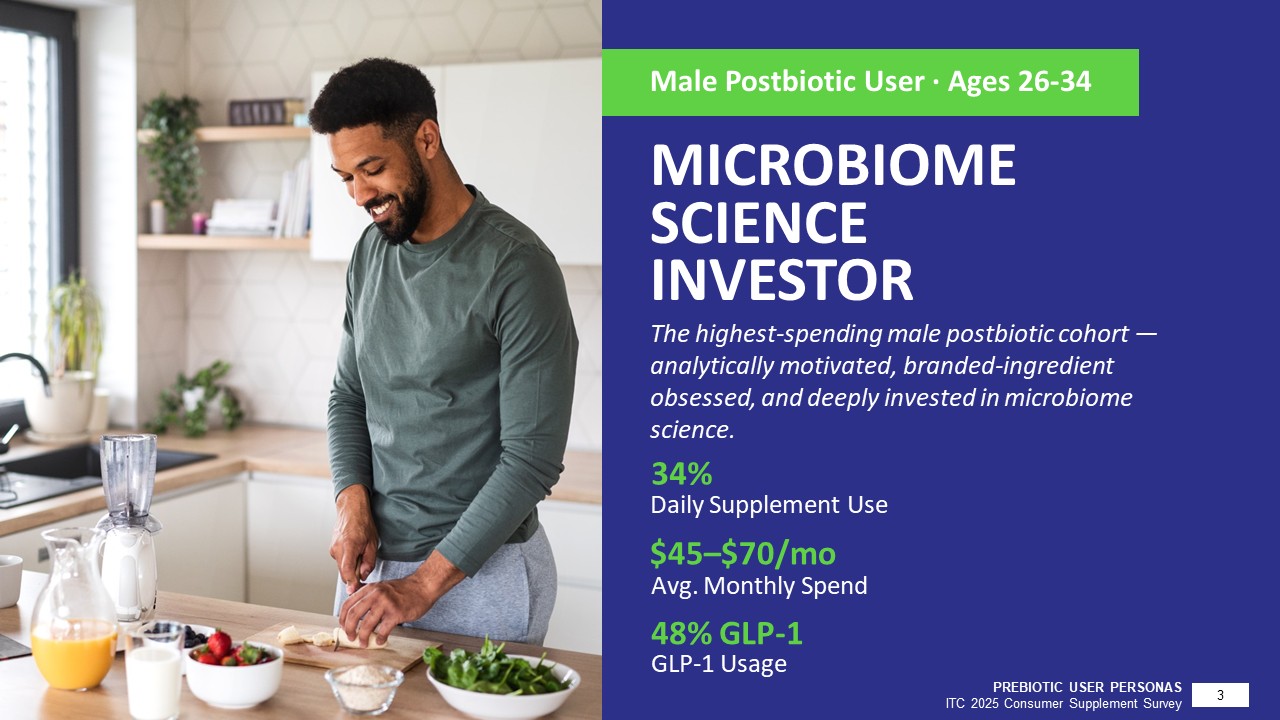
Figure 3 (above) introduces a Postbiotic Persona: the Microbiome Science Investor. This individual is a male aged 26 to 34. Almost half of these individuals are taking GLP-1 medications (48%), with decent overall spend, as well as a passion and belief in the value of branded ingredients and the science behind them. This persona also shows a commitment to sustainability and third-party certifications.
The Microbiome Science Investor is the highest-spending male postbiotic cohort, with an average monthy spend of $45 to $70 per month. These individuals are analytically motivated, as well as branded-ingredient obsessed, and deeply invested in microbiome science.
Stacking & Product Development Considerations
Even though anxiety and stress are the primary health concerns of most U.S. -biotic users (pro, pre, or post), in addition to being a concern that consumers are willing to directly address with supplements, different personas for prebiotics, probiotics and postbiotics begin to vary on preferred formats, ingredient familiarity and influences. This means that the gut/brain/skin product opportunity for the Gut-Curious Wellness Starter in prebiotics evolves to a gut-focused, multi-mechanism white space opportunity for another postbiotic persona. This might lead to a multi-biotic, doubling down on gut barrier function, for instance, and solving for digestion and metabolic health more broadly.
Takeaways
Familiarity with probiotics, prebiotics and postbiotics is strong and on the rise. Stress and mental wellness are the top concerns overall, and ‘biotics’ have a strong and growing association in this concern area, in addition to the more intuitive areas such as gut health, immune health, and skin health. Recognizing the existence of co-concerns that are specific to personas will help companies engage, formulate and succeed in the biotics universe.