The editorial team at WholeFoods Magazine has decades of experiences reporting on natural products and dietary supplement industry news, trends, and more. This national business-to-business magazine has been published continuously for more than 40 years (the magazine was founded in 1977, and has been owned by Wainer Finest Communicationssince 1984). It is the longest-tenured media outlet of its kind in the natural products industry. The editorial focus at WholeFoods Magazine is, and always has been, on informing and educating members of the natural products industry.
*These statements have not been evaluated by the Food and Drug Administration. These products are not intended to diagnose, treat, cure, or prevent any disease.
Our Microbiome: Emerging Data on Cancer Risk and Treatment
More than most maladies, cancer can strike without warning — disrupting lives and devastating health.
Yet new thinking suggests we can live with small cancers; some go away and others may never cause trouble. Furthermore, with sophisticated imaging, benign nodules can be found in screenings, without symptoms or suspicions, which are called incidentalomas.
Thus cancers are not all created equal. As cancers go through several stages of the assault, attack points become apparent. Scientists are finding in our microbes an exciting new map in which to alter our cancer risks.
By acting at crucial points in the cancer pantheon, microbes may:
Bind mutagens
Suppress growth of bacteria that convert procarcinogens into carcinogens
inhibit or deactivate enzymes involved in the creation of carcinogens, mutagens, or tumor-promoting agents
Suppress tumors
Shift pH via short chainfatty acids to suppress bacteria that are associated with cancer risk
Via butyric acid, support appropriate growth and development of the intestinal epithelial cells
Deconjugate bile acids
Enhance immune systems
Trigger macrophages to mediate DNA damage
With so many defenses, clearly our microbiome is looking out in our best interests. Until of course, it isn’t.
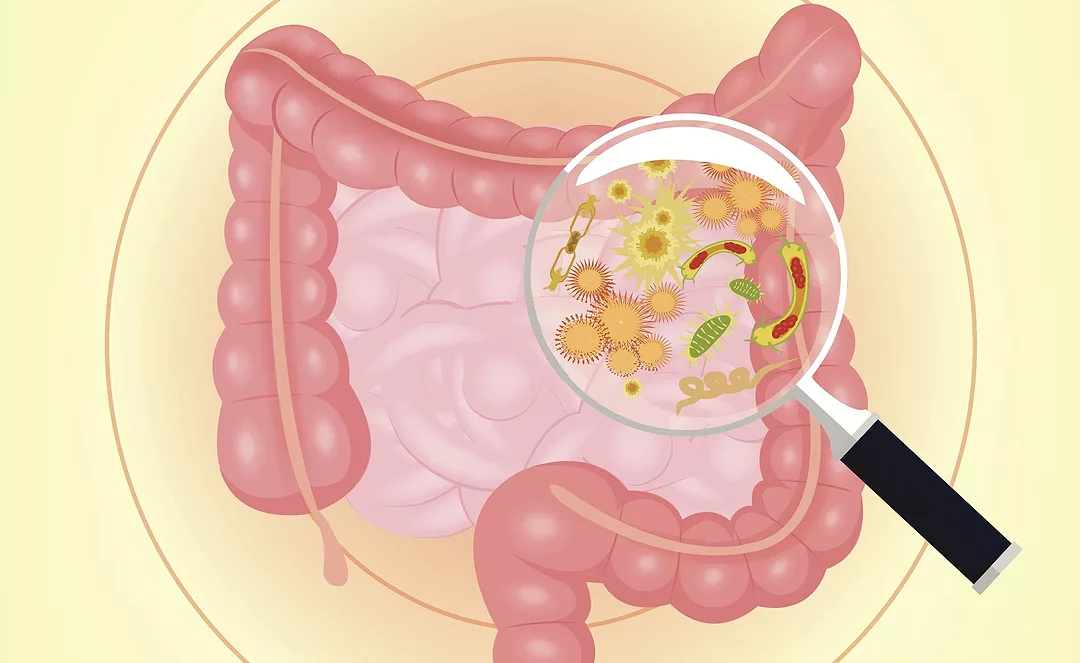
Without a doubt, the microbiome is a factor in the risk, incidence or treatment of many cancers. Because a large swath of our microbes live in the gastrointestinal tract, cancers arising here are prime suspects for initial research. Take a look at two.
Colon Cancer
A large body of evidence supports a relationship between bacteria, bacterial activities and human colorectal cancer.
Healthy people and colon cancer patients host different bacteria . Certain species of Prevotella appear to be absent in those with colon cancer, according to new research. The genus Prevotella also otherwise seems related to colorectal cancer risk. One intriguing note is that this species harvests energy from plant fibers, a food category often deficient in patients with colon cancer.
Also, other bacteria are abundant: Acidaminobacter, Phascolarctobacterium, Citrobacter farmer, and Akkermansia muciniphila are common in stool samples of cancer patients.
Butyric acid is lower in the stool of colon cancer Butyrate is a power nutrient in normal colon cells. It has been seen to reduce the spread of human colon cancer cells alone or in combination with propionate.
These mechanisms will provide leads for future research.
Prostate Cancer
Much attention in the prostate has focused on which cancers must be treated and which can be monitored. Once again, gut bacteria may play a pivotal role. Inflammation triggered by pathogenic gut bacteria may lead to prostate cancer.
But wait, there’s more good news. Bacteria can be vessels for targeted cancer therapy. Bacteria can deliver therapeutic proteins directly to tumors. Bacteria are modified to produce proteins that kill cells, signal cell death and stimulate the immune system; all of these limit tumor growth in animal models.
While a little knowledge is dangerous, when it comes to the microbiome it can be lifesaving. Understanding exactly how microbes intersect with cancer at every stage is the challenge for the coming years.
But take no chances; start with a kombucha or kefir toast to thank our armies within.
Clare Fleishman MS RD bridges the gap between science and health across most platforms: major newspapers, magazines, books (Globesity), workshops, social media and websites. From corporate whiteboards to refugee schools in Egypt, Fleishman agitates for personal and public change. In 2010, she launched www.ProbioticsNow.com to share the cascade of new discovery in the microbiome. Always amazed at this “forgotten organ”, Fleishman also creates white papers, blogs, videos and social media for the International Probiotics Association.
NOTE: The statements presented in this blog should not be considered medical advice or a way to diagnose or treat any disease or illness. Dietary supplements do not treat, cure or prevent any disease. Always seek the advice of a medical professional before adding a dietary supplement to (or removing one from) your daily regimen. WholeFoods Magazine does not endorse any specific brand or product. The opinions expressed in bylined articles are not necessarily those of the publisher.
 RSS
RSS